
Germany unveils “Program for Upswing and Employment” with tax, labour and pension reforms
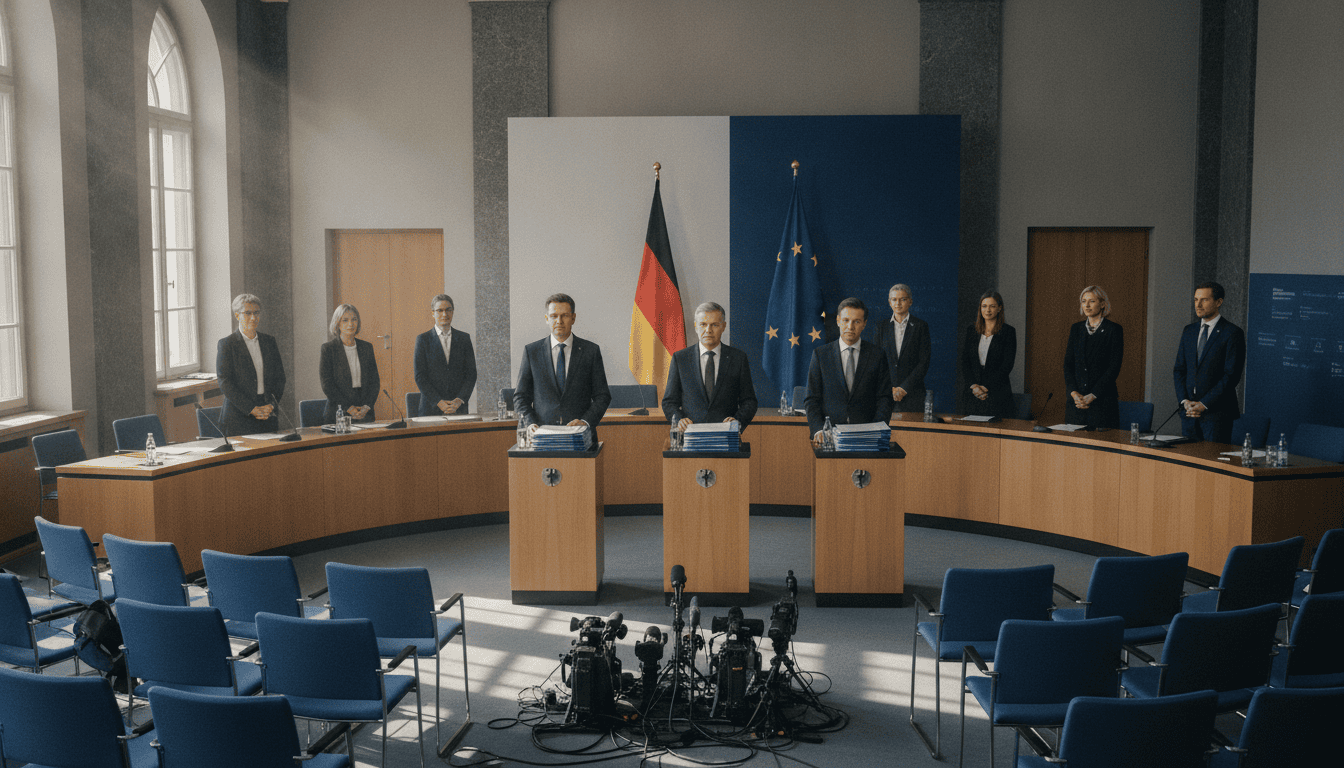
Chancellor Merz on July 2, 2026, presented the Program for Upswing and Employment, a package of more than 30 measures targeting tax relief, labour law changes and pension reform to boost growth.
The coalition leaders in Berlin framed the Program for Upswing and Employment as a comprehensive effort to steer Germany’s economy toward higher growth and employment. Chancellor Friedrich Merz (CDU) said the package is designed to win public support once its effects become visible, and he urged citizens to back the reforms. The measures range from a tax cut scheduled for January 1, 2027, to restructuring of social and regulatory rules intended to reduce bureaucracy and promote strategic industries.
Coalition agreement and legislative timeline
The CDU, CSU and SPD announced the outline after a coalition committee meeting in Berlin on July 2, 2026. Lawmakers and ministries will now translate the agreed measures into detailed legislation, with some provisions set to take effect on January 1, 2027. The government said other elements will be debated over the summer, while a final decision on alterations to the working-time law is expected later in the season. Reform of the Bundestag election law was left undecided and is to be addressed no later than spring 2027.
Tax relief measures and higher top rates
The program proposes targeted tax relief for millions of taxpayers, with the government planning to raise the basic tax allowance, the child tax allowance and the employee lump sum from January 1, 2027. The coalition estimates relief of roughly €10 billion that would chiefly benefit low and middle incomes; an example cited was a working family of four on a €60,000 taxable income gaining up to €600 annually. To offset revenues, the package tightens the top tax bracket: a 45 percent rate would apply from €250,000 of taxable income and rise to 47 percent at €280,000. The government ruled out increases in inheritance or wealth taxes, while also raising the flat contribution rate for mini-jobs from 2 to 5 percent and narrowing some craft-service tax deductions.
Overhaul of employment rules and sick-leave policy
Significant changes to labour law are included in the Program for Upswing and Employment, notably the abolition of telephone sick notes and the requirement that an employer receive a medical certificate from the first day of absence. The coalition also agreed to allow fixed-term contracts without objective cause for up to four years with up to six renewals, a change that would apply to workers hired up to December 31, 2030. The package increases tax-favored Sunday and holiday pay and exempts tariff-agreed premiums from contributions, while postponing a broader flexibilization of working hours until further discussions this summer. The government singled out support for future-oriented sectors — including automotive, chemicals, pharmaceuticals, cleantech, circular economy, machinery, battery cell and semiconductor production, and artificial intelligence — as a priority for targeted promotion.
Pension reform and introduction of a capital pension
A central element is a sweeping pension reform framed as a response to demographic pressures and fiscal sustainability. The coalition accepted recommendations from a commission and committed to implementing 33 reform points, including the introduction of a so-called capital pension financed by an increase of up to two percentage points in the joint employer-employee contribution. The statutory retirement age is set to continue rising beyond 67 in gradual steps in the coming decades, and the entitlement to early retirement without deductions for those with at least 45 contribution years would be phased out. From 2031 a sustainability factor would again be applied to moderate annual pension increases, and the statutory system will extend coverage to include certain self-employed people and politicians, while excluding civil servants.
Health, housing and bureaucracy reduction
The coalition aims to relieve statutory health insurers by at least €16.3 billion in 2027 through spending restraints on practices, hospitals and the pharmaceutical sector, and by adjusting patient co-payments and dependent coverage rules. On housing, the program establishes a federal housing company and bars state-level expropriations of private rental portfolios to create perceived legal certainty for investors and tenants. A broad anti-bureaucracy push includes automatic, pre-filled digital tax returns, a legal obligation for tax authorities to assign company tax numbers within four weeks, and a review to abolish one in four documentation requirements within a year, excluding those mandated by EU or constitutional law. The coalition also proposed making national data-protection rules more permissive within the constraints of the EU GDPR and urging Brussels to exempt low-risk activities of small and medium enterprises and non-commercial groups.
Political reactions and parliamentary hurdles
Coalition figures presented the package as proof of cooperation: Finance Minister Lars Klingbeil (SPD), Labour Minister Bärbel Bas (SPD) and CSU leader Markus Söder expressed satisfaction with the accord. Chancellor Merz called on citizens to support the reforms, saying the government had delivered decisions rather than partisan conflict. Opposition parties and stakeholders are expected to scrutinize specifics in parliamentary debate, with fiscal offsets, health-sector cuts and labour-market flexibilities likely to be focal points of contention as bills proceed through committees.
The Program for Upswing and Employment maps a broad policy agenda that links tax relief to revenue measures, labour-market flexibility to worker protections, and pension stability to new funding mechanisms. As ministries draft legal texts in the coming weeks, the coalition will face the task of converting political agreement into enforceable laws while managing the economic and social trade-offs those laws entail.
