
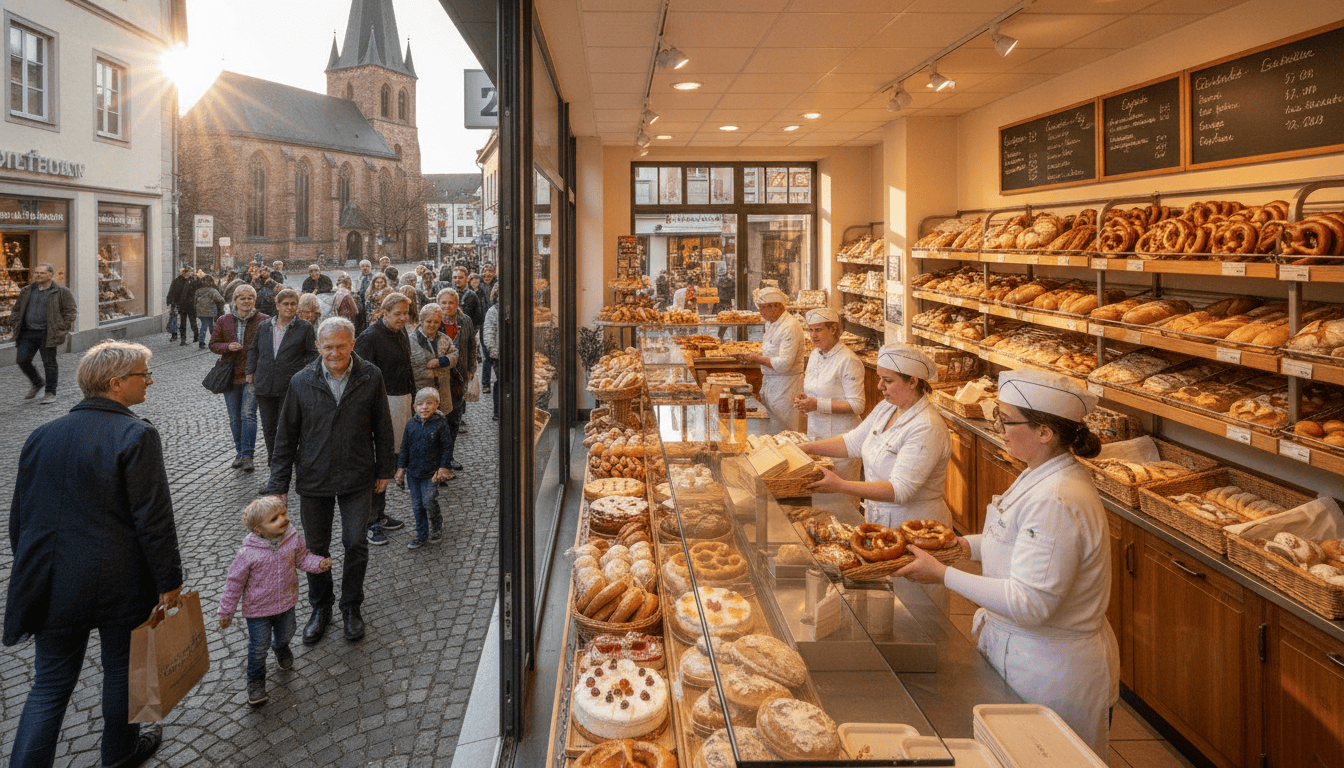
Germany moves to expand Sunday openings for bakeries as retailers press for broader rules
Government extends bakery Sunday hours; retailers demand wider Sunday openings to revive city centers and match online commerce.
The federal government has approved a measure extending Sunday openings for bakeries and confectioneries, and retail associations are now calling for broader Sunday openings across the high street. The decision allows bakeries to deploy staff for up to eight hours on Sundays and public holidays, aligning their working window with hospitals and hospitality businesses. Trade groups say the change will renew pressure for a wider liberalization of Sunday trading law in Germany.
Government decision on bakery hours
The coalition’s recent reform package included a targeted easing of rules for bakeries and confectioneries, permitting up to eight hours of staff deployment on Sundays and holidays. Lawmakers framed the change as a narrow, sector-specific adjustment rather than a wholesale rewrite of Sunday work provisions.
Officials point to parity with other essential services, noting that hospitals and many restaurants already operate under comparable allowances. The measure is intended to ensure continuous supply chains for fresh goods and to reduce legal uncertainty for small food businesses.
Retail associations push for more liberal Sunday openings
Industry bodies immediately seized on the bakery decision to press for a broader opening of Sunday trade, arguing that modern consumer habits and online competition make strict limits outdated. The head of the German Retail Association (HDE) told a national tabloid that shopping has become a leisure activity and that relaxed Sunday hours could help keep inner cities vibrant.
Regional retail leaders echoed that demand, saying retailers and consumers should be given greater discretion over weekend trading. They argue expanded Sunday openings would level the playing field with e-commerce and help traditional stores retain footfall.
Patchwork of state rules complicates implementation
Current regulations are a mix of federal and state laws, resulting in significant regional differences in permissible Sunday work. In Bavaria and Baden-Württemberg, bakers may schedule up to three hours of Sunday production and delivery, while North Rhine-Westphalia allows up to five hours under existing rules.
Many businesses have used café or hospitality classifications to operate more flexibly, citing the guest-service exception in hospitality law. That uneven legal landscape is one reason industry groups say a clearer nationwide framework is necessary.
Legal uncertainty for municipalities and shop owners
Trade associations argue that the requirement for a “special occasion” to justify a Sunday opening is often unclear, leaving local authorities unable to issue robust, legally defensible permits. The Saxony retail chief described the current regime as opaque and called for legislative clarification to give municipalities a stable basis for decisions.
Municipalities, for their part, have warned that any change must balance business needs with planning and public-interest considerations. Local administrations will face pressure to both support economic activity and uphold regulations designed to protect public order and workers’ rights.
Arguments from business groups and regional leaders
Leaders of regional trade associations framed Sunday liberalization as overdue in an era of 24/7 online retail. One federation head said it is “outdated” that selling a shirt on Sunday can expose a shopkeeper to legal risk, and urged lawmakers to allow shopkeepers and customers to decide.
Business groups add that more flexible hours could help revive city centers, particularly outside peak tourist seasons, by providing steady consumer traffic and supporting hospitality neighbors. They also argue that predictable rules would reduce reliance on legal workarounds that create uneven competition.
Potential social and labor implications
The move is expected to reopen debates over Sunday rest and protections for employees, with labour representatives likely to demand safeguards if hours are extended across retail. Trade associations have signalled willingness to discuss conditions for staff, but details on compensation, scheduling and worker consent remain central to future negotiations.
Policy makers will need to weigh economic benefits against social norms that view Sunday as a day of rest, while also considering the operational realities of small retailers that rely on weekend trade. Any broader reform would therefore require political compromise and regulatory detail.
The bakery change marks the first decisive liberalization in the current reform package and sets a precedent that industry groups hope will lead to wider Sunday openings for retailers.
