
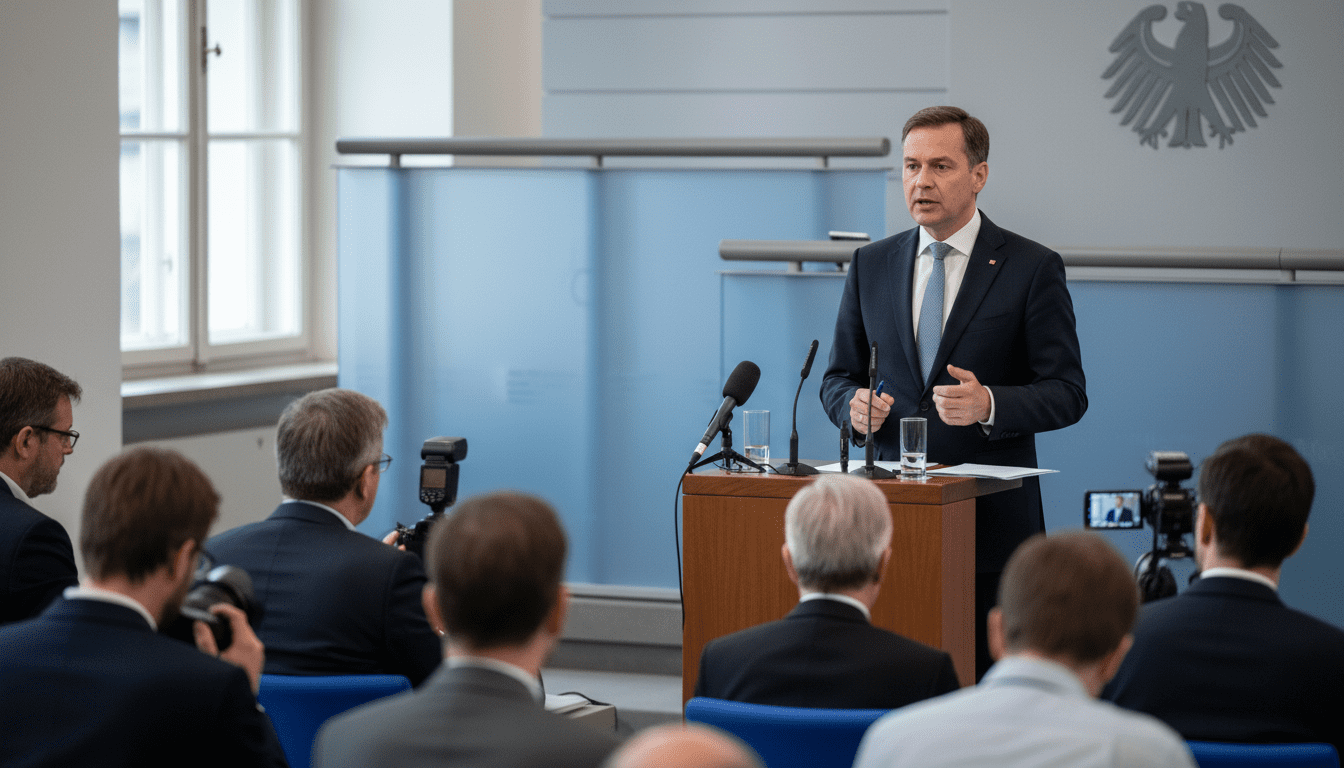
Merz’s Chief of Staff Thorsten Frei Opposes Higher Taxes for Top Earners
Thorsten Frei rejects higher taxes for top earners as a way to fund relief for middle-income workers, opening a cautious standoff within the ruling coalition.
Chancellor Friedrich Merz’s chief of staff, Thorsten Frei, has publicly rejected plans to impose higher taxes for top earners as the vehicle to finance relief for employees with small and medium wages, saying such increases are not the Union’s starting point. Frei made the remarks in an interview with the Augsburger Allgemeine and the Südkurier, framing his position as a fiscal judgment rather than an outright refusal to talk. The intervention risks sharpening differences between the CDU-led Union and the SPD as both sides prepare to overhaul income tax rules later this year.
Frei Rejects Higher Taxes for Top Earners
In the interview Frei argued that Germany does not primarily face an earnings shortfall that would justify tax hikes on the highest incomes, stressing the Union’s preference for other funding paths. He portrayed the position as pragmatic, adding that opening negotiations by listing prohibitions would be unwise. The comments underline Frei’s influence as a close adviser to Chancellor Merz and set a clear boundary for upcoming coalition talks.
Coalition Negotiations Turn to Income Tax Reform
Union and SPD leaders recently agreed to revise the income tax system within the year to strengthen support for working households in the middle of the income distribution. The SPD has advocated targeting very high incomes to pay for the measures, while the Union seeks alternatives that avoid increasing burdens on top earners. The exchange between Frei and the SPD signals that tax reform will be a central, and potentially contentious, test of coalition cooperation in the months ahead.
SPD Presses for Levies on Very High Incomes
SPD officials have argued that asking wealthier taxpayers to contribute more is both progressive and politically necessary to finance relief for middle-income workers. Party spokespeople emphasize redistribution as a means to reduce inequality and to shelter households from inflationary pressures and rising living costs. The SPD’s proposal to increase levies on very high incomes now faces scrutiny from the Union’s leadership and its key advisers.
Frei Frames Argument as Fiscal, Not Revenue Shortfall
Frei told interviewers he does not believe Germany’s budgetary challenge is one of primary revenue shortage, implying that spending priorities and efficiency should be examined first. He avoided an absolute veto, however, saying it would be counterproductive to preempt negotiations by listing what cannot be done. That calibrated stance leaves room for compromise while signalling the Union’s red lines to SPD negotiators.
Proposal to Link Working Life to Life Expectancy
On pensions, Frei advocated tying the length of working life to rising life expectancy, arguing that if people live longer then a proportionate increase in working years is unavoidable. He framed the linkage as a necessary element of long-term pension sustainability and suggested that societal trends must shape retirement policy. A government-appointed commission is currently drafting a set of proposals that officials expect to present in the summer.
Commission to Deliver Pension Options by Summer
The cross-party commission charged with designing a comprehensive rentenreform is due to publish recommendations in the coming months, and Frei’s comments appear intended to shape that debate. Lawmakers and social partners will now weigh fiscal sustainability against social protections as the commission’s options emerge. The timetable places both tax and pension reforms on a busy policy agenda before the parliamentary session advances further.
Both parties face political trade-offs: the SPD risks alienating centrist voters if it presses too hard on taxes for the wealthy, while the Union must balance tax restraint with public demands for relief and fairness. Negotiators will need to reconcile competing fiscal diagnoses and political priorities to produce measures that can pass both the coalition and the Bundestag.
