
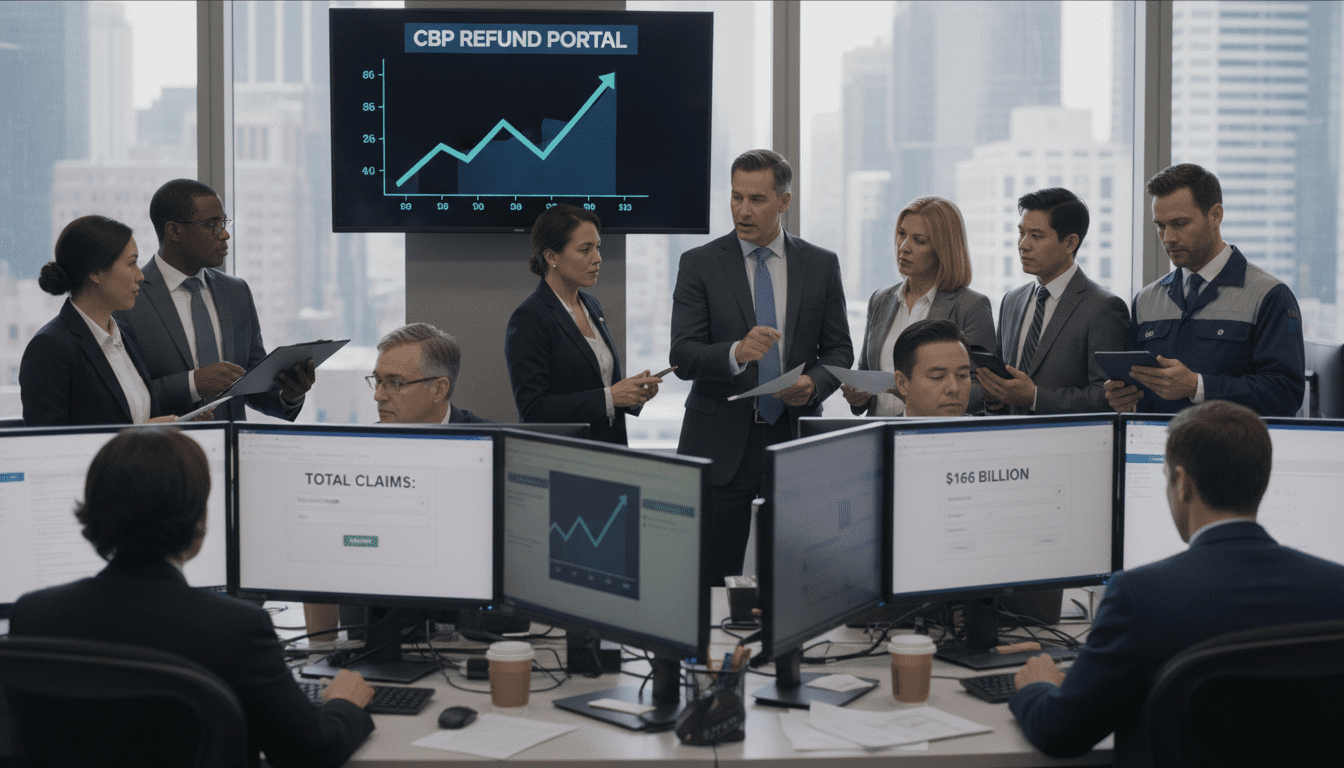
CBP Portal Goes Live as Importers Rush to File Tariff Refunds Worth Up to $166bn
CBP’s refund portal opened April 20, 2026, as thousands of importers rush to claim up to $166bn in tariff refunds after the recent Supreme Court decision.
The United States Customs and Border Protection (CBP) launched a new online portal on April 20 to accept claims for tariff refunds after the Supreme Court in February 2026 struck down emergency tariffs imposed over the past year. Thousands of companies moved quickly to submit documentation seeking recovery of duties, testing the capacity and reliability of the new system. The rush underscores the scale of the reversal: more than 330,000 importers paid the disputed duties on roughly 53 million shipments.
Portal Launch and early user experience
The portal went live at 8 a.m. US Eastern (12:00 GMT) and immediately drew a high volume of traffic from importers and customs brokers. Jay Foreman, chief executive of toymaker Basic Fun, said the platform was usable but exhibited intermittent upload errors that required retries.
Several firms reported using dedicated teams to batch-upload invoices and declarations, noting that the system allows grouped submissions but may reject larger batches when demand spikes. Companies described a steady advance through their files with some uploads completing and others needing repeated attempts.
Scale of eligible refunds and claim status
Court filings indicate the refund exposure could reach as much as $166 billion, with customs officials reporting that as of April 9 some 56,497 importers had completed the necessary steps to receive electronic refunds totaling about $127 billion. More broadly, more than 330,000 importers were affected by duties applied to approximately 53 million shipments.
Those figures establish both the magnitude of the repayment effort and the administrative burden CBP faces in adjudicating tens of thousands of complex claims across industries ranging from consumer goods to industrial components.
Processing timeline and phased approach
CBP has said it will process refunds in phases, prioritizing more recent tariff payments, and that approved claims will take roughly 60 to 90 days to be paid. The agency warned that technical and procedural issues could delay individual applications, and it expects staggered disbursements as claims are reviewed and validated.
Officials emphasized that the phased approach is designed to manage workload and reduce the risk of processing errors, but importers worry that prioritization by payment date may leave earlier claimants waiting longer for reimbursement.
Business implications and customer reimbursements
Companies facing potential reimbursements to downstream customers are cautious about committing to refunds until they receive payments from CBP. Many businesses said they would require proof of refund receipt before passing money back to wholesalers or consumers.
The uncertainty risks creating a cascade of partial or delayed reimbursements and could complicate commercial relations, particularly in sectors that shifted prices or supply chains in response to the tariffs last year.
Technical risks, compliance and documentation demands
Importers must submit detailed declarations listing the goods on which duties were paid and provide supporting invoices and shipping records, a process many described as administratively intensive. CBP’s portal accepts batch uploads, but firms warned that incomplete or incorrectly formatted files can be returned for correction, slowing processing.
Customs and brokers urged companies to review historical records and assemble documentary evidence promptly, noting that accurate, complete submissions are likely to move more smoothly through validation checks.
Political and trade-policy backdrop
The refunds follow a pivotal Supreme Court ruling in February 2026 that found the administration’s use of emergency authority to impose tariffs exceeded the scope permitted by law. The decision represents a major legal rebuke to the tariff program that had prompted rapid supply-chain adjustments and pricing shifts across global markets.
While the ruling resolves the legal status of the measures, it leaves open broader policy questions about the future use of emergency trade powers and how administrations will balance domestic industry protection with legal constraints.
Businesses have already spent months reorganizing sourcing and logistics to avoid prior tariffs, and some industry groups say they will press for clearer guidance from Washington on any future tariff strategy to avoid repeated disruption.
The immediate yardstick for many importers is whether the CBP portal can sustain heavy usage without systemic breakdowns and whether refunds arrive fast enough to permit orderly business settlements. In the coming weeks, the rate at which CBP approves and pays claims will determine how quickly affected companies can normalize accounts and resolve outstanding customer claims.
