
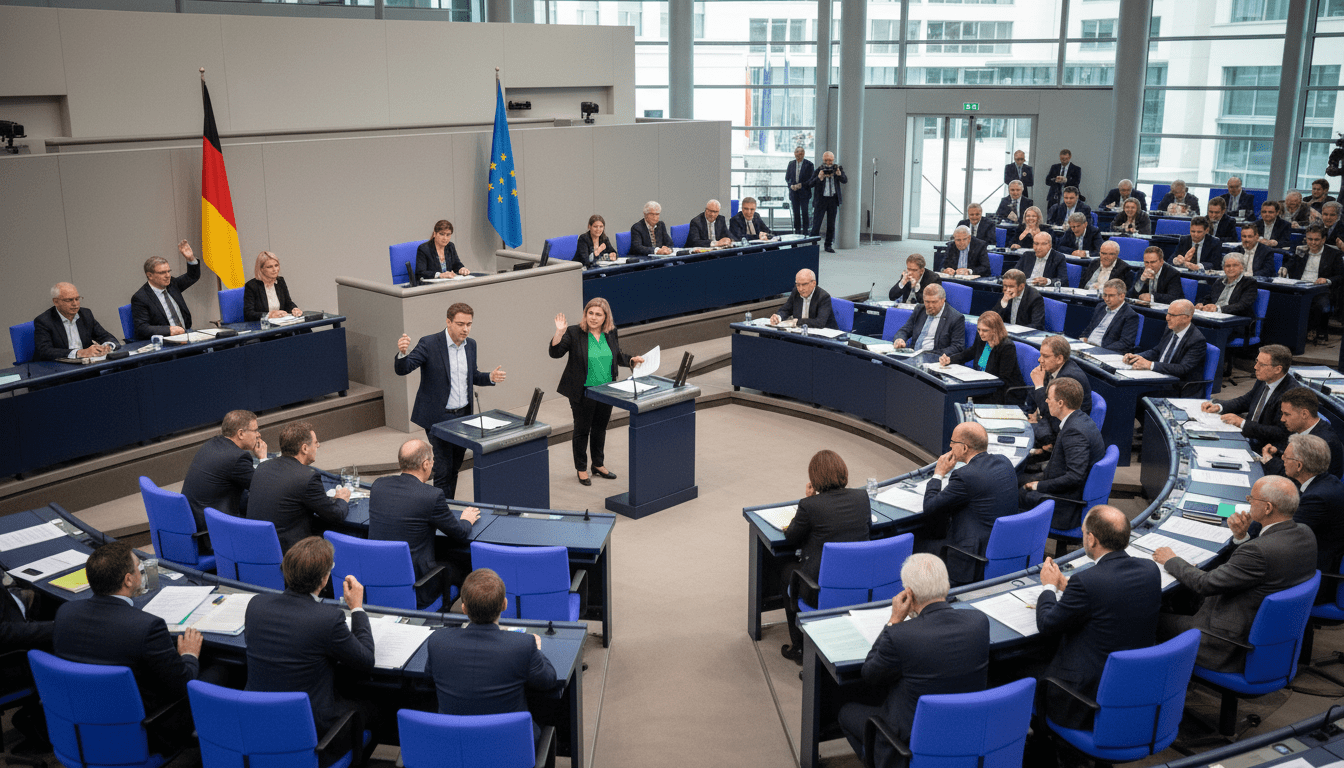
German Bundestag Debates Decriminalization of Fare Evasion as Greens and Left Advance Bills
Bundestag debated two rival bills on the decriminalization of fare evasion on Thursday, with Green and Left proposals seeking to reclassify riding without a ticket as an administrative offense. The push placed the SPD under visible pressure during a heated parliamentary debate.
Parliament Debated Two Competing Bills
The Bundestag discussion centered on two separate proposals from the Greens and The Left to remove criminal penalties for fare evasion, commonly known in Germany as Schwarzfahren. Both bills would convert the current criminal approach into fines or administrative measures, aiming to reduce criminal records for low-income travelers.
Lawmakers from both parties argued during the session that criminal sanctions can have disproportionate long-term consequences for offenders, including impacts on employment and housing. Opponents warned that decriminalization could undermine deterrence and complicate enforcement on public transport.
Green and Left Proposals Outline New Penalty Frameworks
The Green and Left drafts propose replacing imprisonment or criminal conviction with a structured administrative penalty regime and clearer procedures for issuing fines. Supporters contend the change would allow for graduated sanctions, social support measures, and stronger focus on prevention rather than punishment.
Both bills include provisions to prevent aggressive collection practices and to ensure that fines are proportionate and cognizant of income. The differences between the two texts are technical in some areas, prompting calls for compromise or a joint committee review to harmonize standards.
SPD Faces Internal Pressure and Strategic Choices
SPD lawmakers found themselves in a delicate position as the debate unfolded, with party members split between empathy-driven reform supporters and colleagues emphasizing public safety and enforceability. The parliamentary session made clear that parts of the SPD feel pushed by the Greens and The Left to adopt a more progressive stance.
Party strategists are weighing political risks ahead of committee votes, mindful that any alignment with decriminalization could attract criticism from centrist and conservative voters. At the same time, the SPD must consider broader coalition dynamics and local government perspectives on transit enforcement.
Legal Experts and Prosecutors Caution on Implementation
Legal commentators appearing or referenced in the debate cautioned that reclassification would require careful drafting to avoid loopholes and ensure consistent application. Prosecutors warned that replacing criminal charges with administrative procedures might shift burdens onto municipalities and transport operators ill-equipped to manage a spike in fines processing.
Experts also highlighted potential constitutional and procedural questions, including the administrative courts’ capacity to handle appeals and the need to safeguard due process for accused travelers. Supporters argued these issues are solvable through targeted legislative detail and investment in local administration.
Transport Operators and Cities Voice Practical Concerns
Representatives from municipal authorities and transport companies raised concerns about enforcement logistics, revenue implications, and passenger safety. Some operators said they fear higher rates of unpaid fines if the sanction is perceived as less severe, while cities emphasized the need for funding to expand inspection and collection infrastructure.
Public transport unions and driver associations urged lawmakers to consider frontline staff safety, calling for clear protocols around ticket checks and conflict de-escalation. Municipal leaders pressed for compensatory funding mechanisms should fare enforcement revenue decline.
Parliamentary Procedure and Next Steps
Parliamentary leaders signaled that both bills will be sent to relevant Bundestag committees for detailed review, where amendments and expert hearings are likely. Committee deliberations are expected to focus on aligning legal frameworks, administrative capacities, and social support provisions to accompany any shift away from criminal penalties.
A timetable for committee votes or a consolidated draft has not been set, and lawmakers indicated they will consult state and municipal stakeholders before moving to a final plenary decision. Observers expect negotiations to continue in the coming weeks as parties seek workable compromises.
The debate has reignited wider conversations about social policy, public security, and the role of judicial sanctions in everyday life. As the Bundestag proceeds to committee stages, lawmakers will need to reconcile legal precision with practical enforcement realities to determine whether the decriminalization of fare evasion will become law.
