
Olkiluoto Nuclear Waste Repository Set to Begin Operations as Finland Readies Final Permits
Finland’s Olkiluoto nuclear waste repository is expected to receive final approvals by summer 2026, paving the way for the first permanent deep geological storage of spent fuel in the world.
Immediate regulatory milestone
Posiva, the company developing the Olkiluoto nuclear waste repository, says regulators and permitting authorities are completing the final steps needed to permit operations by summer 2026. If approvals are issued as planned, the facility will begin receiving its first canisters of spent nuclear fuel from Finnish reactors for long-term disposal.
The planned timeline requires coordinated decisions from the national nuclear regulator and other oversight bodies, followed by operational readiness checks. Officials have emphasized that regulatory clearance is contingent on meeting strict safety and environmental conditions before emplacement begins.
Repository design and engineering
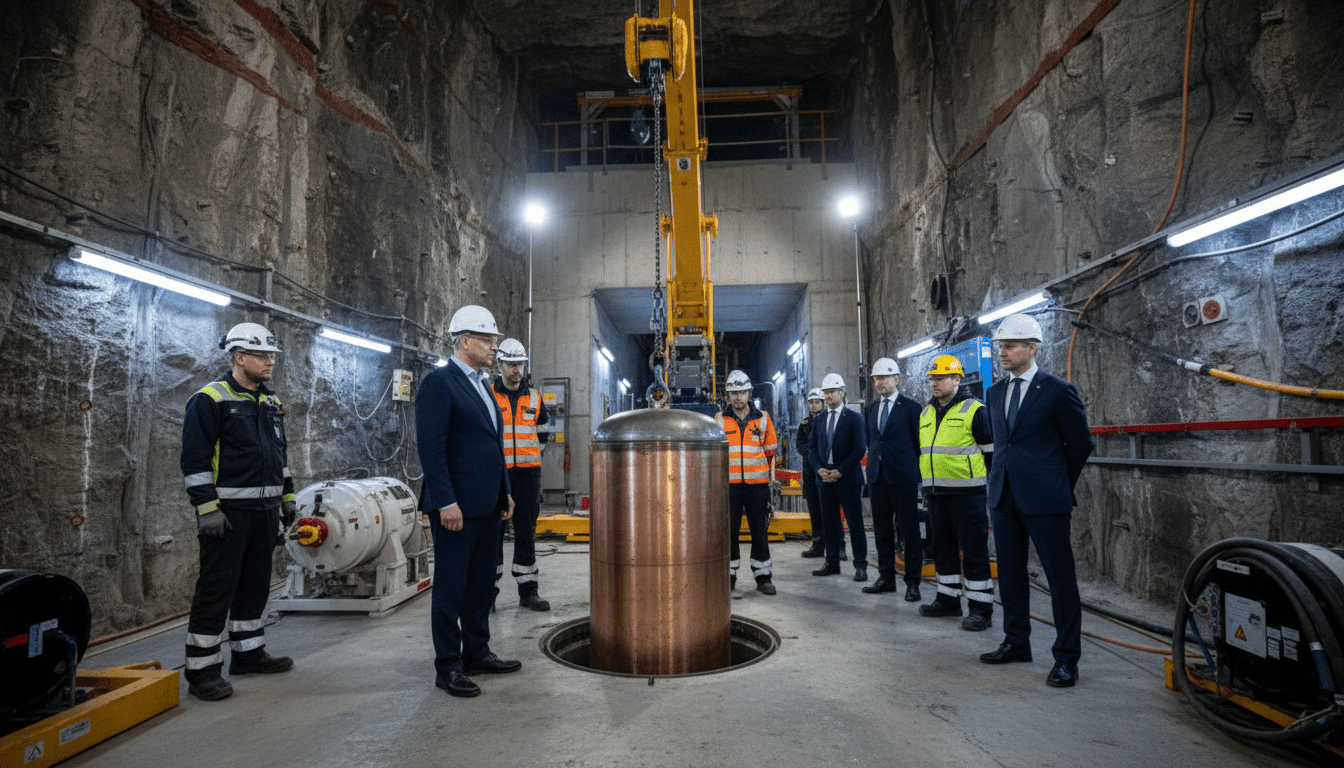
The Olkiluoto nuclear waste repository is built deep within stable crystalline bedrock on a peninsula in southwest Finland, using an underground facility known as Onkalo. Spent fuel will be encapsulated in corrosion-resistant copper and cast-iron containers designed to work together with the surrounding rock and engineered barriers to isolate radioactivity.
The repository combines multiple engineered and natural barriers to limit the movement of contaminants for geological timescales. Access tunnels and emplacement rooms have been excavated and outfitted to permit controlled placement of canisters while minimizing disturbance to the host rock.
Safety case and long-term isolation
Extensive safety assessments underpin the case for the Olkiluoto repository, relying on modeling of geological stability, groundwater flow, and material performance over thousands to hundreds of thousands of years. The multi-barrier approach — including copper canisters, bentonite clay buffers and the crystalline bedrock — is intended to delay or prevent the release of radioactivity to the surface environment.
Regulators require continuous review of monitoring data and regular safety updates during the facility’s operational phase. Independent oversight and periodic reassessment are built into the licensing framework to ensure that long-term performance assumptions remain valid as emplacement proceeds.
Transport, encapsulation and emplacement process
Before waste arrives at Olkiluoto, spent fuel will be transported from Finnish nuclear power stations to an encapsulation facility where it will be sealed inside engineered canisters. Transportation and handling systems are designed to minimize risk to workers and the public, and to maintain containment integrity throughout the supply chain.
Once encapsulated, canisters will be lowered into emplacement shafts and positioned in underground vaults, where they will be surrounded by compacted bentonite clay. The process is staged and deliberate, allowing inspections and testing at each step and enabling operators to pause or adjust procedures if any anomalies are detected.
Domestic and international significance
Finland’s progress toward opening the Olkiluoto nuclear waste repository marks a milestone with both national and international implications. Domestically, the project resolves a long-standing need for a permanent solution to store high-level radioactive waste produced by the country’s reactors.
Internationally, the facility is closely watched as a potential model for deep geological disposal, offering practical lessons on permitting, community engagement and long-term safety demonstration. The project has attracted scientific interest because it integrates long-term monitoring plans with a staged regulatory approach.
Community engagement and local oversight
Local municipalities and stakeholders have been involved in the project for decades, with public consultations and independent reviews forming part of the approval process. Officials say that ongoing communication with residents, landowners and local government will continue as emplacement operations commence.
Community oversight mechanisms and environmental safeguards will remain active during the operational phase, and Finnish authorities have emphasized transparency in reporting monitoring results. Those commitments aim to maintain public confidence while meeting the strict regulatory standards that govern nuclear waste management.
Next steps and long-term governance
If permits are finalized this summer, initial emplacement of spent fuel canisters will begin under a phased schedule combined with continuous regulatory inspections. Operators will implement a long-term monitoring program to track repository behavior and validate performance models over time.
Beyond operational readiness, long-term governance arrangements will address record-keeping, institutional memory and safeguards to ensure the site remains managed and understood for generations. The repository’s success will depend not only on engineering but also on sustained institutional oversight and public accountability.
As Finland moves toward inaugurating what would be the world’s first permanent deep geological repository for spent nuclear fuel, the coming months are likely to focus on final regulatory approvals, careful commissioning of systems and transparent communication with both domestic and international audiences.
