
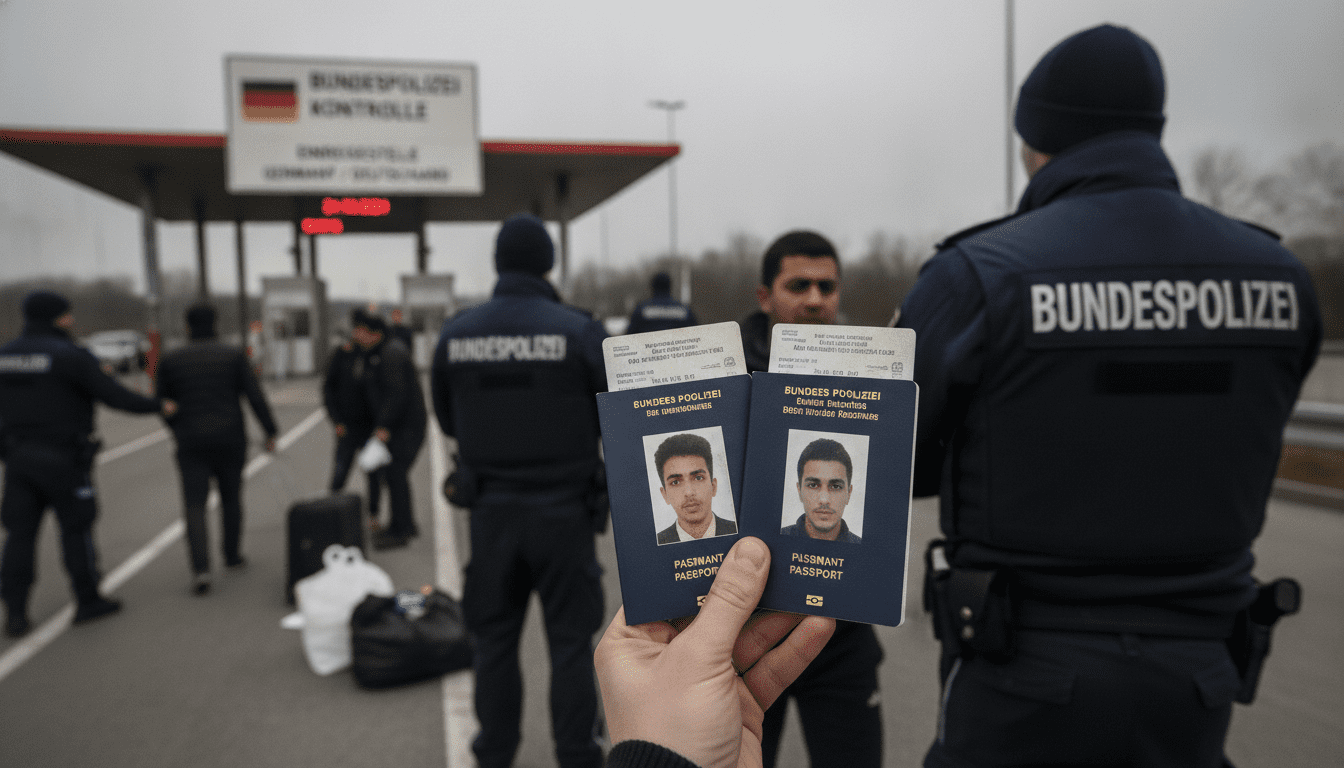
Lookalike ID misuse: Leipzig raid highlights risks of the “lookalike principle” in Germany
Leipzig raid exposes lookalike ID misuse and visa fraud in Germany. Bundespolizei details the ‘lookalike principle’ and expands document-check teams abroad.
A Leipzig police operation and federal statistics have brought renewed attention to lookalike ID misuse as a vector for illegal migration and visa fraud in Germany. The phenomenon, often dubbed the “lookalike principle,” involves people using genuine documents that belong to visually similar others to cross borders, and authorities say it presents growing practical and investigative challenges. The issue moved from anecdote to enforcement when a large-scale raid in April targeted alleged networks exploiting this method. Federal police figures and the deployment of specialist document advisers underscore how authorities are adapting to detect and deter the tactic.
Mistaken identity on the street illustrates the problem
A lighthearted case in Berlin — a politician repeatedly misidentified while riding an e-scooter — underscores how closely people can resemble one another and how that similarity can become consequential. What is amusing in public life can be exploited in more serious contexts when real identity documents are involved. Federal investigators caution that visual resemblance alone can be combined with genuine papers to produce apparently legitimate travel credentials. That mix of authenticity and deception complicates checks at borders and on aircraft.
Leipzig operation and alleged smuggling ring
In mid-April, roughly 1,000 officers of the Bundespolizei executed coordinated searches of about fifty apartments and business premises in Leipzig and surrounding towns. Authorities said the operation targeted some fifty Syrian nationals aged between 27 and 50 who were suspected of arranging for lookalikes to use valid residence-permitted passports to enter Germany. Investigators allege that in many cases Syrian passport holders in Germany sent their documents back to Syria — sometimes for payment — so others who resembled them could present the papers at departure points. The raid sought to disrupt those organizing or materially supporting that practice.
How the lookalike principle works in practice
The lookalike approach relies on the existence of an original, valid travel document and a person whose appearance approximates that of the document holder. Compared with producing high-quality forged papers, providing an authentic document to a similar-looking third party can be technically simpler. At airports or consular posts a visual check combined with documentary validation can be sufficient to allow boarding or visa issuance, which makes the method attractive to smugglers. Authorities say the tactic is used in both individual cases and as part of larger facilitation chains that can involve payments, intermediaries and coordination across borders.
Federal police deploy document and visa advisers abroad
To counter document misuse, the Bundespolizei has sent specialist document and visa advisers to German foreign missions and selected international airports. Around fifty such advisers are currently deployed worldwide, working on visa file checks, training airline staff and assisting local authorities in spotting irregularities. Their work includes instructing airline personnel on the telltale signs of tampering, from altered watermarks to barely perceptible color shifts. Officers also advise on procedural steps that can prevent onward travel when documents raise suspicion.
Detection techniques and evolving fraud methods
Advisers use a mix of technical inspection and practical heuristics to flag suspect documents, noting features such as microprinting, lamination seams and material sounds when a card is dropped to judge substrate composition. They also monitor changing trends in forgery and the market for genuine document circulation so training can be updated promptly. Fraudsters adjust their methods in response, which keeps detection a moving target and requires continuous learning and equipment upgrades by authorities. The goal remains to prevent travel that would facilitate irregular migration or criminal networks.
Scale of prevention and statistical blind spots
Federal police say the document advisers’ activities last year prevented roughly 35,500 unauthorized entries, with about 18,500 cases resulting in airlines refusing carriage after irregularities were detected. However, those figures capture only part of the picture: statistics record attempts where a document was used by another person, but they typically do not capture how often passport holders in Germany lend or sell their papers to others. For Syrian nationals specifically, authorities reported 42 exclusions last year for lookalike-related cases and 13 such exclusions in 2024. The majority of identified incidents occurred at airports in Amman, Damascus, Beirut and Erbil, with occasional detections in Istanbul and Doha.
Open questions for investigators and policymakers
Despite operational successes, investigators acknowledge limits in measuring the full extent of lookalike ID misuse. Data gaps persist because many transactions and document transfers occur out of sight of authorities, and secondary markets for genuine travel papers are difficult to trace. Policymakers face decisions about expanding international cooperation, investing in detection technology and strengthening penalties for those who facilitate document circulation. At the same time, civil liberties and consular access considerations must be balanced against stricter controls on mobility.
The Leipzig operation and the Bundespolizei’s deployment of overseas document advisers illustrate a broader enforcement posture that mixes targeted raids, preventive airline interventions and cross-border collaboration. As fraud methods evolve, German authorities say they will continue to refine training, share intelligence with partners and update technical capabilities to reduce the risk that genuine identity documents will be exploited under the lookalike principle.
