
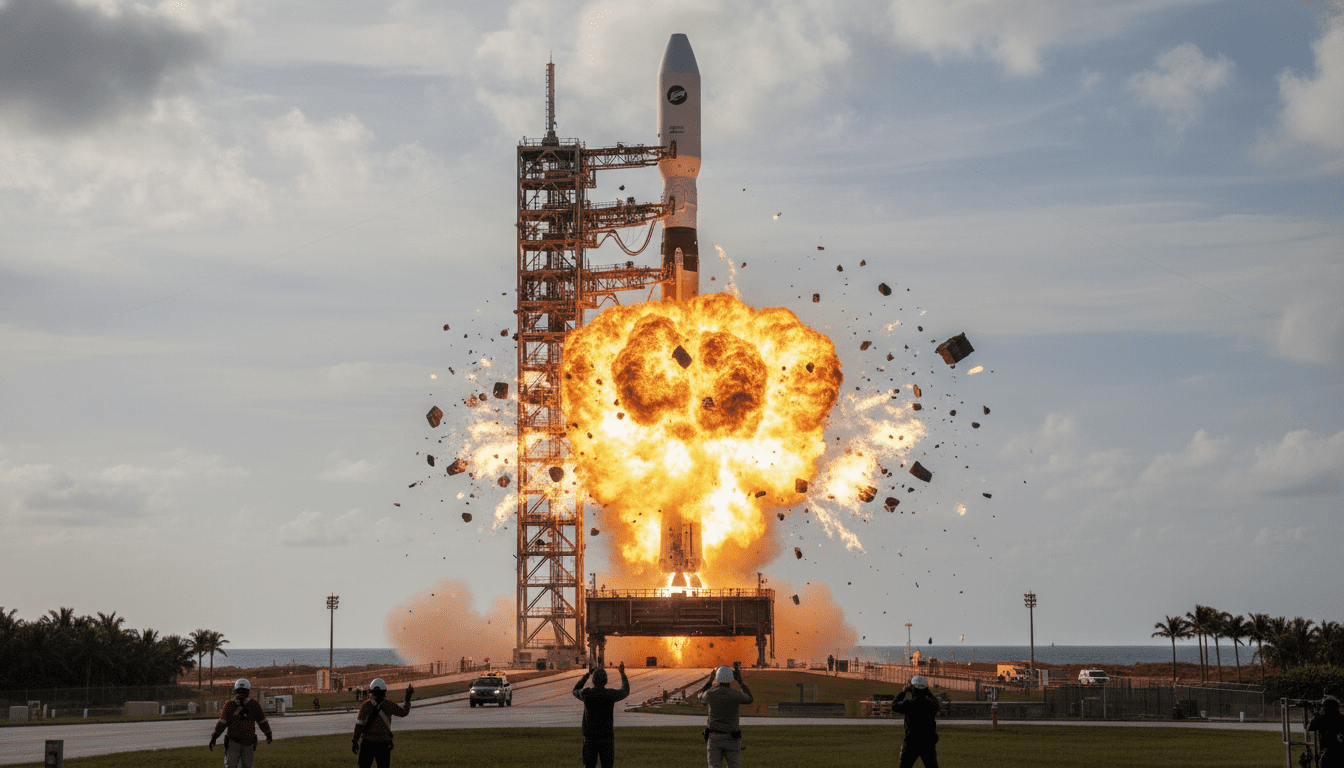
Blue Origin New Glenn explosion at Cape Canaveral damages launch pad and clouds Artemis plans
Blue Origin New Glenn explosion at Cape Canaveral produced a massive fireball, damaged the launch infrastructure and raised fresh questions about Artemis timelines and commercial satellite missions.
The New Glenn rocket built by Jeff Bezos’s Blue Origin suffered a catastrophic explosion during an engine test at its Cape Canaveral launch complex, producing a large fireball and severe damage to the pad. The Blue Origin New Glenn explosion occurred during an evening ground test and, according to the range operator, did not result in injuries. Company leadership has said the cause is unknown and promised to rebuild as investigators begin work.
Launch Pad Blast at Cape Canaveral
The incident took place on the company’s launch complex in Florida during a preflight engine test intended to prepare New Glenn for a planned mission next month. Video and eyewitness accounts from the site show an intense conflagration that engulfed the vehicle and surrounding structures within moments. Range authorities confirmed the demolition of significant pad infrastructure and restricted access to the facility while emergency crews extinguished the blaze.
Tests, Timing and Immediate Damage
Blue Origin had been preparing New Glenn to carry dozens of commercial satellites on a June flight, part of its effort to establish routine heavy‑lift launches. Company officials said the satellites were not mounted on the rocket at the time of the test, limiting the immediate commercial loss to hardware and the pad itself. Engineers will now face an initial damage assessment and a timeline to clear debris before any repairs or reconstruction can begin.
Investigation Underway, No Injuries Reported
Federal and company investigators have opened inquiries into the anomaly, and Blue Origin has pledged full cooperation with authorities to determine root causes. The launch range operator reported no injuries to personnel on site, and emergency services declared the area secure after the fire was brought under control. Blue Origin leaders have described the event as a serious setback but emphasized a commitment to restore operations and resume flights.
Consequences for Artemis Moon Program
The blast reverberates beyond Blue Origin’s operations because the company is a designated partner in NASA’s Artemis lunar architecture, expected to supply a lander element and heavy‑lift capabilities. Delays to New Glenn or further setbacks for commercial lander providers could complicate NASA’s plans to rehearse lunar rendezvous and landing operations in the latter half of this decade. NASA and other program stakeholders will need to assess schedule risk and contingency options as the investigation proceeds.
Effect on Amazon’s Planned Satellite Deployment
Blue Origin’s New Glenn was being readied to launch a batch of satellites intended to expand a commercial low‑Earth‑orbit internet network linked to the company’s founder. Those satellites were not aboard the rocket at the time, but the loss of launch infrastructure and a delay in New Glenn availability place additional pressure on the company’s and its partners’ deployment timetables. Operators that arrange rides on New Glenn will now need to review manifest schedules and alternative launch providers to meet contractual obligations.
Industry Context: New Glenn, Starship and Commercial Competition
New Glenn entered service only recently and has experienced a mix of outcomes on its early flights, including both successful orbital insertions and missions that missed targeted delivery points. Its troubles come amid ongoing test and regulatory activity elsewhere in the industry, where another commercial heavy‑lift system has also faced pauses while authorities probe recent test anomalies. The incident highlights the technical difficulty and operational risk inherent in next‑generation rockets as commercial firms scale up cadence and complexity.
Blue Origin’s chief executive reiterated a commitment to rebuild and return to flight testing, and peers in the sector offered sympathy and encouragement publicly. Market watchers will be watching how the company’s insurer, partners and NASA respond, and whether repairs and investigations will shift broader program schedules or commercial launch contracts.
As investigators work to identify the sequence of events that led to the New Glenn failure, industry officials and customers will be focused on the timeline for launch‑pad restoration and the technical fixes needed to prevent recurrence. The coming weeks are likely to bring more detailed assessments from Blue Origin and regulatory authorities, which will determine the pace at which the company can resume testing and rejoin the race to support Artemis and commercial satellite deployments.
