
Alexander Zverev diabetes incident in Halle linked to faulty glucose sensor and insulin error
Alexander Zverev diabetes incident in Halle: faulty glucose sensor and insulin error left the world No. 3 depleted in his semifinal, raising questions on rules.
Zverev links poor performance to a glucose-sensor malfunction
Alexander Zverev said a malfunctioning continuous glucose monitor and a subsequent insulin miscalculation left him physically exhausted during his semifinal defeat in Halle. The world No. 3, who has type 1 diabetes, explained that a sensor readout before the match gave an incorrect high value and led him to inject too much insulin. He described having to consume large amounts of sugar during play to counteract the drop, which in turn left him feeling unwell and fatigued.
Zverev framed the episode as a technical failure rather than a chronic fitness issue, stressing that sensor accuracy is critical for athletes who manage insulin on match days. His comments came after a three-set loss to Taylor Fritz, a match in which his movement and energy visibly declined. The sequence has prompted renewed attention to how medical devices are used and monitored in elite sport settings.
On-court symptoms and match chronology
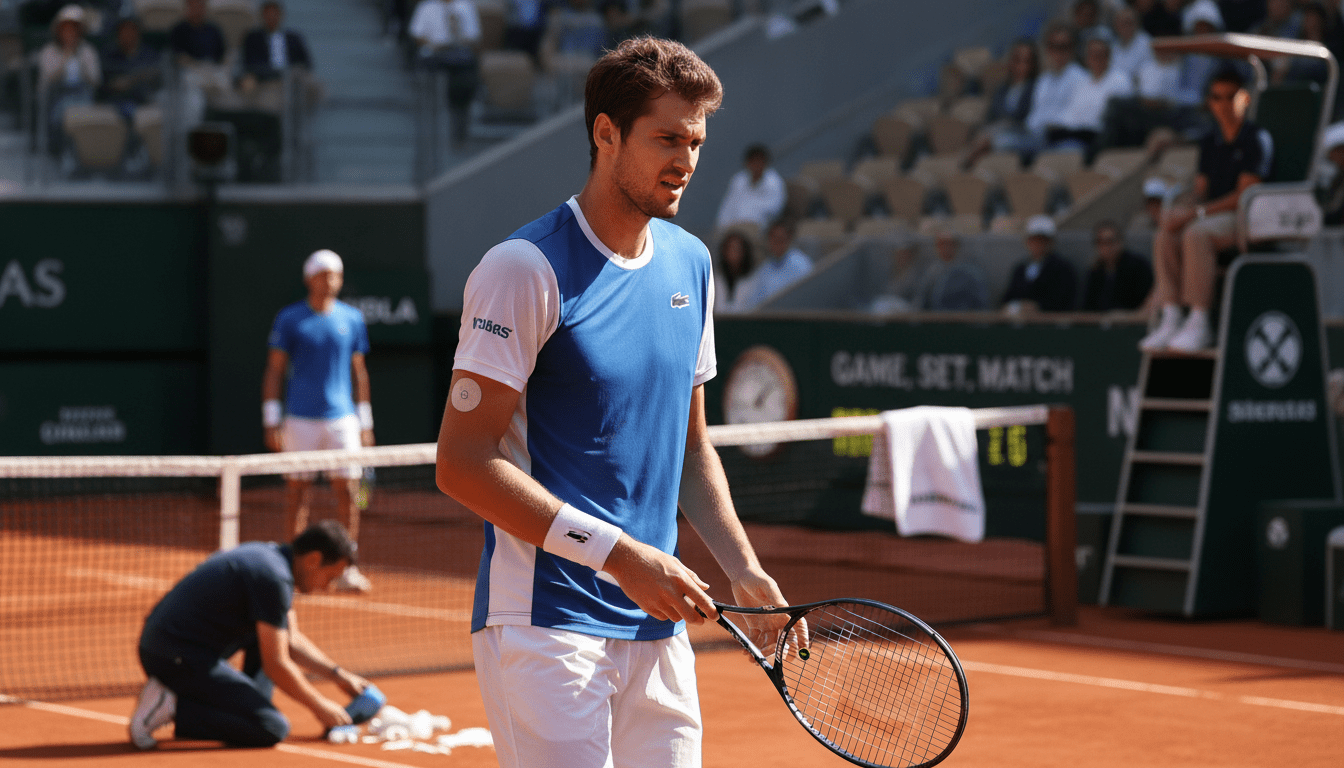
The match, played on grass in Halle, ended 7-6(4), 4-6, 5-7 in favor of Fritz after a tight opening set. Observers noted Zverev struggling physically: slowing between points, kneeling and seeking treatment mid-match before retreating to the locker room briefly. He later recounted drinking repeated doses of glucose gel and said he consumed the rough equivalent of several hundred grams of sugar to stave off hypoglycaemia.
Those symptoms, he said, began after the sensor initially signalled an anomalously high blood glucose level and he administered insulin accordingly. By the time the error became apparent, his measured blood sugar had already plunged and the rapid correction left him unable to sustain his usual intensity. Zverev acknowledged his opponent played better on the day but insisted his glucose episode was decisive.
Technical limits of continuous glucose monitors
Continuous glucose monitors (CGMs) are widely used by people with type 1 diabetes to track trends in interstitial glucose levels, but they can lag behind true blood glucose and occasionally produce inaccurate readings. Factors such as sensor calibration, placement, physical impact and environmental conditions can affect performance, leading to discrepancies between the device readout and actual blood glucose. For athletes who time insulin dosages and carbohydrate intake around competition, such mismatches carry immediate sporting and medical consequences.
Clinicians advise verification with fingerstick tests when readings do not match symptoms, and some athletes use redundant monitoring strategies during high-stakes events. Zverev’s account underscores the precarious balance between insulin dosing and carbohydrate replacement under competitive pressure, and highlights why sensor reliability is treated as a safety issue, not merely a convenience.
Public disclosure and charitable work on diabetes
Zverev disclosed his diagnosis of type 1 diabetes publicly in August 2022 after keeping the condition private for many years, and he subsequently established a foundation focused on children living with the disease. He has said he is reluctant to use his condition as an excuse for performance, and that he prefers to manage it without drawing attention during tournaments. The foundation work reflects an effort to use his profile to support young people facing the same medical challenges.
His openness around the episode in Halle was presented as part of that same effort to increase awareness, particularly about the complexities athletes face when managing insulin and glucose during competition. Zverev also pointed to the emotional and logistical strain that managing a chronic condition imposes on travel schedules, training routines and match preparation.
Questions about match-day medical procedures and regulation
The incident has prompted discussion about how tournament medical teams, officials and governing bodies handle insulin use and diabetes care courtside. Zverev’s experience — including his mid-match trip to the locker room and the use of rapid-acting sugar during play — has led some to call for clearer, standardized procedures to support players who require medical interventions during matches. Advocates argue that protocols should ensure both safety and minimal disruption to competition.
Tournament organizers face the challenge of balancing medical necessity with the flow of play, and of ensuring staff are trained to respond quickly to device inaccuracies and metabolic crises. For players who rely on CGMs and insulin, the stakes are high: a single faulty reading can force a cascade of corrective actions with immediate competitive and health implications.
Outlook for Wimbledon and Zverev’s plans
Zverev said he nonetheless enjoyed his time on the grass and remains optimistic about upcoming events, including Wimbledon, where he plans to compete after a short trip to a foundation event in Tyrol. He described the Halle episode as an anomaly in nine years of sensor use and expressed hope that the problem can be fixed or avoided going forward. The player emphasized that he will continue to manage his diabetes openly while aiming to return to form on the tour.
Coaches and medical staff around the circuit will likely incorporate the episode into their preparation for similar situations, and manufacturers of monitoring devices may face renewed pressure to validate performance under competitive conditions. For now, Zverev’s immediate focus appears to be recovery, refinement of his monitoring routine and the dual responsibilities of competition and advocacy.
Alexander Zverev remains scheduled to travel to London for the grass-court Grand Slam and has signalled confidence that better monitoring and routine adjustments will prevent a repeat of the sensor-driven insulin error that undermined his semifinal in Halle.
