
Ten Years After Brexit Vote, Britain Faces Lasting Economic Costs and Deep Political Division
Ten years after the June 23, 2016 Brexit referendum, new assessments and economic data show persistent GDP losses, trade frictions and shifting public attitudes in the United Kingdom.
The referendum that set Brexit in motion remains a defining turning point for British politics and economics, and its effects are still being measured a decade on. Economists point to weaker growth, a lower pound and reduced investment as structural legacies of leaving the European Union. Political divisions over the decision continue to shape policy debates and public opinion across the country.
Tea Room encounter and the mood of 2016
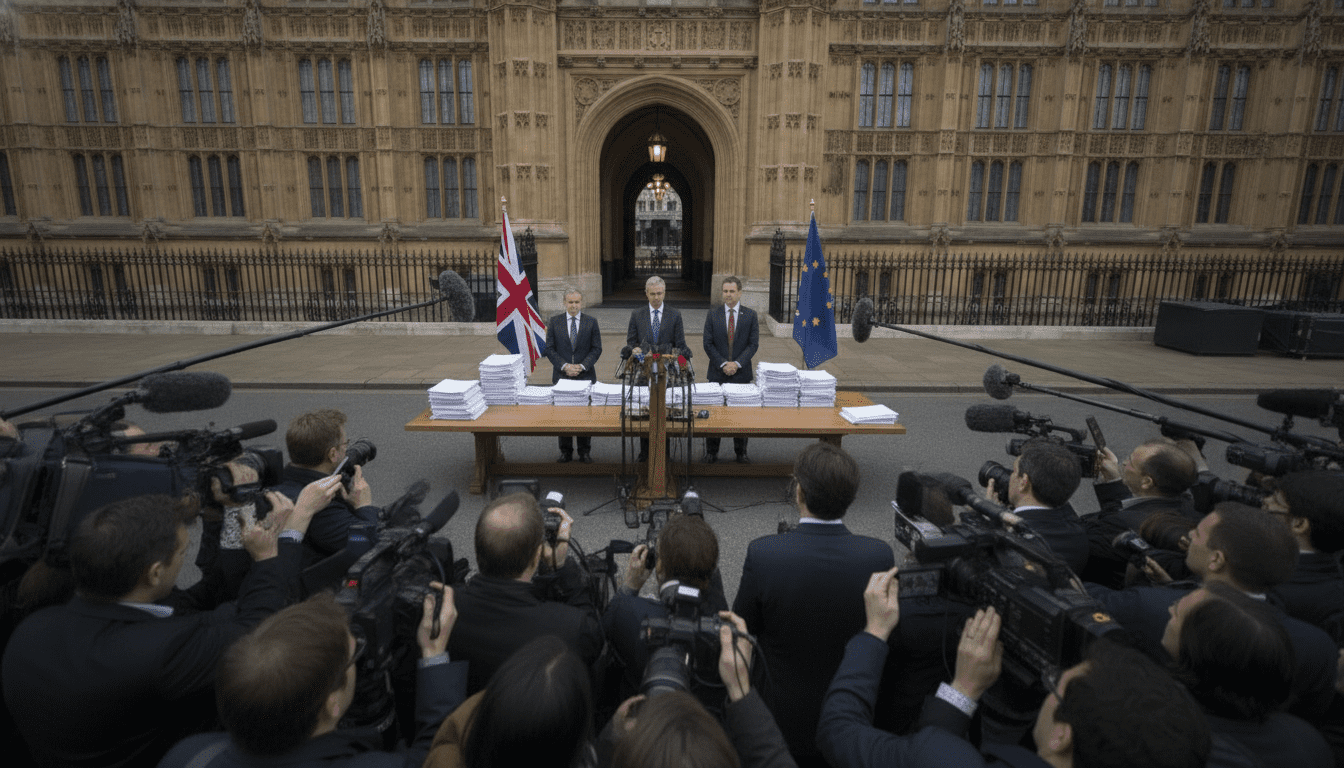
A decade ago, in July 2016, a high-profile meeting in the Tea Room of the House of Lords captured the confident mood among leading Brexit advocates. The late Nigel Lawson, a former chancellor and prominent supporter of leaving the EU, met journalists and argued that Britain could prosper outside the bloc on the back of freer global trade. That gathering came a few weeks after the shock of the June 23 referendum result, which handed Leave a narrow victory and set off years of political turmoil.
The referendum itself crystallized a wider political shift in Britain and beyond, at a moment when populist movements were rising internationally. For many Leave campaigners, the vote was a chance to reclaim national sovereignty and control migration, while opponents warned of long-term economic disruption.
Campaign promises on trade and immigration
During the 2016 campaign, proponents of Brexit frequently emphasized the potential for new global trade deals and the ability to restrict free movement of people from EU member states. Supporters argued that Britain would no longer need access to the single market to thrive and that an independent trade policy would increase opportunities with non-EU markets. Immigration was a central theme, with Leave campaigners promising greater control over who could live and work in the UK.
These promises shaped voter choices but proved difficult to reconcile in practice. Negotiators had to weigh immediate economic ties to the EU against political demands for regulatory autonomy, while the government sought to implement a new immigration system that balanced labor needs and public expectations.
Parliamentary battles and the formal exit
What followed the referendum was a prolonged period of political drama in Westminster as successive governments wrestled with how to enact the public vote. Divisions in Parliament over the terms and timeline of withdrawal led to repeated votes, changes in leadership and a protracted negotiation process with Brussels. Those domestic fights delayed clarity for businesses and investors and prolonged uncertainty for several years.
On January 31, 2020, the United Kingdom formally left the European Union, becoming the first and so far only member state to do so. But leaving the institutions of the EU did not remove economic complexity; Britain also exited the customs union and single market, and new checks and procedures began to affect trade with European partners.
Economic assessments and the NBER findings
A major retrospective assessment by the U.S. National Bureau of Economic Research cited in recent analysis finds that Brexit’s long-run economic hit has been larger than many earlier forecasts predicted. Researchers estimate that, had the UK remained in the EU, output per person would be roughly six to eight percent higher than current levels. The study points to reduced investment, lower productivity and ongoing trade frictions as primary channels of the loss.
Economists highlight that the NBER results attempt to isolate Brexit’s effect from other shocks, comparing Britain’s performance with that of a broad set of advanced economies affected by the pandemic and the energy crisis. The conclusion underscores that the referendum’s economic consequences were both significant and enduring.
Currency, trade patterns and business reaction
The British pound weakened sharply in the immediate aftermath of the 2016 vote and has not fully regained its pre-referendum level against the euro and the dollar. That depreciation has raised the cost of imports and added pressure on firms that rely on cross-border supply chains. Meanwhile, although EU countries remain the UK’s largest trading partners collectively, new non-tariff barriers have increased the friction and cost of doing business with the continent.
Business surveys and firm-level data reveal that many companies adjusted by reshoring, relocating some operations, or reducing investment in the UK market. The combination of regulatory change and persistent uncertainty contributed to a slower pace of capital formation than would have been expected under continued EU membership.
Migration shifts and labor market effects
One of the referendum’s central promises was to reduce migration from EU countries, and the data show a decline in EU-born residents in the years after the vote. However, that outcome was complicated by simultaneous increases in migration from non-EU countries, in part due to temporary adjustments to Britain’s immigration rules and continued demand for foreign labor. The net effect on the overall population and labor supply was therefore more mixed than Leave campaign rhetoric had suggested.
Certain sectors, notably health care, hospitality and agriculture, continued to rely on foreign workers, prompting policy makers to refine visa schemes and recruitment strategies. Firms facing labor shortages reported higher wage costs and difficulties scaling operations, factors that fed into the broader economic drag documented by researchers.
Public opinion and political prospects
A decade on, public sentiment about Brexit has shifted for many voters, with surveys indicating a growing share of Britons who would prefer closer ties with the EU than the current arrangement. Nevertheless, the subject remains politically contentious and unlikely to be reopened for formal reversal in the near term. Deep divisions persist within parties and across regions, complicating the prospect of major policy shifts back toward EU membership.
Political leaders continue to navigate the trade-offs between asserting sovereignty and mitigating economic costs, while opponents of Brexit press for pragmatic fixes to trade and migration problems arising from the split.
As Britain marks ten years since the referendum, the debate over Brexit’s legacy is no longer only ideological; it is increasingly grounded in measurable economic outcomes and everyday experiences of businesses and households. The coming years will test whether policy adjustments and international developments can alter the course charted by the 2016 vote or whether its economic and political consequences will remain a defining feature of British public life.
