
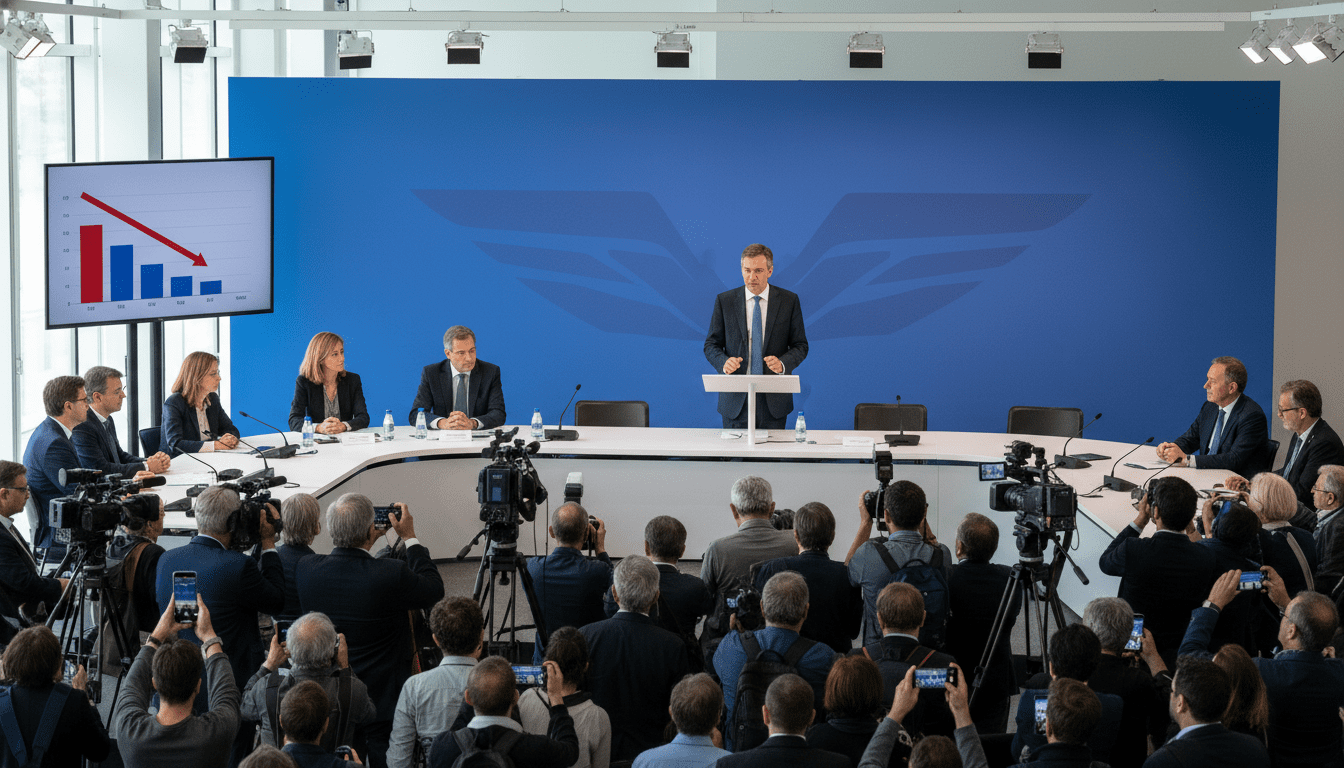
Airbus reports 52% drop in Q1 adjusted EBIT as deliveries stall
Airbus Q1: adjusted EBIT down 52% to €300M as Pratt & Whitney engine shortfalls and A320 fuselage defects cut deliveries; company keeps full-year targets.
Airbus posted a sharp decline in first-quarter profitability, with adjusted operating profit (EBIT) falling to €300 million, a 52 percent decrease from the prior-year period. The results reflect constrained aircraft deliveries and persistent production bottlenecks in the civil-aircraft division. Management said the shortfall was driven mainly by supplier engine shortages and remedial work on A320 fuselage panels, while reiterating full-year targets.
Adjusted earnings slump and divisional impact
The company’s adjusted EBIT slump was most pronounced in the civil-aircraft unit, where profitability dropped from €494 million to €81 million year-on-year. Helicopters also saw a decline, while the defence and space business delivered a notable rise that helped partially offset losses elsewhere. Overall, the first-quarter outcome underscored the uneven recovery across Airbus’ portfolio.
Pratt & Whitney engine shortages identified as bottleneck
Airbus management identified missing Pratt & Whitney engines as the principal constraint on its production ramp-up and delivery schedule. Executives said Pratt & Whitney will prioritise airlines’ requirements for the northern summer, with a heavier supply to Airbus expected in the second half of the year. Airbus maintains it has been negotiating with the US supplier but continues to face capacity and allocation limits.
A320 fuselage defect remediation delays deliveries
Manufacturing defects discovered in December affecting A320 fuselage panels added pressure to the production chain and will occupy engineering teams through the first half of the year. The corrective work, Airbus said, has already pushed some serial assembly and final acceptance steps back, delaying a slice of scheduled handovers. A related certification issue in China also shifted roughly twenty deliveries into the second quarter.
Management maintains full-year delivery and profit targets
Despite the weak opening quarter, Airbus reiterated its full-year goal of roughly 870 civil-aircraft deliveries and a €7.5 billion adjusted EBIT target. Company executives argued that revenue recognition in commercial aircraft largely aligns with deliveries, so timing shifts can depress quarterly results without necessarily derailing annual guidance. The finance chief described the Q1 performance as consistent with previously communicated expectations for the production ramp-up.
Supply-chain and geopolitical risks persist
Airbus warned that the wider operational environment remains “dynamic and complex,” noting potential knock-on risks from the Middle East conflict. While no direct impact on deliveries has been registered to date, the firm signalled concern that sustained regional instability could affect suppliers, logistics through the Strait of Hormuz and Gulf carriers’ order patterns. Airbus said it is examining alternative logistics routes and contingency measures to limit disruptions and additional costs.
Market reaction and industry comparison
Investors reacted to the profit setback by pricing in weaker near-term earnings, with Airbus’ market value retreating from January highs to a lower level in recent weeks. In industry terms, the US manufacturer Boeing outpaced Airbus in Q1 deliveries, an outcome that highlights competitive pressures in the commercial market. Airbus recorded one of its weakest first-quarter delivery totals in well over a decade, reinforcing the immediate urgency of resolving supplier and production issues.
Airbus expects deliveries and factory output to accelerate in the second half as engine supplies improve and fuselage repairs are completed, but the company cautions that execution risks remain. Management says it will continue to monitor supplier performance closely and adjust production sequences where necessary to protect the year-end targets.
