
Phlegraean Fields earthquake M4.7 near Naples injures 21, damages Pozzuoli after strong overnight aftershocks
Phlegraean Fields earthquake M4.7 struck near Naples overnight; aftershocks including M3.8 left 21 injured, damaged Pozzuoli and caused local power outages.
The Phlegraean Fields earthquake, a magnitude 4.7 tremor with an epicenter beneath the Phlegraean Fields west of Naples, rattled the region late in the evening and produced numerous aftershocks through the night, including a 3.8 event that authorities said was particularly strong. The seismic sequence was felt across municipalities surrounding the volcanic caldera and in the city of Naples itself, prompting residents to flee buildings and spend the night outdoors. Officials reported 21 people injured and concentrated damage in the coastal town of Pozzuoli, where falling masonry and tuff outcrops caused structural harm.
Seismological details and timeline
The National Institute of Geophysics and Volcanology (INGV) logged the main shock at magnitude 4.7 and recorded a series of aftershocks that continued into the morning, the largest measuring 3.8. Seismologists described the sequence as the most intense in the area in roughly 40 years, noting the event’s epicenter beneath the Phlegraean Fields volcanic complex. Monitoring teams maintained a heightened surveillance posture to track any changes in frequency or depth that could indicate evolving unrest.
Damage concentrated in Pozzuoli
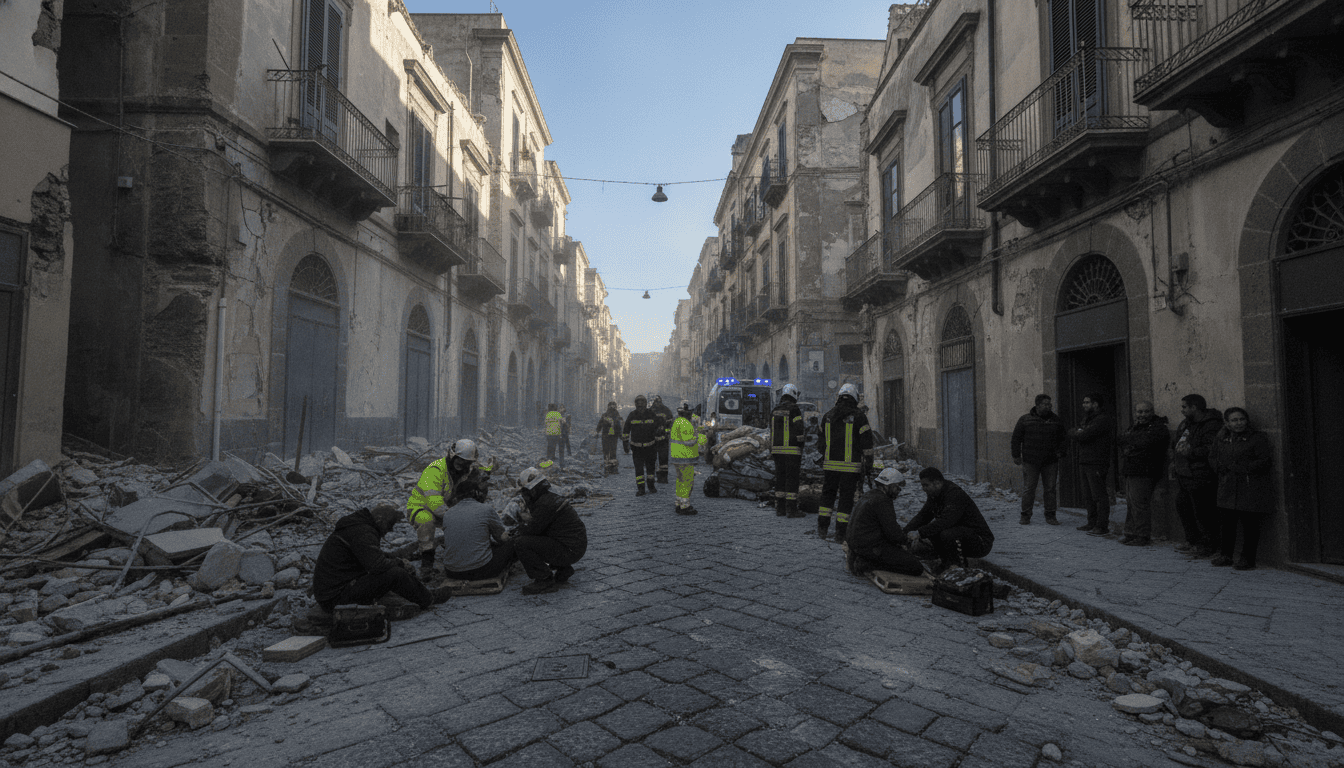
Local authorities said Pozzuoli suffered the greatest material impact, with sections of walls and building facades collapsing and blocks of volcanic tuff giving way on steep slopes above streets. Falling debris damaged cars and hit a number of buildings, leaving visible scarring on older masonry and historic structures. Emergency crews worked on-site to clear routes and secure unstable sections of wall to prevent further hazards as daylight revealed the full extent of the damage.
Human impact and immediate casualties
Authorities confirmed 21 injuries, most of them minor and resulting from falling debris or individuals who sustained injuries while evacuating buildings, and all were treated in local hospitals or outpatient facilities. Many residents across the affected towns, as well as inhabitants of Naples and the islands of Ischia and Procida, reported feeling the shocks strongly enough to leave their homes and spend the night on streets or in temporary outdoor shelters. Emergency services urged caution around damaged structures and advised people to avoid re-entering buildings until they had been inspected.
Disruptions to services and community response
Power outages were reported in several neighborhoods, compounding the disruption caused by the tremors and complicating early-morning assessment work for municipal teams. Municipal authorities mobilized civil protection units, police and volunteer groups to assist with evacuations, route clearance and the transport of vulnerable residents to safer locations. Road access was intermittently restricted while crews removed loose rubble and checked bridges and overpasses for damage, especially on approaches to Pozzuoli.
Authorities establish crisis centre and begin inspections
Local government officials established a crisis centre on the evening of the quake to coordinate rescue, medical response and structural assessments, and to centralize information for residents seeking assistance. Teams of engineers and building inspectors were deployed at first light to evaluate the safety of public buildings, schools and utilities infrastructure and to produce prioritized lists for repairs. Civil protection officials said they would publish guidance for residents on when it is safe to re-enter homes and how to report suspected structural failures.
Monitoring the Phlegraean Fields and volcanic risk oversight
The Phlegraean Fields area, a well-monitored volcanic caldera system, has a documented history of both seismic and volcanic unrest, and INGV emphasized that ongoing seismic monitoring is essential to distinguish between tectonic aftershocks and signals that might signal volcanic activity. Scientists are continuing to analyze seismic waveforms, depths and gas emission data collected before and after the main shock to refine assessments of the risk profile. For now, experts described the sequence as seismic in nature, while cautioning that surveillance would remain active until the activity subsided.
Emergency services continue to prioritize the safety of affected residents and to restore basic services as inspections proceed. Authorities have asked the public to follow official channels for verified information, to avoid unnecessary travel into damaged zones and to report any structural hazards to municipal hotlines. Additional updates are expected as engineers complete more thorough damage assessments and seismologists release further analysis of the night’s activity.
