
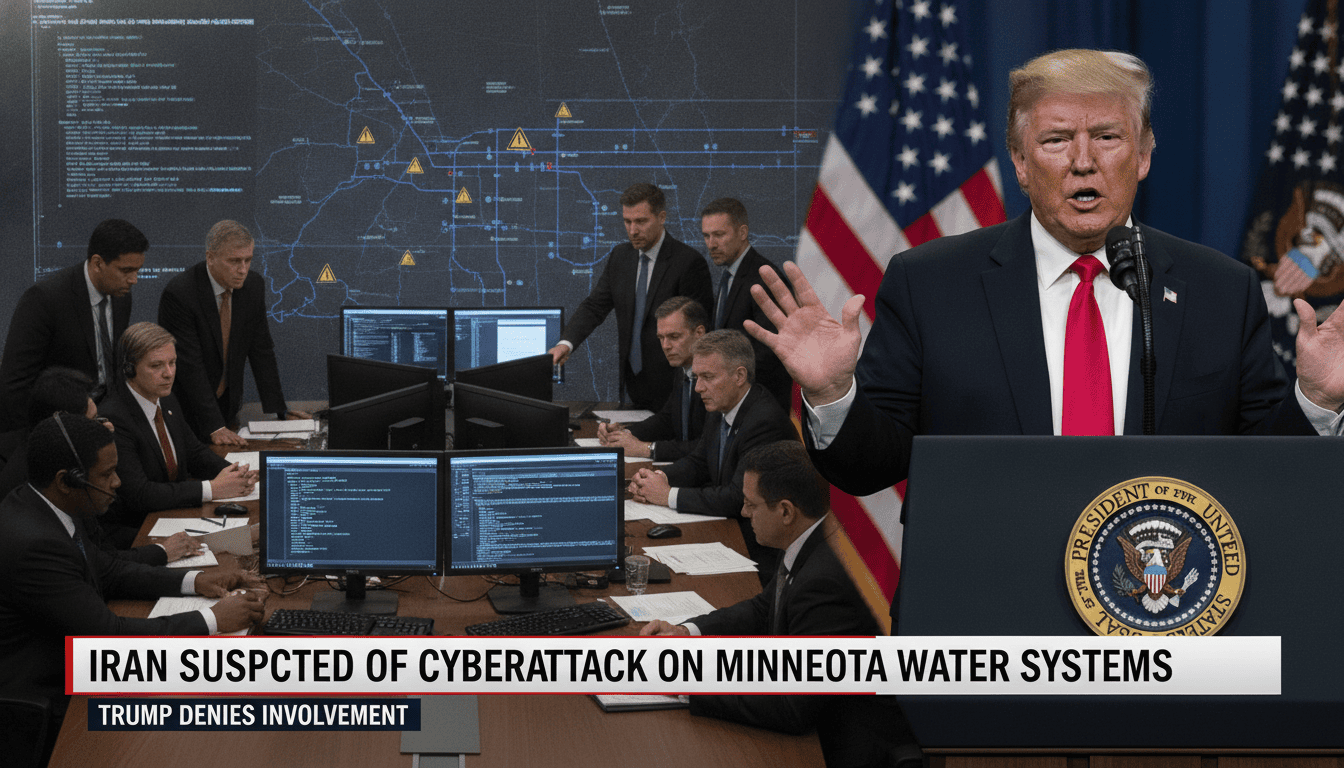
Iran cyberattack on Minnesota water systems reported as U.S. agencies probe breach
U.S. media report Iran may be behind a coordinated cyberattack on Minnesota water systems, with intelligence officials and state leaders offering conflicting assessments.
U.S. media outlets report that intelligence officials now consider an Iran cyberattack on Minnesota water systems a likely explanation for a coordinated intrusion that targeted dozens of local utilities earlier this week. The Washington Post and the New York Times, citing U.S. officials and investigators, said assessments point toward Iranian-linked hacking groups, though they emphasized the findings are not final. At least one water system was briefly taken offline, and authorities say there is no current public advisory to alter drinking water consumption.
Intelligence officials identify likely foreign actors
Officials briefed by U.S. intelligence described a pattern of activity across multiple utilities that, according to those officials, aligns with techniques attributed to Iranian state-sponsored or proxy groups. Reporting indicated that analysts found commonalities in malware signatures and intrusion methods that led them to narrow the focus toward Tehran-linked actors.
Those same officials cautioned that the intelligence community’s conclusions are provisional and subject to further forensic work. Investigators emphasized the need to corroborate network logs and trace command-and-control infrastructure before making a definitive public attribution.
Scope of the intrusions across Minnesota utilities
Federal and state sources said the incidents affected dozens of water systems across Minnesota, from small municipal suppliers to larger regional utilities, though most disruptions were described as limited in duration and scope. The targeted systems reportedly experienced unauthorized access to operational networks and administrative interfaces used to monitor and manage water treatment and distribution.
Investigators said the breaches appeared coordinated in timing and method, suggesting a single campaign rather than unrelated opportunistic intrusions. Public utility operators have been asked to review access logs, patch vulnerable systems, and implement additional monitoring while the probe continues.
Operational impact and public safety messaging
Authorities reported that at least one system was temporarily offline following the incident but there has been no broad directive for residents to change their water use. State and local public health officials have indicated that treatment processes were not compromised in a way that currently endangers water quality, and routine testing continues.
Emergency response teams and utility managers have stepped up inspections and contingency planning to ensure continuity of service. Officials also urged customers to report any outages or unusual water characteristics while investigations proceed.
President’s remarks at Camp David draw scrutiny
Speaking at a Cabinet meeting at Camp David, President Donald Trump disputed media reports tying Iran to the breach and said he believed responsibility lay with Minnesota state leadership and its governor, Tim Walz. The President criticized the state’s handling of infrastructure security and suggested political blame rather than foreign culpability.
The remarks drew attention because they diverged from the assessments reported by U.S. newspapers and some intelligence officials. White House and administration spokespeople did not immediately provide additional evidence to support the President’s public position.
Minnesota officials respond and demand clarity
Governor Tim Walz and state cybersecurity officials rejected immediate blame and called for a thorough federal investigation to establish the facts. Minnesota leaders emphasized coordination with the Department of Homeland Security and federal partners to secure systems and determine the full extent of the intrusion.
State agencies also highlighted investments in critical infrastructure protection and urged federal agencies to share all relevant intelligence that could help local operators harden their networks. Local utility managers expressed frustration at conflicting public statements while they focus on restoring and safeguarding service.
Federal probe and international implications
Federal investigators from agencies including the FBI, the Cybersecurity and Infrastructure Security Agency, and intelligence community elements have mobilized to conduct a forensic examination of affected networks. Officials said they will seek to link indicators of compromise to known threat actor profiles and to determine whether the campaign represents part of broader geopolitical operations.
If a state actor is conclusively identified, the incident could prompt diplomatic and policy responses and raise questions about the protection of civilian infrastructure. Cybersecurity experts warned that attribution is technically complex and typically requires corroborating technical, human intelligence, and signal intelligence sources before reaching a final judgment.
The investigation into the intrusion remains active, with U.S. authorities balancing rapid remedial action for utilities against the careful analysis required for confident attribution; officials stressed that conclusions could change as new evidence is collected and examined.
