
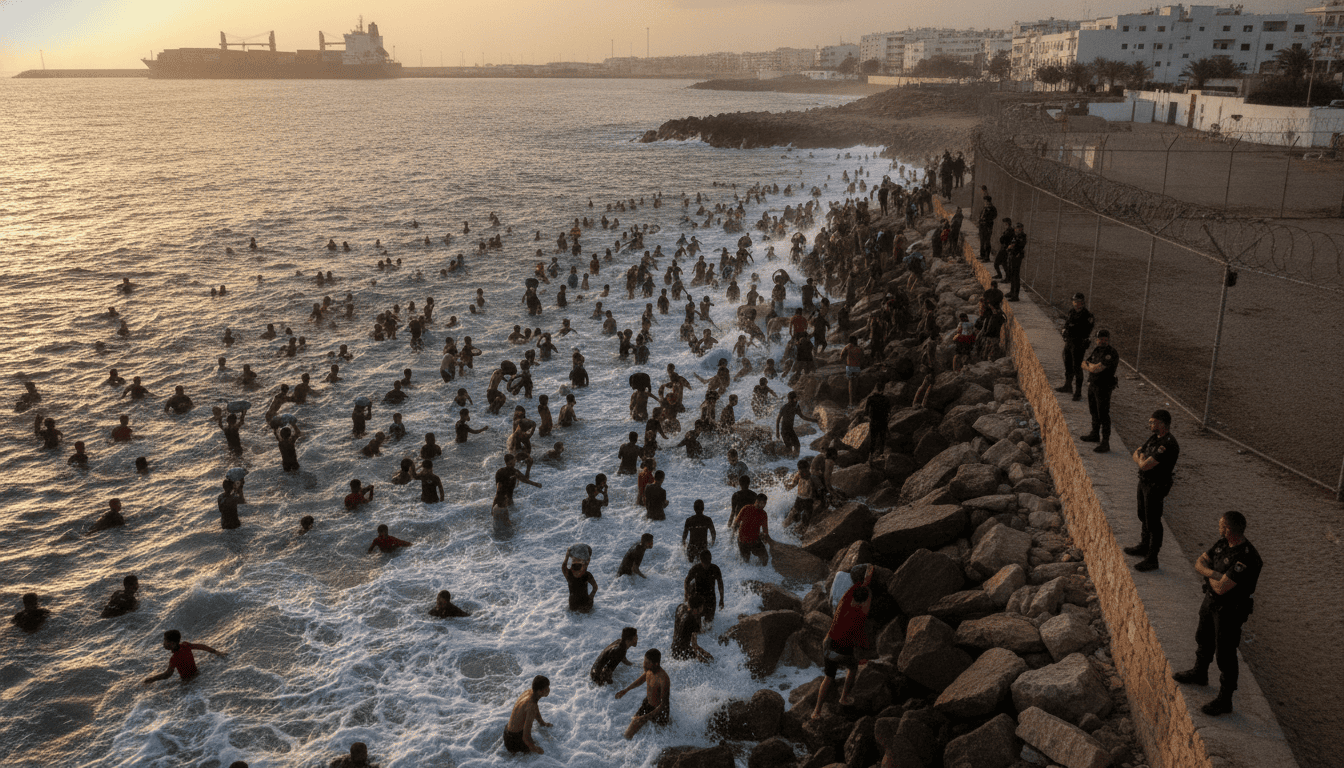
Ceuta migrant surge: tens of thousands cross from Morocco in chaotic weekend influx
Hundreds to tens of thousands of migrants arrived in Ceuta over recent days, many swimming from Morocco or passing through border gates in scenes captured on video, in what officials described as a dramatic surge that overwhelmed local capacity. The Ceuta migrant surge saw people arriving barefoot or in swimwear, cheering as they reached Spanish territory, according to local and international reports. (apnews.com)
Thousands reach Ceuta by sea and across border gates
Video footage circulating on social media and carried by news outlets showed groups of people wading ashore, some using inflatable rings, others running through openings in the barrier that marks the border with Morocco. Local authorities and journalists reported waves of arrivals concentrated along the Tarajal area and other beaches south of the enclave. (youtube.com)
Officials in Ceuta gave widely varying counts as the situation evolved, with some local sources citing tens of thousands of entries within a short period and national figures still being reconciled. Authorities said many migrants later left Ceuta of their own accord, complicating efforts to determine a definitive total. (apnews.com)
Limited pushback alleged from Moroccan and Spanish forces
Multiple reports said Moroccan security personnel did not systematically prevent the groups from approaching the coast, and that Spanish law-enforcement units on the ground — including the Guardia Civil — initially made few arrests or interventions as the crossings continued. Those accounts have prompted scrutiny of policing decisions on both sides of the border as officials work to explain how a mass arrival unfolded so rapidly. (apnews.com)
Legal constraints and recent court rulings have altered how some Spanish forces respond at sea, with a recent court decision curbing the long-standing practice of instantaneous at-sea expulsions. That legal backdrop has been cited by officials as a complicating factor in operational responses to simultaneous mass arrivals. (eldiario.es)
Deaths reported as emergency services struggle to respond
Authorities in Ceuta reported a rising death toll after large groups attempted to reach the enclave by swimming or scrambling over breakwaters, with national media citing dozens of recovered bodies. Local hospitals and emergency teams were stretched as officials counted casualties and treated hypothermia, injuries and dehydration among those who made landfall. (elpais.com)
The spike in fatalities prompted urgent appeals from municipal leaders for reinforcements and for a coordinated state-level response to safeguard lives and restore order. Civil protection and health services said they were prioritising triage and repatriation logistics while attempting to identify minors and vulnerable people among the arrivals. (elpais.com)
Madrid deploys military support and national officials visit Ceuta
Madrid announced the deployment of military personnel to assist border security and logistics, and senior government figures travelled to Ceuta to assess the situation on the ground. Prime Minister Pedro Sánchez visited the enclave and described the episodes as a violation of Spain’s territorial integrity while pledging state resources to manage the crisis. (apnews.com)
Ceuta’s local assembly and municipal leaders called for a national emergency declaration and the establishment of a single command structure to coordinate security, health and repatriation efforts. Political leaders across the spectrum urged faster action to prevent further loss of life and to stabilise the border. (lemonde.fr)
City infrastructure and services pushed beyond capacity
Ceuta, an autonomous Spanish city with a population under 100,000, saw its reception and containment resources rapidly overwhelmed as the influx surged. Officials said temporary reception centres, health facilities and police stations were quickly at or beyond capacity, prompting transfers and emergency coordination with mainland agencies. (elpais.com)
Local NGOs and international actors warned of urgent humanitarian needs, particularly for unaccompanied minors and people arriving in poor physical condition after long swims or chaotic crossings. Organisations on the ground called for clear protocols to identify and protect the most vulnerable while processing returns and asylum claims. (apnews.com)
Regional tensions and policy debate intensify
The mass arrivals have reignited long-running tensions between Madrid and Rabat over migration control and border management, reviving memories of earlier crises in recent years. Political commentators and diplomatic sources warned that the incident could complicate bilateral cooperation on migration, trade and security unless both capitals engage rapidly to de-escalate. (lemonde.fr)
Across Spain, the event has sharpened domestic debate about border strategy, asylum procedures and the capacity of EU member states to coordinate responses to sudden migration surges. Some regional leaders demanded stricter controls and immediate repatriations, while rights groups pressed for humane reception and due process for those seeking protection. (apnews.com)
Humanitarian actors and Spanish authorities say the immediate priorities are to secure the border, treat the injured and account for those who have gone missing, while simultaneously reopening diplomatic channels with Moroccan counterparts to prevent further uncontrolled crossings.
