
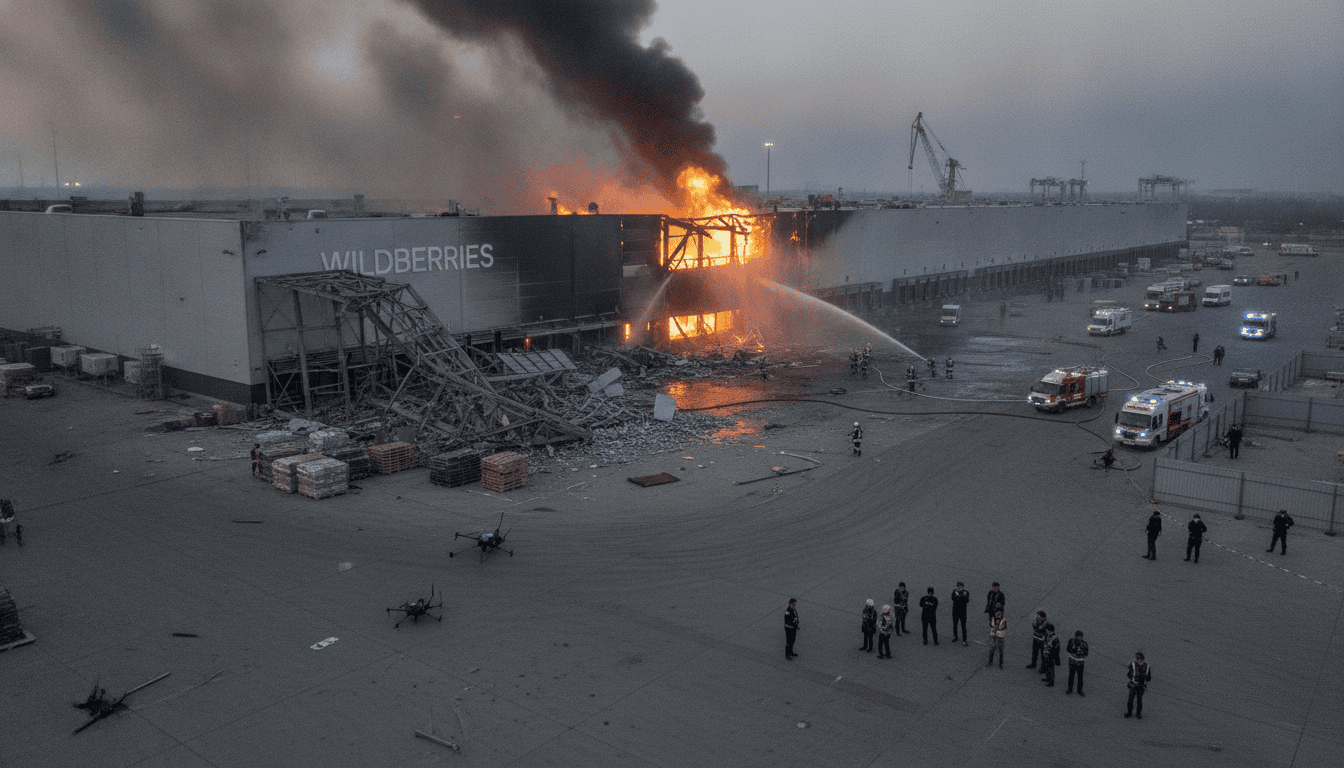
Wildberries drone attacks escalate as warehouses burn across Russia
Drone strikes on Wildberries logistics centers escalate in Russia, sparking warehouse fires, heavy seller losses and growing financial pressure on banks and state.
Since July 18, 2026, a wave of Ukrainian drone attacks has repeatedly struck warehouses operated by Wildberries, Russia’s largest online marketplace, culminating in new fires during the night of July 31, 2026. The latest incidents include a blaze at a Wildberries distribution hub in Volgograd and an attempted strike on a facility in Selenodolsk, Tatarstan, which reportedly failed. Earlier rounds of strikes on July 30 hit storage sites in Penza region, Sarapul in Udmurtia and Perm in the Urals, forcing operations to halt at multiple locations. The assaults follow a pattern that Kyiv’s forces say targets logistics that supply Russian military use, while causing mounting civilian and commercial damage.
Geography of the campaign
The attacks have affected a broad swathe of Russia, from facilities near Moscow to warehouses in the south and northwest of the country. Wildberries’ fulfillment centers in Elektrostal and Kotovsk were among the first to be hit in mid-July, and subsequent strikes have been reported in Voronezh, Krasnodar, Newinnomyssk and two sites in Saint Petersburg. Many of the damaged hubs have been put out of service, producing billowing plumes of black smoke that have become a recurring summer image. Observers say the targeting has been selective, focusing on the company’s large, centralized fulfillment halls rather than smaller local outlets.
Damage dynamics inside fulfillment halls
Experts warn that modern e-commerce warehouses are particularly vulnerable to drone-borne explosives because goods are densely packed on pallets in cardboard, plastic and wood packaging. A single incendiary device can ignite highly flammable stock that is stored closely together and spread rapidly through ventilated aisles. Wildberries built roughly 25 major fulfillment centers to serve sellers and customers nationwide, and those hubs have become preferred targets because they concentrate inventory and logistics capacity. Insurers typically exclude losses from such attacks, leaving companies and sellers exposed to uninsured fire and blast damage.
Economic exposure and bank risk
Analysts point to Wildberries’ deep financial entanglements with Russia’s banking sector as a source of systemic risk if disruptions persist. Exiled media outlets have estimated RWB — the holding linked to Wildberries after its 2024 merger with outdoor advertising firm Russ — carried liabilities exceeding €14 billion at the end of 2025, with more than €5.4 billion owed to state-owned VTB. Fire Point CEO Denys Schtilerman has publicly suggested the objective of undermining lenders that have large exposures to Wildberries, arguing that loans tied to the retailer could become unrecoverable. Those calculations have elevated worries inside Moscow about potential knock-on effects for banks and the broader economy.
Sellers’ losses and calls for relief
Thousands of small and medium-sized entrepreneurs who list products through Wildberries say they have suffered direct losses as inventory burned or became inaccessible. Many “sellers” operate on slim margins and rely on rapid turnover, receiving payment from Wildberries weeks after sales. Entrepreneurs claim payouts from the platform have been limited and slow; a previous warehouse fire in January 2024 prompted roughly €360 million in compensation but left many vendors dissatisfied and pursuing legal claims. Small business owners now appeal to authorities for tax relief, loan moratoria and direct support to prevent bankruptcies and preserve tax revenues that would be lost if wholesale closures occur.
Wildberries’ operational and corporate response
Wildberries has publicly signalled measures to reroute logistics flows, activate thousands of smaller sorting centers and shift away from concentrated fulfillment to a more distributed model. The company has told partners it will offer voluntary credits and “sale-simulator” calculations to determine compensation, though many sellers report only modest credits that cover a fraction of losses. Wildberries’ terms of service disavow liability for damages caused by drones as force majeure, a stance competitors such as Ozon have mirrored. At the corporate level, the group’s 2024 merger and the subsequent creation of RWB have further complicated the picture; critics and market watchers note a complex ownership web and large dividend transfers reported by some exile outlets.
State deliberations and political implications
Russian authorities have signalled discussions with banks and Wildberries’ management about possible support, but spokespeople say no concrete decisions have been made. Reuters reported that the government is examining options to help the platform and associated entrepreneurs, a step that would likely involve state banks and potentially the central bank. The linkage between major marketplaces and state lenders has taken on political significance, with officials portraying domestic e-commerce as a strategic sector even as strikes expose its vulnerabilities. Some voices in business and politics view tailored assistance as necessary to avert broader economic fallout, while others warn that intervention would deepen the fiscal burden amid ongoing security and budgetary strains.
The drone campaign has rapidly shifted what had been a logistical and commercial efficiency advantage into a pressing security and financial crisis for Russia’s e-commerce ecosystem. Wildberries’ centralized fulfillment architecture, heavy bank exposure and the dependence of thousands of small sellers on the platform leave the company and the wider economy grappling with immediate losses and difficult policy choices.
