
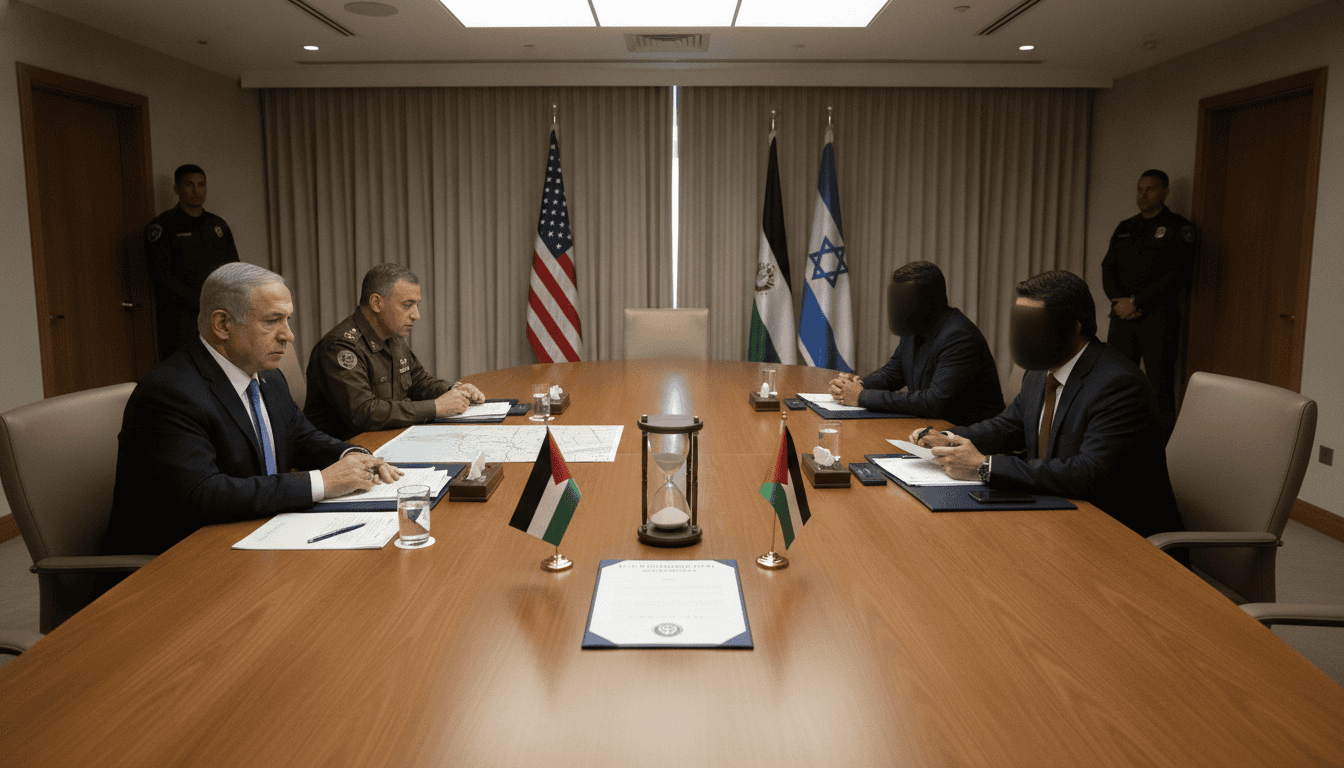
US-Backed Gaza Political Transition Roadmap Sets 14-Day Deadline for Final Talks
US-backed Gaza political transition roadmap gives Hamas and Israel 14 days to finalise terms before disarmament and a three-year demilitarisation plan.
Under a US-backed proposal unveiled on July 31, 2026, Hamas and Israel would have 14 days to reach agreement on a Gaza political transition before steps toward disarmament and Israeli withdrawal begin. The plan frames a three-year phased transition intended to result in a demilitarised Gaza with international monitoring and staged security handovers. U.S. officials described the proposal as time-bound and conditional, tying each phase to verifiable actions on the ground. Diplomats in Washington signalled that the measure is designed to accelerate a negotiated exit from active hostilities and a long term political settlement.
US-backed plan gives 14-day window for Gaza political transition
The roadmap requires both sides to finalise political arrangements within a 14-day window from the plan’s activation, according to senior U.S. briefings. That period is intended for agreement on interim governance, checkpoints, and immediate humanitarian corridors before any disarmament begins. U.S. negotiators say the compressed timetable is meant to limit opportunities for spoilers and to create momentum for subsequent phases. Critics caution that an extremely tight schedule may be difficult to meet amid deep mistrust and ongoing security concerns.
Three-year timetable aims to demilitarise Gaza
The core of the proposal is a three-year transition that gradually reduces militant capabilities while building civilian institutions and security forces under international oversight. Early phases prioritise the removal of heavy weaponry and dismantling of command nodes, followed by longer term measures to prevent rearmament. Parallel reconstruction and governance support are planned to stabilise civilian life and create incentives for compliance. The U.S. framework links the pace of demilitarisation to benchmarks in governance, humanitarian access, and security sector reform.
Sequence before disarmament and Israeli withdrawal
Under the roadmap, disarmament by armed groups is the precondition for phased Israeli withdrawal from occupied positions and checkpoints. The sequence envisages initial handovers of specific areas and responsibilities to an interim authority while international monitors verify compliance. Withdrawal is not automatic and will be calibrated according to verification reports and security conditions. U.S. officials have stressed that disarmament must be verifiable and irreversible to protect civilians and prevent renewed hostilities.
International actors to monitor transition and compliance
The proposal assigns a central role to an international monitoring mechanism to oversee arms reductions, border controls, and the implementation of civic reforms. Potential participants named in briefings include a coalition of Western and regional states along with United Nations observers, though final composition remains to be negotiated. Monitoring teams would report regularly on benchmarks and have authority to recommend corrective measures if violations occur. Backers argue that independent verification is essential to build trust and to provide objective grounds for phased actions.
Palestinian governance and security arrangements outlined
The roadmap calls for an interim governance structure in Gaza that includes both local representatives and external guarantors to administer services and security during the transition. Plans indicate that civil policing and internal security would be reformed and trained with international support, while political pathways toward longer term arrangements would be explored. Economic and humanitarian components are tied to security benchmarks to ensure aid reaches civilians promptly. Observers caution that durable governance will require inclusive political negotiations beyond the initial technical arrangements.
Political hurdles and risks for implementation
Analysts warn that the plan faces significant political obstacles including distrust between parties, opposition from hardliners, and regional rivalries that could undermine compliance. Implementation will likely depend on sustained diplomatic pressure, clear incentives, and contingency plans to deter violations. The tight 14-day initial window raises particular concerns that negotiations could collapse before disarmament commitments are secured. Any failure in early stages risks plunging the territory back into violence and complicating future mediation efforts.
If accepted by both sides, the roadmap would mark a significant international effort to move Gaza from active conflict toward a monitored, demilitarised status and a defined political transition. The coming days and weeks will determine whether the compressed timetable produces agreement or further entrenches stalemate, with international monitors poised to assess progress against the plan’s benchmarks. Observers say the success of the initiative will hinge on verification, external support for reconstruction, and the political will of regional stakeholders to enforce commitments.
