
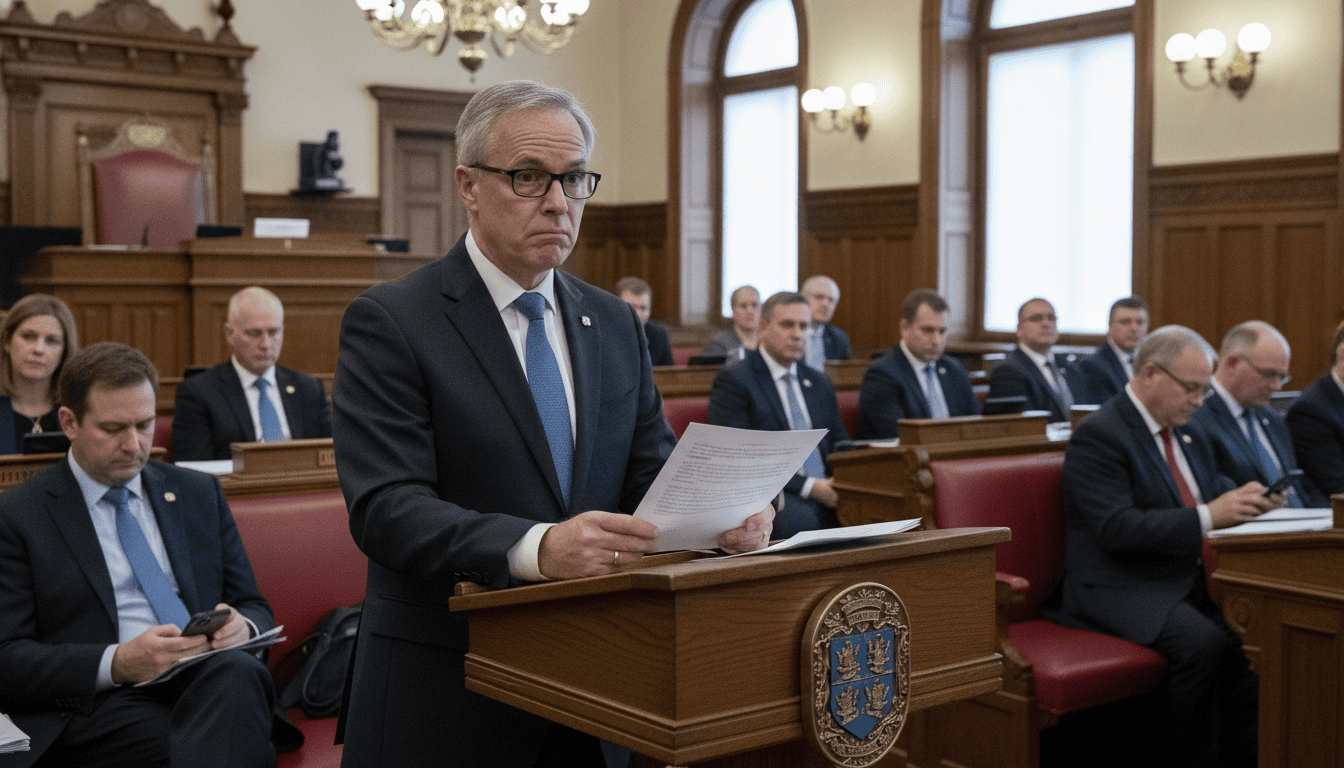
Bill Oliver AI speech goes viral after New Brunswick MP reads apparent chatbot prompt
Bill Oliver AI speech clip went viral after a New Brunswick MP read what sounded like a chatbot prompt during a June 9 legislative address, sparking debate about AI in political drafting. The provincial politician, Bill Oliver, criticized a proposed bill and then — apparently unaware — read a passage that matched common chatbot guidance language. The moment circulated widely online after a Reddit post drew renewed attention to the parliamentary video.
Video shows Bill Oliver reading AI phrasing
Footage from the New Brunswick legislature shows Oliver delivering a critique of a proposed bill before his tone shifts into a line that many viewers identified as resembling a generative AI prompt. In the clip he says a sentence urging a “more natural, flowing version” that “reads like a speech” rather than a list of short points, language typical of editing instructions directed at chatbots.
Parliamentary colleagues did not visibly interrupt and the line passed without immediate correction on June 9. The National Post and other Canadian outlets later reported the date and the context, while the short clip became the focal point for online discussion once redistributed.
Timeline: June 9 speech and Reddit surge
According to media reports, the speech was delivered on June 9 in the New Brunswick legislature and originally attracted little immediate attention beyond the local record. The excerpt resurfaced weeks later when a Reddit user uploaded the clip, where it quickly accumulated comments and shares.
Once the clip circulated on social platforms, commentators and journalists began tracing the line back to drafting practices and the increasing use of AI tools for editing and speechwriting. The viral spread underlined how a single, out-of-context phrase can change the public reading of routine parliamentary business.
Reactions in the New Brunswick legislature
There has been no public record of a formal correction from Oliver or his office at the time of reporting, and no parliamentary motion referencing the incident was filed in the immediate aftermath. Members present in the chamber appeared to treat the remark as part of the speech as delivered.
Officials and legislative staff did not immediately respond to media queries reported by outlets covering the story, leaving questions about whether the text was prepared by Oliver, a staffer, or an outside aide using automated tools. That uncertainty has driven much of the follow-up coverage.
Media and social media amplification
Social platforms amplified the clip quickly, with Reddit threads and reposts on other networks turning the moment into a broader conversation about authenticity and automation in public communication. Many online responses combined ridicule with concern, treating the lapse as emblematic of a larger trend.
Traditional news outlets framed the clip as both a lighthearted gaffe and a window onto how machine-generated text can slip into political workflows. Analysts noted that viral distribution often serves as a forcing function, prompting reporters and officials to investigate origins and editorial practices.
Parallels with incidents in Germany and other democracies
Observers drew parallels to recent controversies in other countries where politicians have been criticized for using AI to draft speeches or opinion pieces. In Germany, for example, senior figures have faced scrutiny after reports suggested AI assistance in public texts, fuelling a cross-border debate about disclosure and standards.
Those parallels have sharpened political scrutiny on both sides of the Atlantic, as democracies grapple with how to preserve trust in official communication while integrating AI tools into everyday work. Critics argue transparency measures should accompany any use of automated drafting.
Experts warn about blurred lines between human and machine drafting
Communication specialists and ethicists say the incident illustrates a growing problem: as AI-generated and AI-edited language becomes more polished, distinguishing authored text from machine-assisted text is increasingly difficult. They urge clearer protocols for reviewing and attributing material prepared with AI tools.
Legal scholars also emphasize that while using AI to draft or edit speech content is not inherently unlawful, the lack of disclosure can erode public confidence. Training for legislative staff and standard disclosure practices are among the remedies experts propose.
The Bill Oliver AI speech episode has become more than an internet meme; it is a test case in how public institutions adapt to tools that alter the shape of political rhetoric. As governments and parties consider ethics rules and review procedures, the clip serves as a reminder that technology shifts the mechanics of speechmaking as much as the content.
