
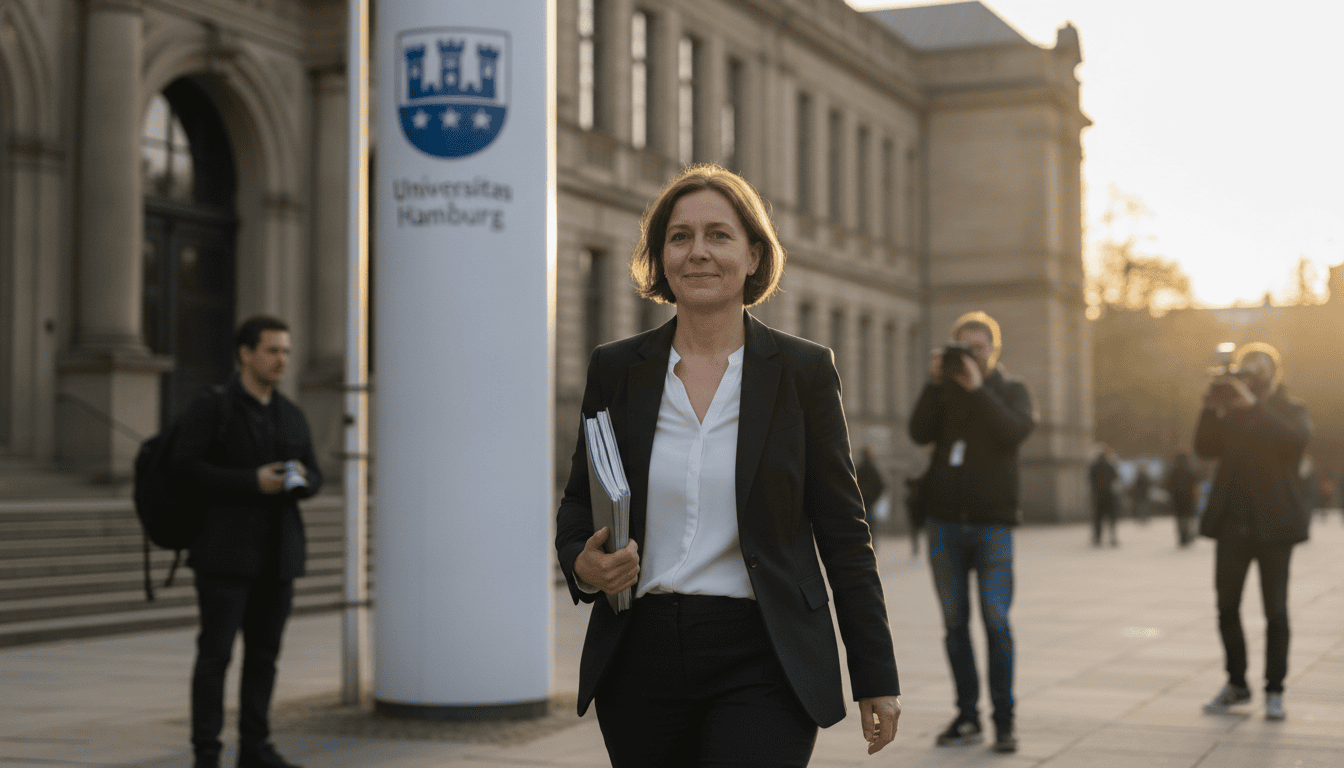
University of Hamburg Clears Frauke Brosius-Gersdorf of Plagiarism Allegations
University of Hamburg finds no scientific misconduct in its review of Frauke Brosius-Gersdorf’s doctoral thesis, closing a year-long plagiarism dispute now.
Frauke Brosius-Gersdorf has been cleared of plagiarism following a formal review by the University of Hamburg, which found no evidence of scientific misconduct in her doctoral thesis. The university said its responsible committees concluded the accusations did not amount to a breach of academic conduct, and that the investigatory procedure is now closed. The decision ends a public controversy that previously affected her nomination to Germany’s Federal Constitutional Court.
University Investigation and Official Ruling
The University of Hamburg said its internal review assessed the claims thoroughly and reached a negative finding on allegations of plagiarism. University officials reported that the relevant bodies did not consider the charge of scientific misconduct to be justified. The statement marked the formal conclusion of the inquiry into the doctoral work submitted by Brosius-Gersdorf.
Origin of the Allegations
The allegations emerged after a researcher who monitors suspected plagiarism, Stefan Weber, flagged overlapping passages between Brosius-Gersdorf’s dissertation and the habilitation thesis of her husband, Hubertus Gersdorf. Weber described the similarities as indicative of potential unethical authorship, prompting calls for an independent examination. The timing of his public accusations—reported to coincide with the day before a scheduled parliamentary vote on her appointment—intensified scrutiny.
Political Consequences and Withdrawal
Brosius-Gersdorf had been nominated last year by the Social Democratic Party for a seat on the Federal Constitutional Court in Karlsruhe, a high-profile judicial appointment. Her candidacy encountered resistance from coalition partners in the Bundestag and was not voted on after the emergence of the plagiarism claims. In August 2025 she ultimately withdrew from the nomination, citing the political controversy surrounding the matter.
Accuser’s Track Record and Legal History
Stefan Weber’s investigations have in some cases led to the revocation of academic degrees, though several universities in recent years have also rejected his claims after review. Weber himself was ordered by the Higher Regional Court in Linz to pay 4,000 euros in February 2025 for defamation related to unverified allegations he published about a university rector. That ruling has been cited by critics who question his methods and the accuracy of his public postings.
Academic Review Process Explained
The university’s review reportedly followed established procedures for handling allegations of scientific misconduct, including evaluation by an ombudsperson’s office and deliberation by academic committees. Such reviews typically examine citation practices, authorship claims and the degree of textual overlap against disciplinary standards. In this case, the committees determined that the evidence presented did not meet the threshold for declaring misconduct.
Repercussions for Judicial Appointments and Oversight
The episode underscores how academic disputes can influence judicial and public-service appointments, especially when allegations surface close to decisive political moments. Lawmakers and academic bodies have faced renewed calls to refine vetting processes for high-level nominations to avoid last-minute controversies. The case has also reinvigorated debate over how to balance public scrutiny with due process in allegations that hinge on nuanced assessments of scholarly practice.
The University of Hamburg’s announcement ends the formal proceedings against Brosius-Gersdorf, leaving open broader questions about political vetting and the handling of public accusations by private critics. With the university concluding there was no misconduct, supporters say the matter is settled academically, while others continue to stress the need for transparent, consistent standards in both academia and judicial nominations.
