
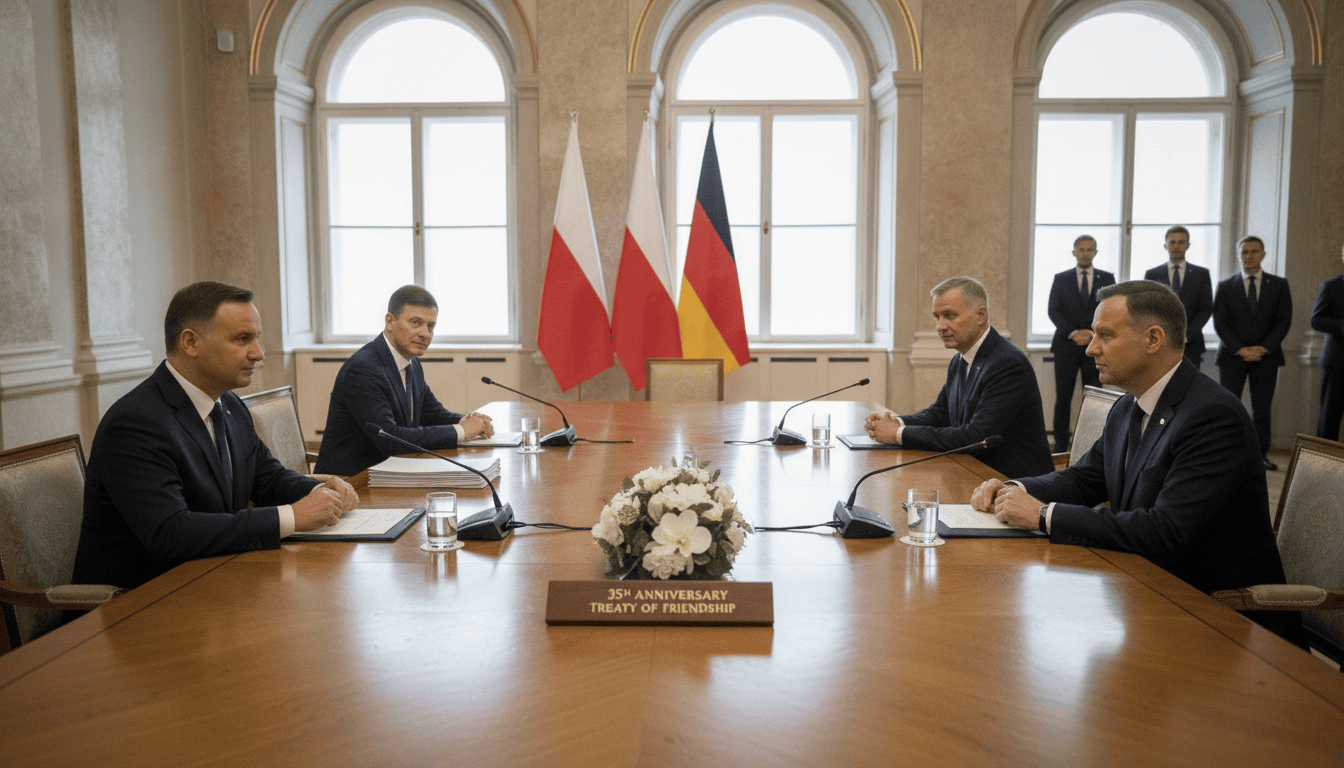
German payments to Polish WWII victims resurface as Poland and Germany mark 35th anniversary of Neighbourhood Treaty
Poland and Germany mark 35 years since the 1991 Neighbourhood Treaty as debate over German payments to Polish WWII victims reignites, pitting political demands against diplomatic caution.
This year’s 35th anniversary of the 1991 Neighbourhood Treaty has refocused attention on German payments to Polish WWII victims, reviving a long-standing debate over justice and compensation. Millions of Poles were killed, deported or forced into slave labor under German occupation during the Second World War, and the question of adequate redress remains unresolved for many survivors and their families. The issue has moved from historical reckoning into contemporary politics as parties and civic organisations press divergent claims and proposals. That tension underscores the difficulty of translating moral responsibility into concrete payments or programs decades after the conflict ended.
Anniversary Sparks Political and Public Debate
This year’s observance of the 1991 treaty has become a backdrop for renewed calls for reparations and humanitarian measures. Anniversary events and official statements have highlighted both the gains in bilateral cooperation and the outstanding grievances tied to wartime suffering.
Officials and campaigners in Poland say the milestone is an appropriate moment to revisit commitments and respond to vulnerable survivors, while German diplomats emphasise the progress in reconciliation and existing compensation mechanisms. The public discussion has forced both capitals to clarify what they view as feasible and legitimate forms of redress.
Scale of Wartime Crimes and Post‑1989 Compensation
Historians estimate that millions of Polish civilians and prisoners died or suffered forced displacement and enslavement during the German occupation, creating a broad constituency of survivors and descendants seeking recognition. In the decades following the war, Cold War geopolitics constrained bilateral claims and complicated legal pathways to large-scale reparations.
After the fall of communism in 1989 and the political transitions that followed, the Federal Republic of Germany implemented compensation programs for some survivors, including pensions, restitution and one‑off payments to particular groups. Many Polish survivors and advocacy organisations, however, argue that these measures were limited in scope and did not address broader material or moral losses experienced across communities.
PiS Pushes for €1.3tn Reparations Claim
The right‑wing Law and Justice party (PiS) has framed reparations as both a matter of historical justice and political leverage, publicly demanding a figure of €1.3 trillion as compensation from Germany. That number has become a touchstone in domestic debate and a rallying point for voters who view reparations as overdue.
Political analysts note that the PiS demand is as much rhetorical as legal, serving to mobilise public sentiment while setting a high bar for negotiations. The scale of the figure and the passage of time since the war raise complex legal, evidentiary and diplomatic obstacles to a straightforward settlement along those lines.
Tusk Government Seeks Humanitarian Gesture, Not Full Reparation Sum
Prime Minister Donald Tusk’s government has taken a different approach, rejecting the €1.3 trillion claim while urging Berlin to make a “humanitarian gesture” toward survivors. Warsaw’s current administration says it wants practical, targeted assistance that addresses living needs rather than reopening a full reparations settlement.
Polish officials under Tusk emphasise measures that can be delivered quickly—such as enhanced medical support, pension supplements, or housing assistance—while avoiding legal demands that could derail bilateral cooperation. The policy reflects an attempt to balance domestic expectations with the diplomatic reality of previous settlements and international law.
Foundation for Polish‑German Reconciliation Calls for Targeted Support
The Foundation for Polish‑German Reconciliation in Warsaw, led by Jakub Deka, has emerged as a key intermediary in translating survivor needs into actionable programs. The foundation works with local communities to identify elderly survivors, trace unresolved claims, and channel charitable and governmental aid where it is most needed.
Deka and his colleagues emphasise that many survivors face urgent practical problems: chronic health issues, inadequate pensions, and the frailty that accompanies advanced age. The foundation advocates targeted assistance that complements state programs and ensures dignity for individuals who endured wartime abuses.
Legal, Fiscal and Diplomatic Obstacles to Comprehensive Payments
Any large-scale move toward full reparations faces significant obstacles, including questions about legal standing, statutes of limitation, and the implications of past treaties and bilateral settlements. Governments must also weigh fiscal realities and the political consequences of reopening widely settled issues.
Diplomats on both sides acknowledge that meaningful progress will require careful negotiation, transparent criteria for eligibility, and mechanisms to ensure that funds reach intended beneficiaries. Some experts suggest twin tracks—legal examination of outstanding claims alongside accelerated humanitarian assistance—to address both demands for justice and the immediate needs of survivors.
The debate over German payments to Polish WWII victims, rekindled by the 35th anniversary of the 1991 Neighbourhood Treaty, underscores enduring tensions between historical responsibility and contemporary diplomacy. As politicians and civil society weigh large monetary claims against targeted aid, survivors and their advocates continue to press for recognition and practical relief, keeping the human consequences of wartime crimes at the centre of the discussion.
