
Austria Extends Austrian Military Service to Nine Months as Coalition Approves Reform
Austria will extend Austrian military service to nine months starting January 1, 2027, with mandatory troop exercises, higher pay and new leave arrangements.
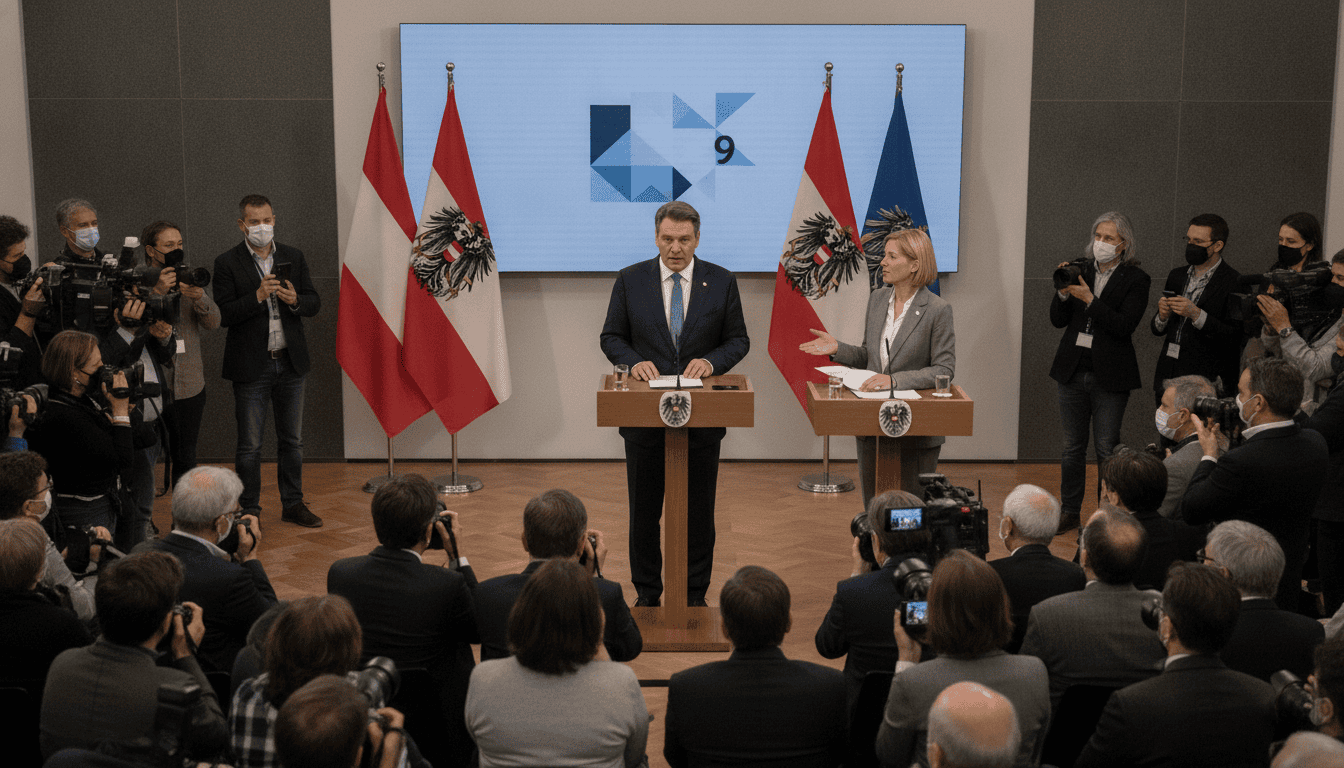
Austria’s governing coalition announced a plan on Monday to lengthen compulsory military service from six to nine months, a move the parties say responds to a deteriorating European security environment. The reform, negotiated by the ÖVP, SPÖ and Neos, introduces a staged training model that adds mandatory troop exercises after basic training and schedules further militia drills within a ten-year window. Officials also tied improvements in pay and leave to efforts to make Austrian military service more attractive to recruits.
Coalition agrees to nine-month service
The ÖVP, SPÖ and Neos presented the reform after extended negotiations aimed at bolstering national defense capabilities. Under the new plan the initial six-month basic training will be followed by additional compulsory troop exercises that extend total service to nine months. Lawmakers framed the change as a restoration of readiness rather than a return to Cold War-era conscription practices.
Party leaders said the design largely follows recommendations from an expert commission tasked with reviewing Austria’s defense posture. The coalition emphasized that the law is intended to improve the operational proficiency of personnel and to better integrate militia training into long-term defense planning.
New staged training and pay rises announced
The reform establishes a stepwise approach: recruits complete a six-month foundational course and are then required to participate in further troop exercises that bring the cumulative commitment to nine months. Additional militia exercises can be scheduled over a ten-year period to maintain skills and unit cohesion. The government also pledged to introduce paid leave days for conscripts and to raise monthly compensation to €1,000.
Officials said the changes aim to reduce turnover in training pipelines and to provide clearer career and benefit expectations for conscripts. Higher pay and leave entitlements are framed as necessary incentives to retain personnel and to match peacetime commitments with realistic compensation.
Security threat assessment drives the decision
Chancellery officials cited Russia’s full-scale invasion of Ukraine and growing cyber and infrastructure threats as central reasons for the extension. The government argued that the assumptions of lasting peace in Europe have been fundamentally altered, necessitating a reappraisal of readiness and manpower planning. Chancellor Christian Stocker of the ÖVP stated that acquiring new equipment alone is insufficient without more frequent and realistic practice by service members.
Ministry briefings highlighted vulnerabilities in critical infrastructure and the multi-domain nature of modern conflict — including cyber and hybrid threats — as drivers of the policy shift. The reform is presented as a proportional response to those risks designed to increase resilience without engaging in a broader expansion of permanent standing forces.
Parliamentary hurdles and implementation timetable
Implementing the reform requires a two-thirds majority in the Austrian Parliament, a threshold that makes cross-party support essential. The coalition will need votes beyond its ranks and has acknowledged reliance on either the right-wing FPÖ or the Greens to secure the necessary supermajority. Lawmakers set a target entry-into-force date of January 1, 2027, to give institutions time to adjust training infrastructure and administrative systems.
Defense planners outlined a phased rollout to align barracks capacity, instructor availability and logistics with the extended service period. The government said the schedule allows units to incorporate revised curricula and to begin recruiting for the new service length in advance of the effective date.
Possible changes to civilian service and recruitment triggers
The proposal also includes provisions affecting the nine-month civilian service alternative. The government indicated that in 2027 civilian service could be extended voluntarily by two months, with a conditional mandatory extension of those two months slated to take effect in 2028 if certain recruitment benchmarks for basic military service are not met. Those triggers are intended to preserve parity between military and civilian obligations while encouraging enlistment into the armed forces.
Officials said they will monitor recruitment metrics closely and apply the contingency only if thresholds for military manpower fail to materialize. Critics from civil society and draft-advocacy groups have already signaled concern about compulsion and fairness, while veteran organizations welcomed the emphasis on improved training and compensation.
Operational implications for the Bundesheer
Defence analysts said the changes will require adjustments across training commands, logistics and personnel management in the Austrian armed forces, the Bundesheer. Extending basic commitments and scheduling recurrent militia exercises will increase demand for training infrastructure and require a larger pool of qualified instructors. That, in turn, will place short-term strain on budgets even as the policy seeks to improve long-term readiness.
Military procurement officials noted that better-trained personnel are essential to make full use of any new equipment acquisitions, a point the government stressed in public statements. The reform’s designers also indicated plans to align training modules with NATO-interoperability standards where appropriate, while retaining Austria’s legal neutrality and defense-focused posture.
The coalition framed the package as a calibrated strengthening of national defense to meet the security realities of the late 2020s. Observers will now watch whether the measure secures the parliamentary supermajority required for enactment and how quickly administrative and logistical adjustments proceed ahead of the January 1, 2027 start date.
