
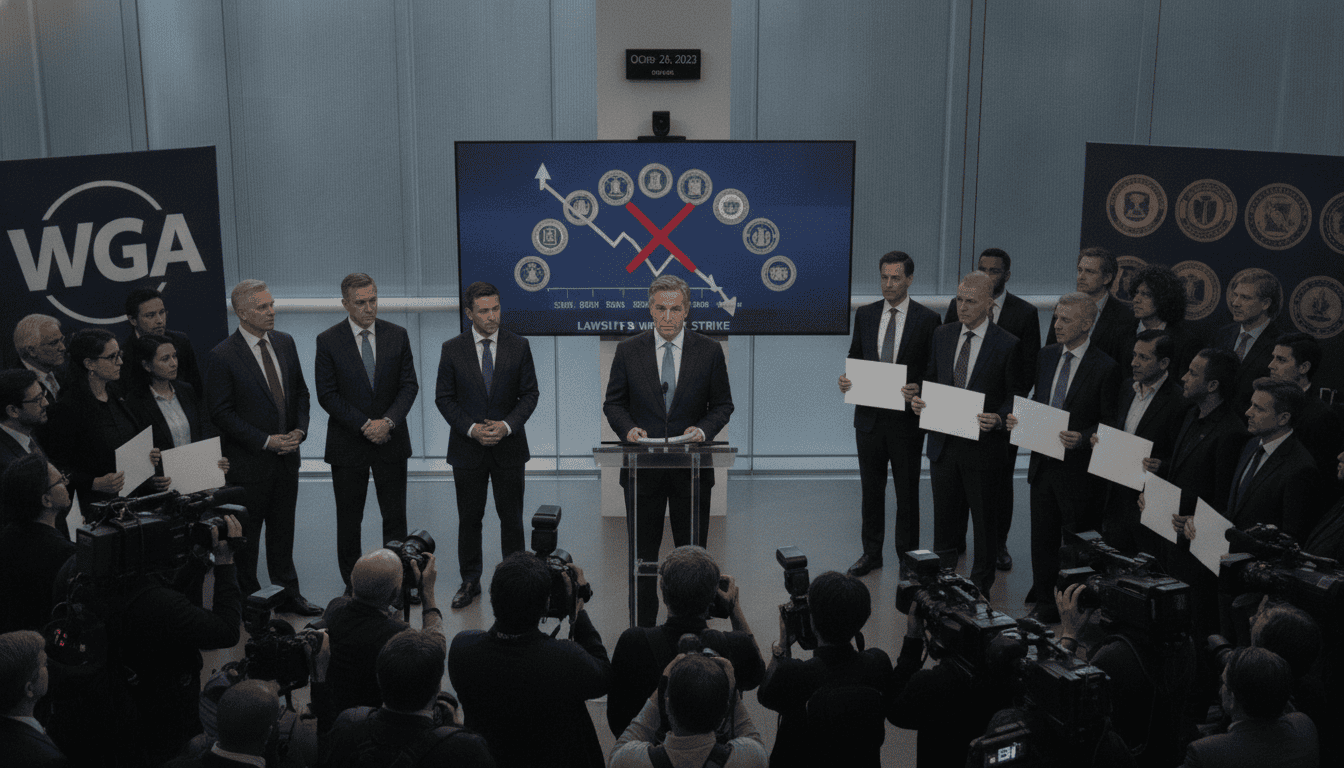
Paramount Pauses Warner Bros Takeover After Lawsuits from 12 States and Writers’ Guild
Paramount suspends $100bn+ Warner Bros takeover after lawsuits by 12 US states and the writers’ guild, pausing the deal until court rulings or June 1, 2027.
Paramount has temporarily halted its planned Paramount Warner Bros takeover after legal challenges from a coalition of 12 US states and the writers’ guild sought to block the merger. The decision, disclosed in court filings, pauses the more-than-$100 billion transaction until the pending lawsuits are resolved or until a hard deadline of June 1, 2027. A federal judge had already imposed a limited injunction through mid-August, and the combined legal actions now determine whether the companies can proceed. The suspension reflects mounting regulatory and political scrutiny that threatens to reshape the media deal’s timetable and economics.
Court filing establishes formal pause and deadline
The company told the court it will not advance closing steps while the consolidated suits play out, or in any event until June 1, 2027, according to filings. The earlier judicial hold, which ran to mid-August, was rendered largely academic by Paramount’s broader pause, though it underscored the immediate legal hurdles. Plaintiffs in the separate state and union actions have since been consolidated into a single procedural track to streamline briefing and the judge’s consideration. The pause converts a temporary judicial stay into a company-led suspension that extends through a specific contractual deadline.
States allege antitrust harms to film and exhibition markets
The dozen states leading the suit frame the dispute as an antitrust case, arguing the merger would materially reduce competition in the market for popular theatrical films. State attorneys contend the combined Paramount and Warner entities would command a significant share of high-profile releases, potentially enabling conduct that disadvantages rival studios and squeezes movie theaters. Prosecutors emphasized in filings that the merged company could leverage its slate to distort distribution deals and exhibition economics. The states say those competitive risks justify a preliminary injunction to halt the deal while the court evaluates the merits.
Writers’ guild joins with separate creative and labor concerns
The writers’ guild filed its own action and successfully pressed to have its case heard alongside the states’ complaint, citing potential harms to writers and creative labor markets. The guild’s intervention signals concern that consolidation among major studios could reduce bargaining leverage for screenwriters and concentrate decision-making about projects and compensation. Union leaders argued an expedited judicial review was necessary to prevent irreversible changes while litigation is pending. The consolidated posture means both public enforcers and labor will be able to present overlapping evidence about market structure and industry effects.
Questions of media influence and ownership conflicts
Beyond antitrust theory, critics and some public-interest commentators have raised questions about media independence under the prospective ownership structure. Observers pointed to the Ellison family’s recent acquisition of Paramount and noted that changes in newsroom tone at network assets had already been remarked on by analysts. Concerns have been voiced that new ownership links between a major technology and investment figure and a large content group could create incentives to shape coverage or editorial priorities. Company defenders counter that editorial independence remains intact, but the debate has become part of the broader public and political scrutiny the deal now faces.
Financial exposure and break fees for shareholders
The pause carries immediate costs for Paramount and potential windfalls for Warner shareholders, because the buyer agreed to make supplementary payments for every quarter the deal remains open after September 30. Those contingent payments are estimated at roughly $650 million per quarter, a substantial sum that increases the acquisition’s carrying cost for Paramount. The merger agreement also includes a $7 billion termination fee payable if the transaction collapses, underscoring the high stakes for both sides. Paramount and Warner had set June 4 of next year as an internal closing target, but the legal moratorium and mounting fees mean that timetable is now uncertain.
Possible outcomes and what comes next
With the suits consolidated and briefing scheduled, the case will test both standard antitrust frameworks and how courts weigh broader public-interest arguments in media mergers. Judges can grant a permanent injunction, allow the deal to proceed, or permit it to close subject to remedies or divestitures; any ruling could be appealed and extend the timeline. Regulators and private litigants are likely to present extensive economic analysis about market shares, film distribution, and consumer harm. Meanwhile, shareholders and investors will be watching closely for further court dates, settlement talks, or adjustments to the deal terms driven by litigation risk.
The suspension represents a pivotal moment for an acquisition that would reshape the US entertainment landscape, as litigation, political scrutiny, and financial exposure converge to determine whether the Paramount Warner Bros takeover can proceed. The coming months will test the strength of antitrust theory in media markets and reveal how courts balance commercial consolidation against concerns over competition, labor rights, and editorial independence.
