
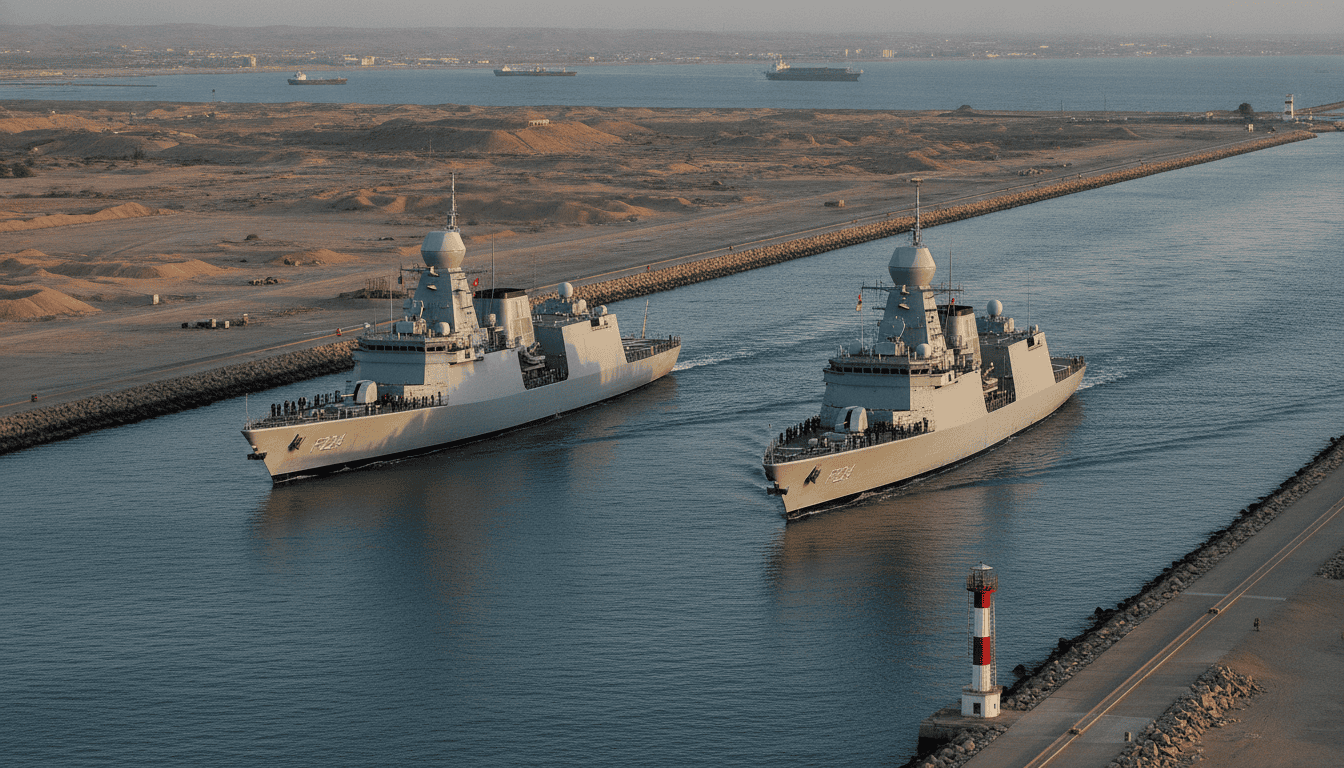
Germany withdraws warships from Gulf of Aden amid rising US–Iran tensions
Germany withdraws warships Mosel and Fulda from Djibouti as Defence Ministry cites escalating US–Iran tensions; vessels to be repositioned toward the Mediterranean for safety and strategic flexibility.
The German Defence Ministry announced on Thursday evening that Germany withdraws warships Mosel and Fulda from their anchorage off Djibouti in the Gulf of Aden, cancelling a pending mission to the Strait of Hormuz. The ministry said the decision responds to a heightened risk environment linked to escalating tensions between the United States and Iran, prompting a reassessment of operational exposure for German personnel.
Decision announced by the Defence Ministry
The ministry communicated the order to pull both vessels back from Djibouti after several weeks of readiness, according to officials familiar with the deployment. The change ends a period of uncertainty for crew members who had been on standby for a potential operation to escort or protect commercial shipping transiting the Strait of Hormuz.
Defence officials framed the move as a precautionary measure tied to rapid shifts in the regional security situation. They emphasized the priority of safeguarding sailors and support personnel while retaining the ability to respond to future contingencies.
Ships and mission profile in Djibouti
The supply ship Mosel and the minehunter Fulda have been stationed in the Gulf of Aden, using Djibouti as a logistical hub while awaiting orders. Mosel is equipped to provide sustainment and replenishment at sea, whereas Fulda’s mine-countermeasure capability would be relevant to clearing or monitoring narrow transit points such as the Strait of Hormuz.
Both vessels were positioned as part of Germany’s contribution to protecting maritime commerce and responding to threats to freedom of navigation. Crews had been conducting routine maintenance and readiness drills while authorities weighed the operational and political costs of a direct deployment toward the Persian Gulf.
Escalating US–Iran tensions cited as reason
Defence Ministry spokespeople pointed explicitly to the deteriorating confrontation between the United States and Iran as the prime factor behind the withdrawal. Rising military exchanges, diplomatic friction, and an uptick in incidents at sea have compounded the risk calculus for NATO and partner-nation deployments in nearby waters.
Analysts say the decision reflects caution toward a theatre where incidents can rapidly escalate and where third-party deployments risk entanglement. By withdrawing from the Gulf of Aden, Berlin avoids placing its vessels in immediate reach of any sudden escalation while preserving other response options.
Redeployment planned toward the Mediterranean
Officials indicated the ships will be redirected toward the Mediterranean, where they will operate under updated tasking and rules of engagement better suited to the current risk posture. The Mediterranean offers a more controlled operating environment and aligns with NATO and European Union maritime activities that focus on regional security and migration interdiction.
The move also allows German command structures to retain operational flexibility and to coordinate more closely with allies on surveillance, convoy planning, or other measures that do not require a forward presence in the immediate vicinity of Iran. Defence planners said the repositioning would be temporary and subject to further review.
Political and parliamentary questions in Berlin
The withdrawal is expected to prompt scrutiny from lawmakers who have debated the scope and limits of German naval deployments in politically sensitive regions. Opposition parties and defence committee members are likely to press the government for a fuller explanation of the criteria used to commit forces abroad.
Ministers face a familiar balance between contributing to international security efforts and avoiding provocative displays that could draw Germany into conflicts not of its making. Parliamentarians will also press for clarity on the mission mandate, the legal basis for any future deployment, and safeguards for personnel.
Implications for maritime security in the Gulf
Maritime security experts caution that a reduced forward presence from certain European navies could leave commercial routes more vulnerable to harassment or disruption, particularly in chokepoints such as the Strait of Hormuz. At the same time, the overall maritime security architecture includes a range of actors — regional coast guards, multinational task forces, and commercial self-defence measures — which together mitigate immediate systemic risk.
Germany’s decision may prompt allies to reassess their own posture in adjacent waters and could influence coordinated efforts to protect shipping lanes. The broader strategic impact will depend on whether tensions between Washington and Tehran de-escalate or further flare, altering the operational calculus for coalition navies.
The withdrawal closes a chapter of uncertainty for the crews of Mosel and Fulda but opens new questions about alliance burden-sharing and the thresholds for German maritime engagement. Military planners say they will continue to monitor developments closely and stand ready to adjust deployments should the security picture stabilize or require renewed German involvement.
