
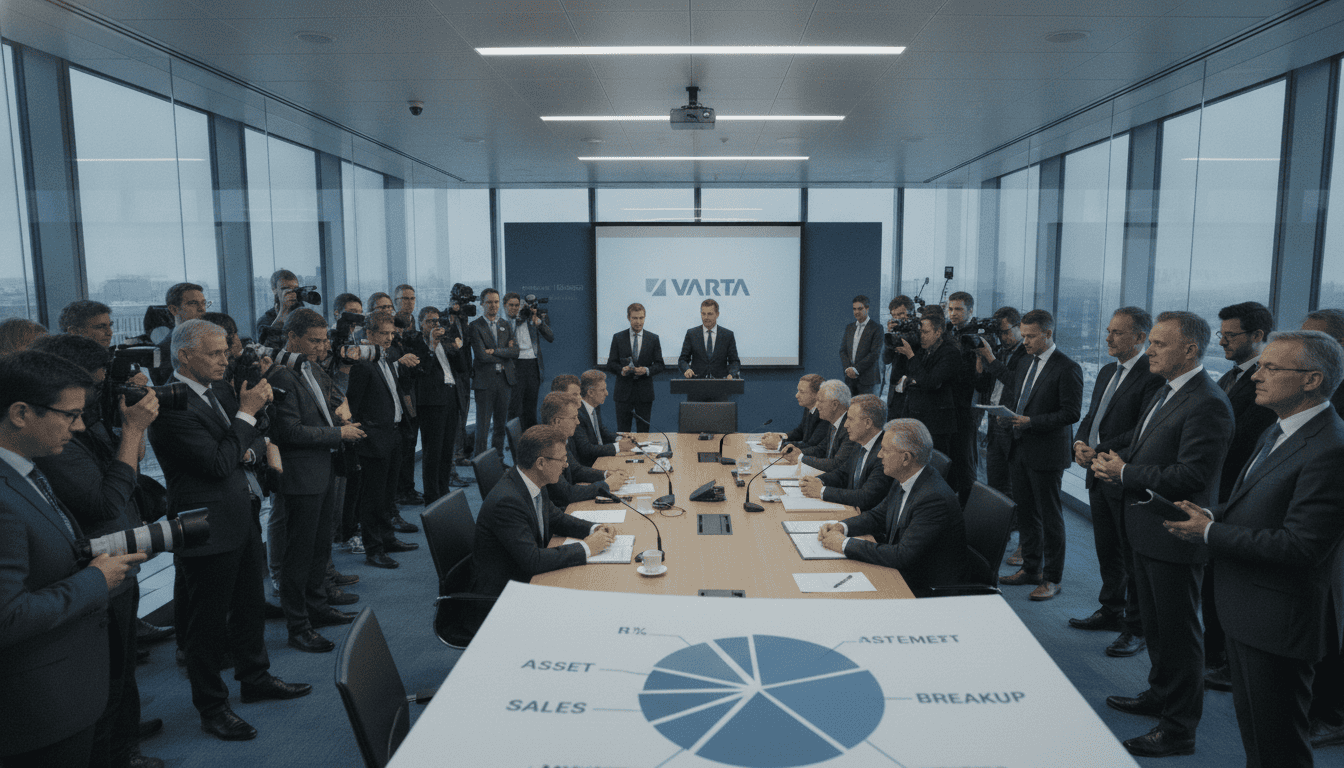
Varta insolvency filed as Stuttgart court receives four applications amid takeover talks
Varta insolvency: German battery maker files for insolvency to preserve operations, with creditors and owners debating a split of household and microbattery divisions.
Immediate filing and official confirmation
The battery maker Varta has filed for insolvency, the company announced as it said the move aims to safeguard its future and enable an orderly continuation of operations. The local court in Stuttgart confirmed it received four insolvency applications, which are now under judicial review by the appointed judge.
Varta said the filings affect its parent company and several subsidiaries as part of a coordinated insolvency process intended to stabilise the group. Company officials framed the step as necessary to protect jobs and preserve core activities while solutions are negotiated.
Entities and business units included
According to the company, the insolvency filings cover Varta AG, headquartered in Ellwangen, together with Varta Microbattery GmbH, Varta Micro Production GmbH and Varta Storage GmbH. Those units represent the group’s household battery, microbattery and energy-storage activities that collectively employ around 3,260 people.
Management emphasised that the procedure was structured to allow continued production and customer service while options for financing, sale or restructuring are explored. Operations at individual sites will be evaluated within the insolvency framework as discussions with creditors proceed.
Causes cited by Varta leadership
Varta attributed the renewed crisis to a combination of deteriorating market conditions, weaker demand, adverse currency movements and, crucially, the recent decision by a major anchor customer to end cooperation. Those factors, the company said, aggravated already challenging industry dynamics and eroded liquidity.
The group’s financials released for 2024 showed revenue of roughly €793 million and a net loss of €64.5 million, underscoring the strain that prompted the earlier restructuring effort. Executives said that despite previous rescue measures, the pace of new orders and the loss of large contracts left the company exposed.
Creditor plan to split profitable and specialised units
Key creditors, including Deutsche Bank and several hedge funds, have reportedly proposed a split of the business that would see the profitable household-battery operations separated from the specialised microbattery units. Those creditors have signalled interest in taking over the home-battery activities, which remain cash-generating and widely distributed in retail channels.
By contrast, Michael Tojner, one of Varta’s owners, has expressed interest in acquiring the microbattery operations, which include button cells used in hearing aids and other medical devices. The proposed division reflects differing strategic views among lenders and shareholders about the most viable path to preserve value.
Owners withdraw fresh support and strategic impacts
Sources close to the matter say that the company’s previous owners — the sports-car maker Porsche and Austrian investor Michael Tojner — declined to inject further capital, a decision that narrowed Varta’s options. That withdrawal followed months of efforts to stabilise the business after a 2024 restructuring that had already involved creditor concessions and equity dilution.
The loss of a major customer also hit manufacturing plans. A plant in Nördlingen employing around 350 staff is slated for closure in the autumn after Apple, identified as the site’s principal client, pulled orders for button cells used in wireless headphones. The production there is scheduled to run through November, after which supply responsibilities are expected to shift to Asian manufacturers.
Next steps in proceedings and market implications
The Stuttgart court will review the insolvency petitions and decide on the opening of formal proceedings and the appointment of insolvency administrators. If the court approves, administrators will assess assets, liabilities and prospective buyers, and they will negotiate with creditors on any sale or carve‑up plan aimed at maximising recoveries and preserving viable activity.
Market observers note that a creditor-led acquisition of the household-battery business could preserve retail supply chains and brands, while separate ownership of microbattery assets would aim to safeguard specialised production and customers with higher technical requirements. The outcome will influence suppliers, retailers and thousands of employees across Varta’s sites.
Varta’s filing marks a significant turning point for a company that has supplied household cells, microbatteries and energy-storage products for decades and had hoped its 2024 restructuring would restore stability. With negotiations now moving into the formal insolvency process, stakeholders will watch closely for court decisions, proposed sales and any rescue offers that could determine the company’s future.
