
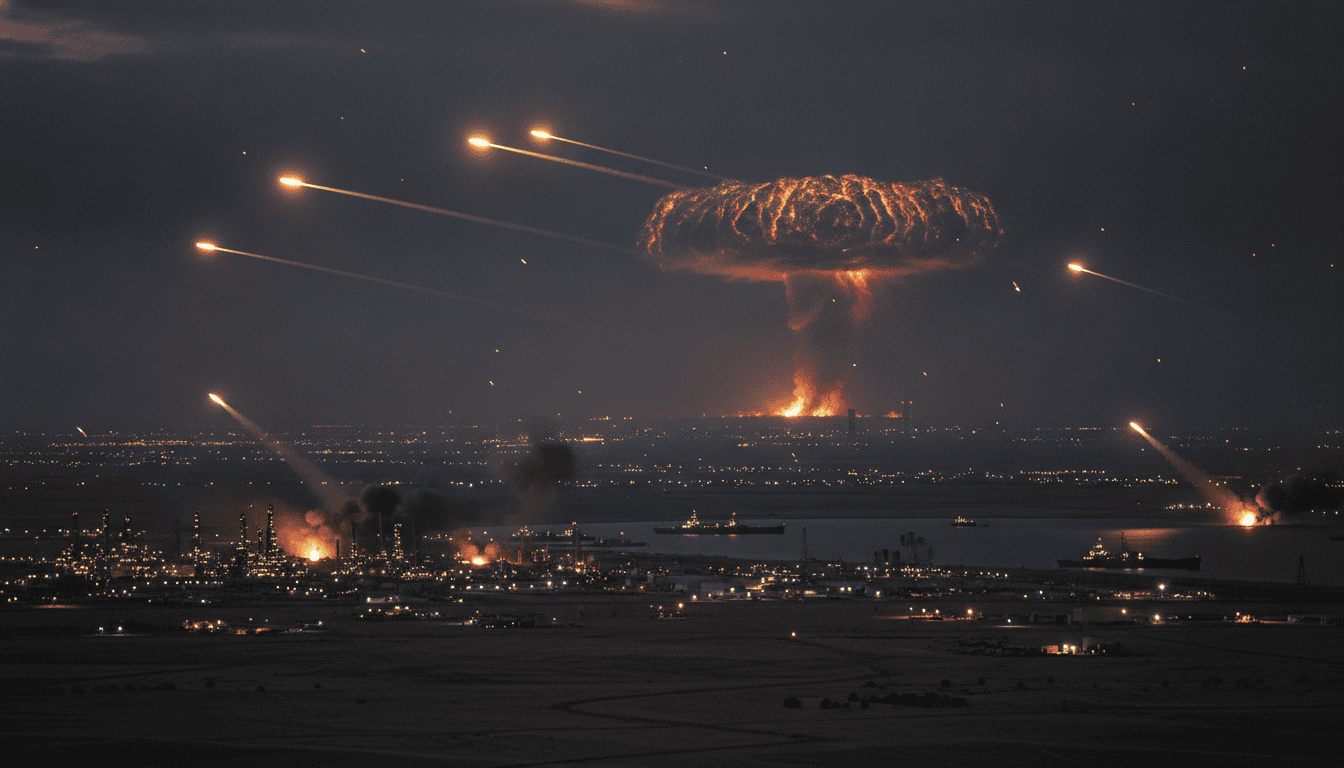
Iran launches missiles at US targets across Gulf states in major escalation
Iran’s Islamic Revolutionary Guard Corps says it launched missiles at US targets across Gulf states after overnight US strikes in Iran killed at least eight people, marking a sharp escalation on July 17, 2026.
Iran launches missiles at US targets across Gulf states, the IRGC said in a statement following overnight US strikes in Iran that Tehran reports left at least eight dead. The strikes were described as the largest escalation since a memorandum of understanding was signed on June 17, and the claims name Qatar, Kuwait, Bahrain, Oman, Jordan and Syria as locations of the strikes. Independent verification of the reported missile impacts and damage in those countries was not immediately available.
IRGC claims strikes in six countries
The Islamic Revolutionary Guard Corps publicly said missiles were fired at US positions in Qatar, Kuwait, Bahrain, Oman, Jordan and Syria, framing the action as retaliation for the earlier US operations inside Iran. Tehran’s announcement was distributed through state-aligned channels and described the operation as coordinated across multiple fronts. Officials gave few verifiable details about the types of weapons used or the specific targets struck.
Context: US strikes in Iran that preceded the retaliation
Iran’s claims came after what Tehran described as overnight US attacks on Iranian territory that killed at least eight people, according to Iranian reports. Those US strikes were reported on July 17, 2026, and were cited by Iranian commanders as the immediate provocation for the reported missile launches. Western governments and international monitors had not provided immediate independent confirmation of the casualty figures or the sequence of events at the time of the IRGC statement.
Verification and reporting limitations
Independent verification of the IRGC’s account was not possible from open sources immediately after the claims were made. Access limitations, the contested nature of the reporting environment, and differing official accounts from regional capitals mean the situation could not be independently corroborated. Analysts caution that in fast-moving incidents like this, initial claims frequently diverge from later, verified information.
Regional military posture and possible impacts
If missiles were launched across the six named states, the action would represent an unusual cross-border escalation with potential to strain military communications and air-defence coordination in the Gulf. Regional militaries often maintain heightened alert status during such confrontations, and commercial and military flights can be disrupted as a precaution. Governments in the region typically assess and respond to missile threats through joint command centers, though confirmations of interceptions or impacts were not reported at the time of the IRGC’s announcement.
Diplomatic consequences and the June 17 memorandum of understanding
Observers noted the timing of the strike claims came after a memorandum of understanding signed on June 17, which had been interpreted by some as a step toward reducing direct hostilities. The IRGC’s description of the operation as the largest escalation since that agreement suggests diplomatic arrangements between the parties have not prevented acute incidents. Diplomats and international organisations are likely to press for clarification and restraint to avoid broader confrontation.
Analysts’ perspective on escalation and uncertainty
Security analysts said the incident underscores the fragility of ceasefires and informal understandings in the region, where proxy dynamics and rapid retaliatory cycles can quickly undermine diplomatic progress. Analysts also warned that public claims by armed forces are often used for domestic signaling, complicating external attempts to assess intent and verify battlefield results. The risk of miscalculation grows when multiple states and non-state actors are involved in overlapping areas of operation.
The situation remained fluid on July 17, 2026, with official confirmations and independent assessments still pending; further reporting and statements from the states named by the IRGC are expected to clarify the extent and consequences of the reported missile activity.
