
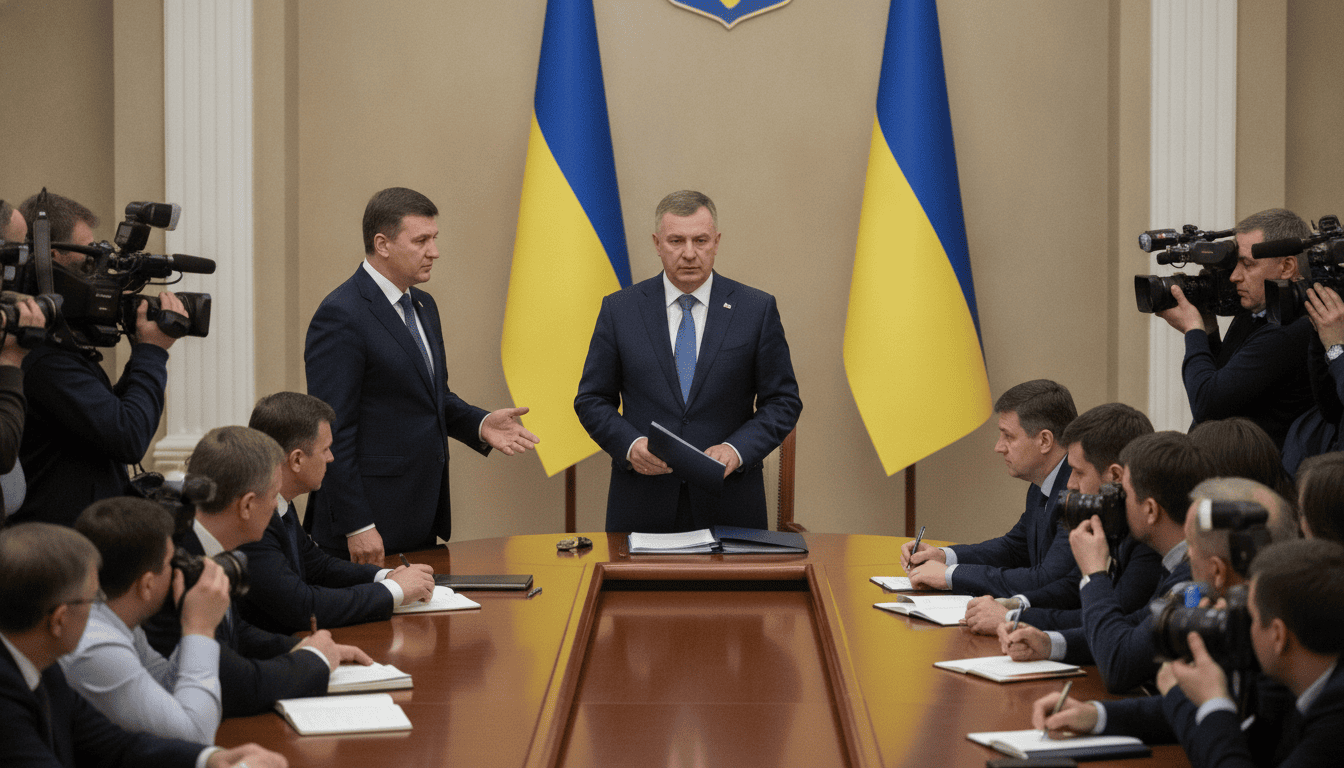
Yevhen Khmara Named Acting Ukrainian Defence Minister as Zelenskyy Shifts War Leadership
President Zelenskyy appoints Yevhen Khmara as acting defence minister; SBU special-ops commander to continue high-tech combat programs amid political friction.
Zelenskyy announces Yevhen Khmara as acting defence minister
Yevhen Khmara was unveiled on Thursday evening by President Volodymyr Zelenskyy as the acting head of Ukraine’s defence ministry. Khmara’s name, until now little known in public political circles, will appear at the centre of an already tense leadership realignment during the country’s defence effort.
Zelenskyy framed the change as necessary to maintain “strategic vision” for ongoing operations and to press Russia toward diplomacy, citing Khmara’s extensive experience in technological combat operations. The president said he will seek parliamentary backing for a permanent appointment once required legal steps are complete.
From Alpha special forces to the defence ministry brief
Khmara has served since January as the acting chief of the domestic intelligence service, the SBU, after leading the Alpha Special Operations Center within the same agency. Alpha is tasked with counterterrorism and special operations and has been credited internally with carrying out long-range strikes against military sites and critical oil and gas infrastructure in Russia.
Those operational credentials were presented by the president as a rationale for choosing Khmara, underlining his familiarity with technological and unconventional tools of modern warfare. Officials say his background with special-ops units and deep involvement in technologically driven missions weighed heavily in his selection.
Combat record: Kyiv, Donbass and Snake Island
Senior officials point to Khmara’s combat record since the full-scale Russian invasion in February 2022 as part of the justification for the elevation. He participated in the liberation of the Kyiv region and has been engaged in operations across Donbass, according to statements from the presidential office.
In June 2022 Khmara led the operation to retake Snake Island, an action described by Kyiv as both strategically and symbolically important for restoring maritime access in the Black Sea. That operation, and others he commanded, are being cited as evidence of his operational competence under pressure.
Continuity of active programmes emphasised by Zelenskyy
Zelenskyy said Khmara will continue “all active programmes” designed to strengthen the armed forces, including direct financing for combat units, fairer personnel distribution and a significant expansion in unmanned systems. The president specifically referenced increased provision of unmanned ground vehicles and various types of drones as priorities to be carried forward.
Those initiatives mirror reforms and programs started under his predecessor, which the presidential office says must be maintained to keep operational momentum. Zelenskyy portrayed the appointment as a measure to sustain innovation and technical advantage on the battlefield.
Political friction over recruitment and command style
The shift follows a contentious clash between proponents of asymmetric, technology-led approaches to fighting and elements of the military leadership that favour traditional manpower and hierarchical command. The dismissed minister, who had advocated reforms to Ukraine’s conscription and personnel system, ran afoul of the military establishment in a dispute described by insiders as both strategic and institutional.
Many Ukrainians had pinned hopes on the minister’s promise to overhaul a recruitment system widely regarded as unfair. That reform drive became a focal point of disagreement with the armed forces’ commander, who favours increasing troop numbers and a command model based on clear authority and obedience.
Parliamentary process and interim government changes
Zelenskyy did not immediately put Khmara’s nomination to a parliamentary vote amid discontent over the previous minister’s dismissal, including among some deputies from the president’s own party. The president said he would request parliamentary approval for Khmara once legal procedures were complete.
Separately, the legislature confirmed Serhij Koretzkyj as prime minister on Thursday, replacing Julija Swyrydenko, and approved a cabinet that included sixteen new ministers. That broader reshuffle leaves the defence portfolio temporarily led on an acting basis at a critical juncture in Ukraine’s war effort.
Ukrainian officials stress that maintaining operational continuity is paramount while political and legal steps proceed. The appointment of an SBU special-ops commander to lead the defence ministry underscores a continued emphasis on technological capabilities and unconventional tactics as Kyiv navigates both battlefield pressures and internal disputes over the future shape of its armed forces.
For now, the defence ministry remains in interim hands as the government balances reform ambitions, military priorities and parliamentary scrutiny during one of the most consequential periods of the conflict.
