
Germany unveils action plan against tax and financial crime, ending self-report immunity
Germany unveils a 26-point action plan against tax and financial crime, ending self-report immunity, boosting AI-led detection, tougher fines and longer records.
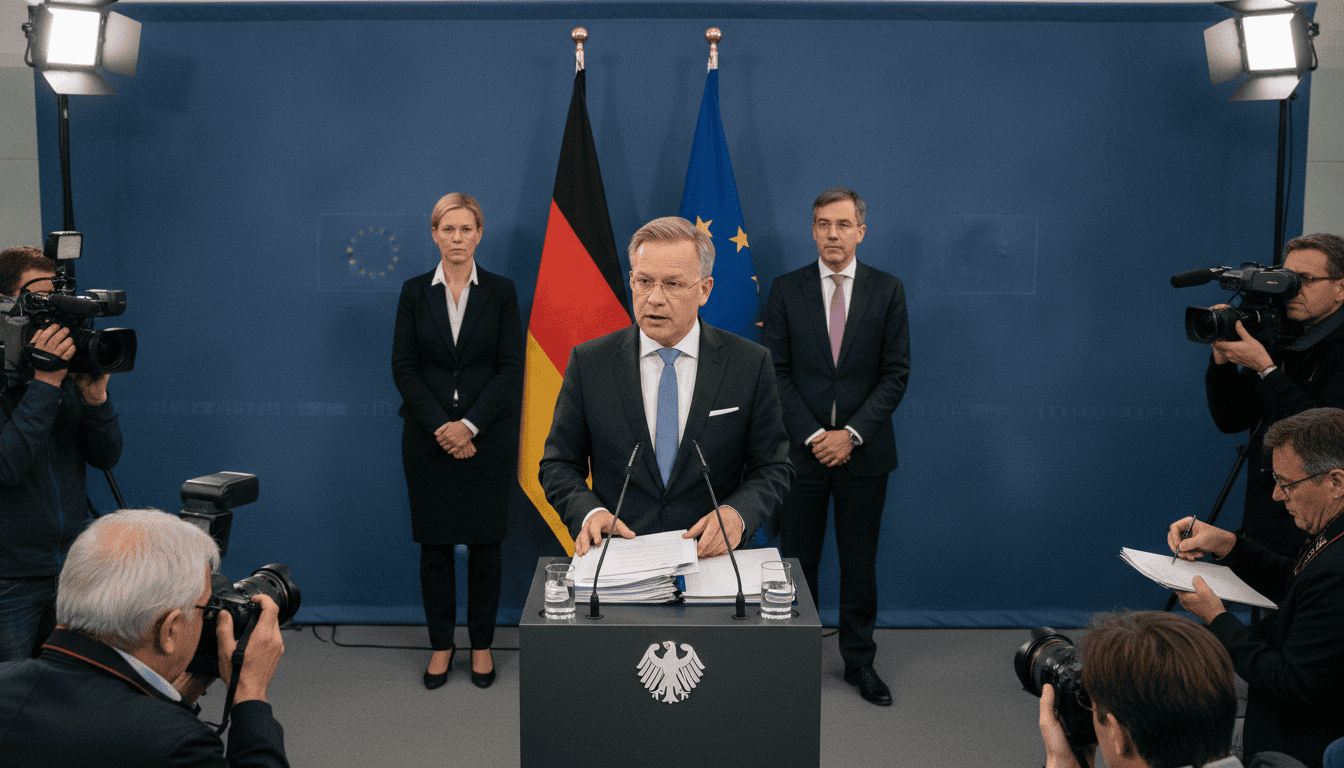
A new federal action plan against tax and financial crime unveiled by Finance Minister Lars Klingbeil and Justice Minister Stefanie Hubig aims to sharply increase enforcement, penalties and investigative capacity. The 26-point package proposes ending the existing criminally exempting self-disclosure for serious tax evasion, expanding customs staff by 1,500 positions, and deploying an AI-powered data-analysis centre to detect complex fraud. Ministers say the measures are designed to restore fairness and raise the risk of discovery and punishment for deliberate tax misconduct.
Ministers present a 26-point package for enforcement
The plan, summarized in a four-page document presented on Thursday, bundles legislative and administrative steps to tighten detection and prosecution of tax and financial crimes. Klingbeil framed the initiative as a matter of fairness, arguing that tax-evaders must no longer benefit from weaker enforcement while law-abiding citizens bear the burden. Hubig emphasized that criminal law should not routinely provide after-the-fact escape routes and that the reforms place the “justice” objective at the centre of policy.
Abolition of criminally exempting self-disclosure and higher penalties
A central and politically sensitive element is the proposed end of a self-reporting mechanism that has previously exempted offenders from criminal sanctions under certain conditions. Under the new approach, voluntary disclosures would at best mitigate sentencing but would not automatically relieve criminal liability when evaded amounts exceed unspecified thresholds. The plan also envisages substantial increases in corporate fines and criminal penalties, with some sanctions for serious tax offences extended to prison terms of up to 15 years.
New enforcement architecture and AI-led analysis
To raise the probability of detection, the package foresees a strengthened enforcement architecture: 1,500 additional posts at the customs authority, a new Joint Centre against Tax and Financial Crime within Customs, and more coordinated agency work. Complementing staffing increases, the government will create a dedicated data-analysis centre that will use artificial intelligence to scan for suspicious patterns, connections and networks. Officials argue the combination of more personnel and automated analytics will allow authorities to “target where the fraud risk is greatest.”
Record-keeping rules, receipts and anti-money-laundering powers
The action plan reverses recent relaxations in paperwork retention and proposes a significant extension of documentation obligations, with bookkeeping retention moving toward a 15-year horizon. The package also addresses earlier reforms to receipt rules: the government plans to eliminate the paper receipt requirement for small purchases while maintaining electronic receipt obligations and to rework rules for businesses above specific turnover thresholds. In parallel, a draft “Customs Finance Justice Act” is expected to be submitted to Cabinet in August to expand customs’ powers in the fight against money laundering.
Fiscal estimates and political rationale
The government’s current 2027 budget projection includes a conservative estimate that improved enforcement could yield roughly €1 billion in additional revenues, a figure ministers say is a baseline they expect to at least reach. Klingbeil and Hubig framed the initiative not only as a revenue measure but as a political signal intended to reduce social tension by ensuring that those who break the rules face consequences. Opposition parties gave mixed reactions to initial proposals in the spring, saying details remain necessary to judge proportionality and legal effects.
Implementation will require detailed drafting and parliamentary approval, and many measures remain intentionally broad in the summary document. Key questions — including the precise thresholds for limiting self-disclosure benefits, the scope of enhanced investigative powers, and safeguards around AI-driven analysis — will be defined only as legislative texts are prepared and debated.
The government says the plan prioritizes restoring confidence in equal treatment under the law while modernizing enforcement tools, but businesses and legal experts are likely to scrutinize the balance between stronger controls and legal certainty as specific proposals move forward.
