
US strikes on Iran escalate as CENTCOM reports dozens of targets near Strait of Hormuz
US strikes on Iran target coastal military sites, Tehran reports counterattacks; oil prices jump and a fragile June ceasefire faces renewed strain.
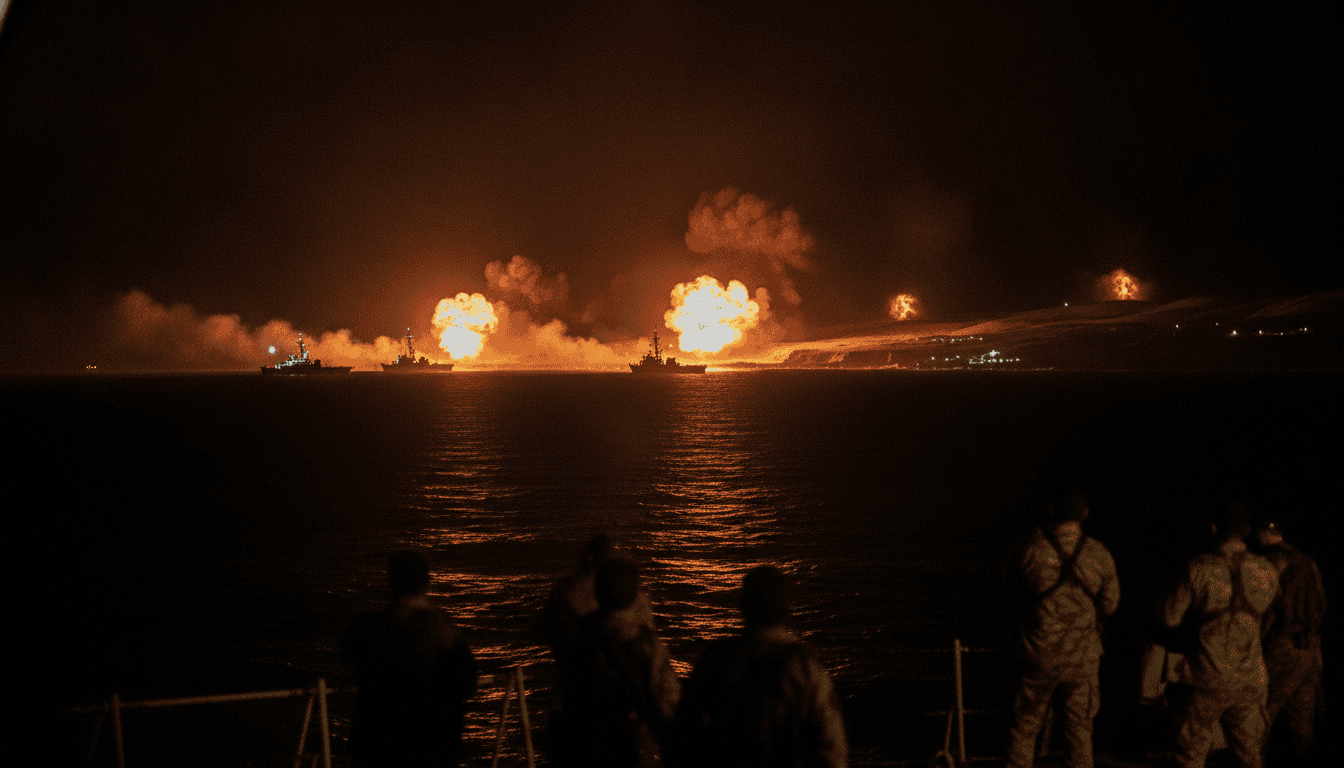
The United States launched a seven-hour campaign of US strikes on Iran that CENTCOM said hit dozens of military targets along the southern coast and near the Strait of Hormuz, while Tehran reported retaliatory attacks on US facilities across the region. CENTCOM said the operation concluded at 10:00pm EDT on July 14, 2026 (02:00 GMT on July 15), and involved fighter jets, drones and naval vessels against coastal and strait-area sites. Iranian state and local media described explosions in several southern cities and islands, and Iran’s Islamic Revolutionary Guard Corps (IRGC) claimed it had struck US military assets in neighbouring Gulf states in response.
CENTCOM: ‘Dozens’ of military targets struck
CENTCOM issued a statement saying the strikes focused on what it described as military infrastructure near the Strait of Hormuz and on Iranian coastal areas. The command said aircraft, unmanned systems and ships were employed in the operation that it characterized as limited to military objectives.
US officials also announced the resumption of a naval blockade of vessels bound to or from Iranian ports, a move CENTCOM said would take effect on the evening of July 14 and that would include protection for ships using alternative Omani transit routes. Pentagon briefings emphasized that the blockade and strikes were intended to degrade Iran’s capability to threaten commercial and military navigation through the strait.
Explosions reported along Iran’s southern coast
Iranian media reported blasts on islands and coastal cities including Bandar Abbas, Qeshm, Hengam, Sirik and Bushehr, and regional witnesses said air-defence systems were activated. Al Jazeera’s reporting from Tehran described strikes that also affected western and southeastern provinces, with local authorities reporting damage at a bottled water plant in Dehloran and projectiles hitting military accommodation in Bampur.
No independent confirmation of casualties had been available in initial reports, and local sources provided varying accounts of the scale and targets of the unrest. The pattern of reported strikes suggested a wide geographic spread along Iran’s southern maritime frontier, complicating early assessments of damage and losses.
IRGC says it struck US facilities in Gulf states
Iran’s IRGC publicly claimed it had launched counterattacks overnight targeting US military assets in Bahrain, Kuwait and Jordan. The IRGC statement alleged damage to the US Fifth Fleet headquarters area and support facilities in Bahrain, as well as to a logistics hub at Mina Abdullah in Kuwait.
Jordan’s military reported intercepting and shooting down three ballistic missiles that entered its airspace early on July 15, according to official statements cited by regional outlets. Tehran’s claims described destruction of shelters allegedly housing US F-15, F-16 and F-35 aircraft and several MQ-9 drones; those assertions were not independently corroborated.
US leadership signals escalation options, including infrastructure
President Donald Trump told US media that strikes would “continue until I say enough,” and warned that future targets could include energy infrastructure and bridges, comments that signalled appetite for intensifying pressure if Tehran did not return to talks. White House and Pentagon officials framed the operations as both retaliatory and preventive, while urging diplomatic avenues remain open.
The renewed rhetoric coincided with the statement that Washington had asked Tehran to resume negotiations under terms first outlined in a June memorandum of understanding that had extended a ceasefire signed in April. Both sides have since accused the other of violating provisions of that agreement.
Maritime blockade, shipping routes and energy markets react
Alongside the strikes, the US announced the reintroduction of a naval blockade for Iranian ports and coastal areas, a step that prompted immediate market concern about energy and shipping disruptions. Brent crude futures rose sharply in early trading, climbing from near $70 a barrel before the latest exchange to about $86.19 a barrel by 00:29 GMT on July 15, reflecting traders’ fears over chokepoint insecurity.
The maritime moves followed Iran’s temporary closure of the Strait of Hormuz after Oman announced a new shipping transit corridor; Tehran had warned commercial vessels to use routes it endorsed under the June memorandum. The IRGC warned it could close “all other export corridors that benefit the US and its allies,” a statement carried by Iran’s official news agency.
Sanctions and financial measures accompany military action
In tandem with kinetic operations, the US Treasury said it had frozen more than $130 million by sanctioning several cryptocurrency wallets it linked to Iran’s central bank. Washington framed the measures as part of a broader campaign to constrain Tehran’s ability to finance military operations and to limit its access to global markets.
Analysts cautioned that the combination of strikes, a naval blockade and financial sanctions complicates both the humanitarian and economic environment in the Gulf, increasing the risk of further escalation and wider commercial disruption if hostilities continue.
A ceasefire memorandum signed in June had extended a prior April agreement and outlined a pathway for talks aimed at ending the conflict that began on February 28, 2026. Nevertheless, both Washington and Tehran accuse one another of breaches, and the latest round of strikes and counterclaims further tests the durability of the temporary arrangements.
The situation remains fluid with limited independent verification of damage and casualties in several of the claimed strikes, and regional militaries continue to mobilize defensive measures. International observers and energy markets will be watching whether diplomatic channels can be reactivated before the Gulf exchanges widen into a broader confrontation.
