
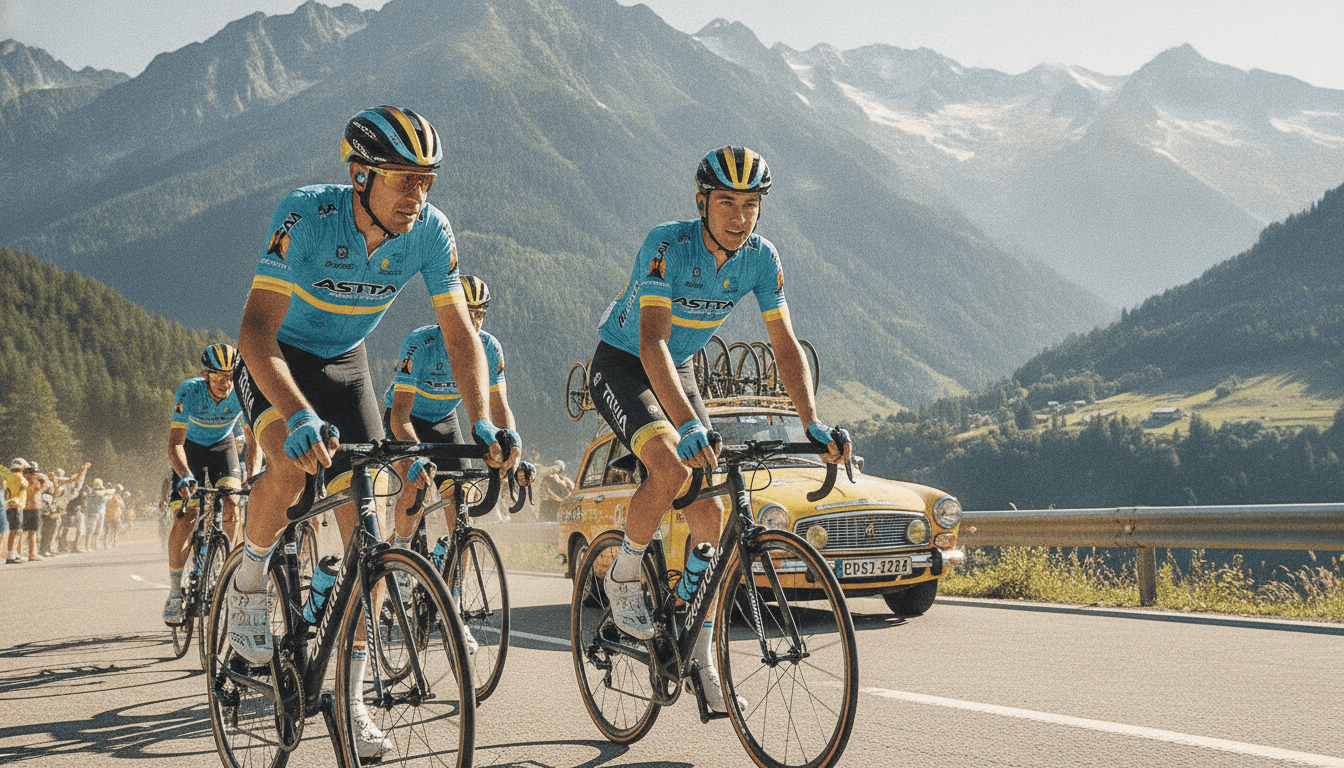
Alexander Vinokourov at the Tour de France: father, manager and renewed spotlight
Alexander Vinokourov returns to the Tour de France spotlight as the Astana general manager while his son Nicolas makes his Grand Tour debut for the team. The dual role places Alexander Vinokourov at the center of attention during cycling’s marquee race. Observers will be watching both the team’s performance and the father-son dynamic as Astana pursues stage victories and classification ambitions. (cyclingnews.com)
Vinokourov in dual role at the Tour de France
Alexander Vinokourov is listed as the general manager of XDS-Astana for the 2026 Tour de France while his son Nicolas appears on the team start list. The pairing creates a rare alignment of familial and managerial responsibilities at a Grand Tour, drawing attention from fans and media alike. This weekend’s stages will test how the team balances race objectives with the symbolic narrative of a father overseeing his son’s Tour initiation. (cyclingnews.com)
Nicolas Vinokourov set for Grand Tour debut
Nicolas Vinokourov will make his first appearance in the Tour de France after progressing through Astana’s development ranks and earlier Grand Tour experience at the Vuelta a España. The team has framed his inclusion as part of a longer-term development plan, giving the young rider exposure to three weeks of racing and a chance to gain experience in support of stronger GC and stage-hunting teammates. Expectations are measured: his role is likely to be supportive on the flat and transitional stages while offering him opportunities to learn the demands of the Tour at age 23. (cyclismactu.net)
Astana’s roster and Max Kanter’s sprint ambitions
XDS-Astana’s selection includes a mix of experienced climbers and fast men, with German sprinter Max Kanter named to the squad and tipped as the team’s primary option in bunch finishes. Kanter’s recent results on the WorldTour and one-day calendar earned him the spot on the Tour roster, where the team will hope he can contest sprint stages and chase a first Tour victory for the German rider. Team management has emphasized stage wins and selective classification targets rather than an overall general classification bid. (tour-magazin.de)
Vinokourov’s career and lingering controversies
Alexander Vinokourov’s transition from decorated rider to long-serving team manager is inseparable from a controversial competitive past, including a 2007 positive test for homologous blood transfusion that led to removal from that year’s Tour and a subsequent suspension. The episode remains a significant part of his public profile and continues to shape conversations around his leadership at Astana. Vinokourov has since rebuilt a managerial career that has kept him at the center of Kazakh cycling’s ambitions on the WorldTour. (theguardian.com)
Team objectives and Astana’s position in the WorldTour
Astana enters the Tour with pragmatic goals: collect stage victories, support opportunistic breakaways and accumulate WorldTour points to secure its ranking. The squad’s blend of punchy stage hunters and domestiques reflects a focus on visible, tangible results rather than sustaining a three-week GC campaign. Management has publicly framed this Tour as a chance to showcase younger talent, including Nicolas, while backing established players to bring home headline-worthy wins. (letour.fr)
Tactical pressures and media scrutiny around the Vinokourov name
The presence of Alexander Vinokourov in both the team hierarchy and the spectator narrative intensifies scrutiny on Astana’s tactical choices and ethical posture. Media interest in family ties at the Tour adds pressure on the team to demonstrate transparent selection rationale and clear role definitions for riders. For rival teams and race officials, the optics of a high-profile former rider managing his son’s debut will be watched closely, particularly given Vinokourov’s historical connection to doping controversies in the sport.
The opening stages will reveal whether Astana’s selection pays immediate dividends through sprint results or opportunistic stage wins. If Max Kanter can deliver a podium or victory, it will reinforce the team’s short-term strategy and ease some of the external narrative around the Vinokourov spotlight.
As the race unfolds across varied terrain, the dual storylines of a managerial icon and a debutant son will run alongside the daily tactical chess of the peloton. Regardless of outcomes, Alexander Vinokourov’s visible role at this year’s Tour de France ensures continued debate about leadership, legacy and the sport’s ongoing efforts to balance redemption with accountability.
