
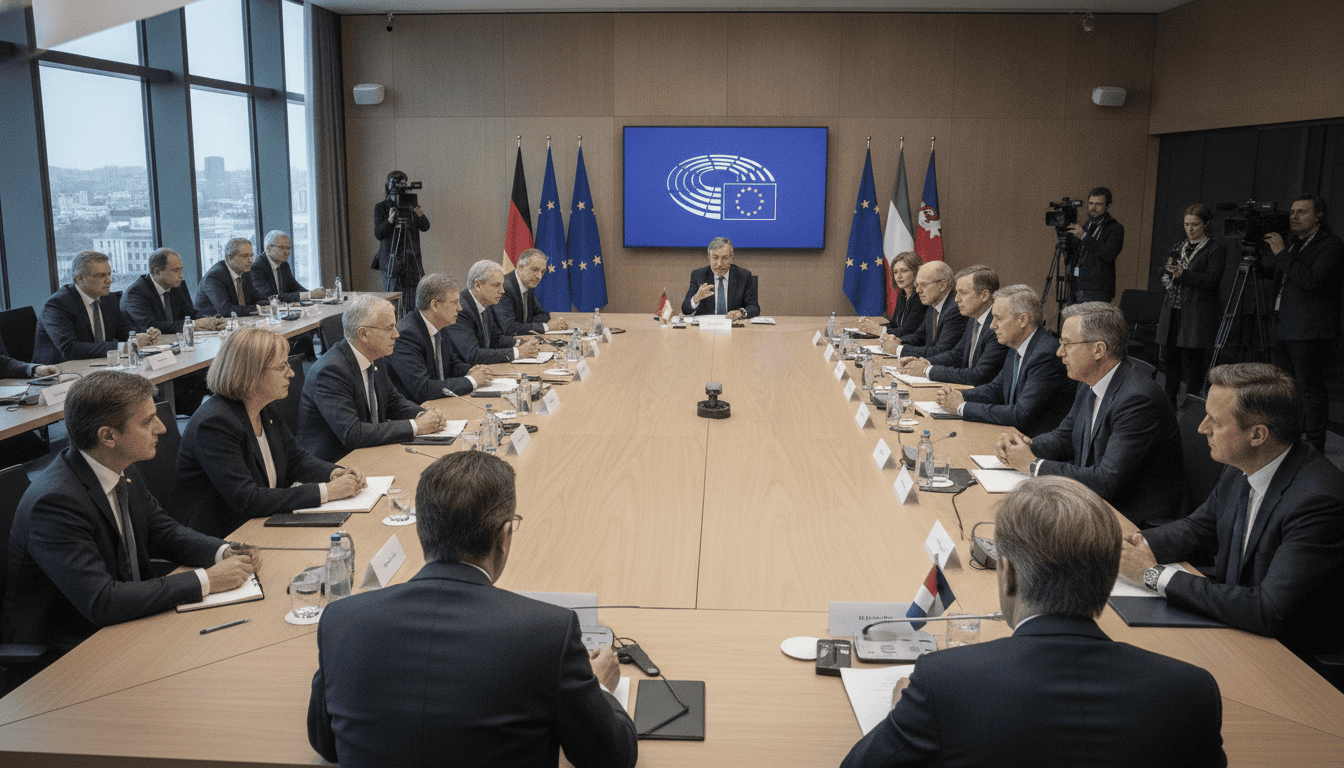
EU foreign ministers largely back plan to ban trade with Israeli settlements, Kaja Kallas says
EU ministers backed proposal to ban trade with Israeli settlements, Kaja Kallas says, as Brussels debates measures over West Bank violence and legal hurdles.
The European Union’s foreign policy chief, Kaja Kallas, told ministers in Brussels that foreign ministers largely favoured a plan to ban trade with Israeli settlements as governments sought a response to a growing wave of settler violence in the occupied West Bank. The proposal to ban trade with Israeli settlements was discussed amid mounting concern about attacks on Palestinian civilians and settlements’ expansion, and officials in Brussels are exploring options that could be implemented under EU law. Kallas referenced a written opinion from the European Commission’s legal service that, she said, indicates some measures might be taken without unanimity among the 27 member states.
Kallas reports wide support for trade ban idea
Kaja Kallas opened the meeting by telling ministers the situation in the West Bank was “really intolerable,” and said that most delegations had signalled backing for the idea of restricting trade with goods originating from settlements. Her comments reflected a rare moment of relative convergence among EU foreign ministers on a sensitive policy toward Israel and the occupied territories. Despite the apparent majority backing, Kallas made clear that detailed legal and political work remains before any formal decision is taken.
Meeting convened to address sharp rise in settler attacks
Ministers met in Brussels primarily to discuss an uptick in violence by Israeli settlers against Palestinians, a trend that EU officials say demands a coordinated response. Participants described the discussions as urgent and focused on both humanitarian and security dimensions, as well as potential policy tools the EU could deploy. The debate underscored growing alarm in capitals across Europe about the humanitarian impact of settler violence and the deterioration of conditions on the ground.
Legal opinion cited as pathway to action without unanimity
Kallas referenced an opinion from the European Commission’s legal service suggesting certain restrictive measures could be adopted without the unanimous consent of all 27 member states. That interpretation, if sustained, would allow the EU to pursue targeted economic steps through qualified majority voting in some policy areas rather than being blocked by a single dissenting country. Legal advisers in Brussels are now expected to clarify which instruments are available and how they could be structured to withstand legal and diplomatic scrutiny.
Longstanding fractures among member states complicate consensus
EU governments have long been divided over Middle East policy, and those fault lines persist even as many ministers voiced concern at the Brussels meeting. Some member states have traditionally resisted measures that could be seen as singling out Israel, while others have pushed for stronger action to uphold international law and protect Palestinian civilians. Those divergent political calculations mean any move to ban trade with Israeli settlements will require careful coalition-building and diplomatic negotiation within the Council.
Options under consideration focus on targeted economic and regulatory steps
Officials in Brussels discussed a range of possible responses, with emphasis on measures that would specifically target settlement-linked economic activity rather than Israel as a whole. Proposals under review reportedly include tighter controls on imports from settlements, enhanced tracing and customs measures, and restrictions on EU funding or procurement tied to settlement presence. EU diplomats stressed that any measures would aim to be legally robust, proportionate, and clearly grounded in the bloc’s obligations under international law.
Potential diplomatic and economic fallout for EU-Israel ties
Adopting restrictions aimed at settlement trade would carry diplomatic consequences and could strain relations between the EU and Israel, which is an important trading partner and security interlocutor. EU governments will need to weigh the political benefits of responding to settler violence against the risks of escalation in bilateral relations and regional repercussions. Several capitals are reported to prefer calibrated measures that convey political pressure while leaving channels for diplomatic engagement open.
The Brussels meeting leaves the issue on a fast-moving track, with officials now tasked with translating broad political support into precise proposals that can survive legal review and win backing in the Council. Further technical work by the Commission’s legal service and political consultations among member states are expected in the coming weeks. The outcome will test the EU’s capacity to act collectively on one of the most disputed elements of the Israeli-Palestinian conflict, and it will shape Brussels’ diplomatic posture toward both sides going forward.
