
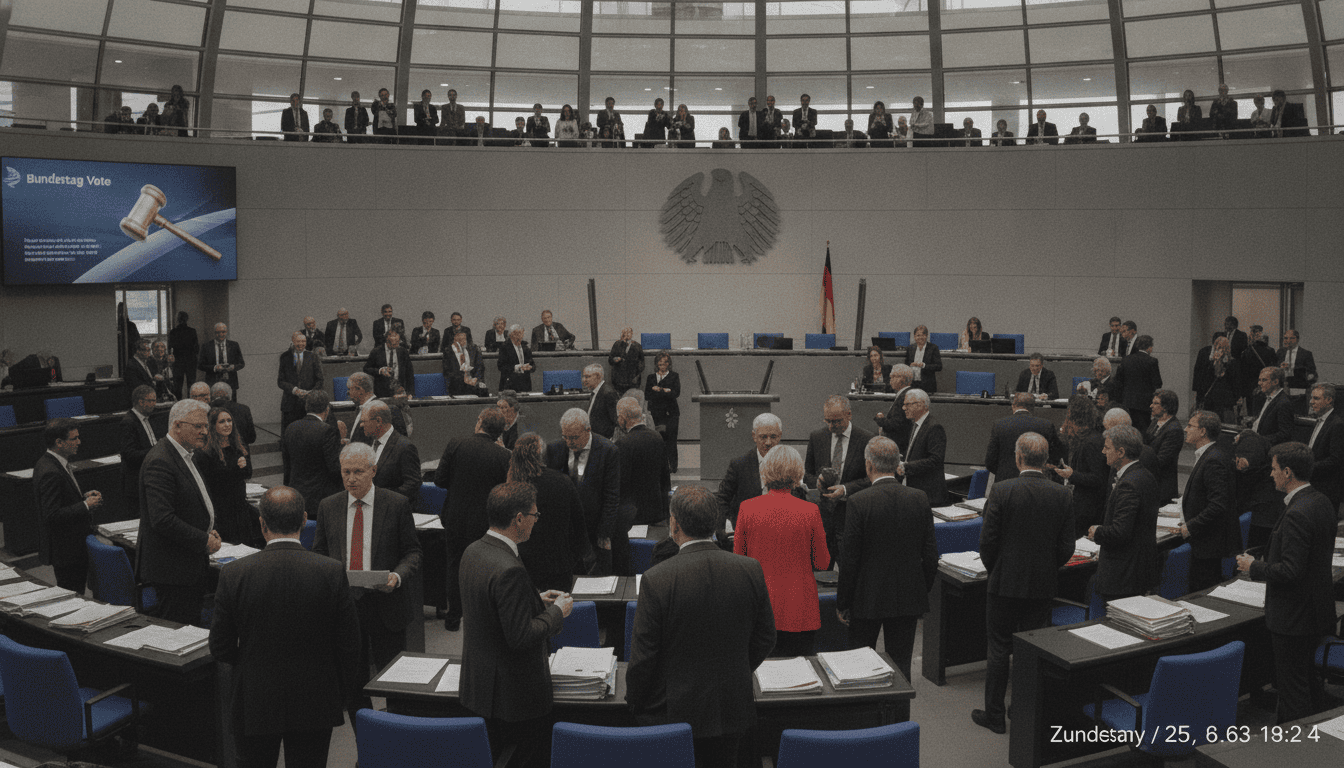
Bundestag Set to Vote on GKV Savings Package After Constitutional Court Clears Way
German Bundestag votes July 10, 2026 on the GKV savings package to stabilise statutory health insurance, amid court clearance and heated political disputes.
Germany’s Bundestag is scheduled to vote on Friday, July 10, 2026, on the contested GKV savings package intended to stabilise statutory health insurance finances. The constitutional court’s rejection of urgent bids by the Greens and the Left cleared the immediate legal obstacle, but political conflict over the content and timing of the reforms remains intense. Opposition parties have complained they were handed about 300 pages of last-minute changes, arguing there was insufficient time to scrutinise the proposals thoroughly.
Court decision and parliamentary timetable
The Federal Constitutional Court dismissed two emergency applications late Thursday, permitting the Bundestag to proceed with the vote on the GKV savings package on July 10, 2026. The petitions, filed by the Greens and the Left, argued that lawmakers lacked adequate time to debate extensive late amendments. The court’s decision did not address the merits of the law itself, only the procedural claim about parliamentary preparation time.
Parliamentary leaders moved quickly after the ruling to keep the schedule, and the vote is set for the plenary session on Friday. Lawmakers on all sides warned that the debate will be intense and that the outcome could shape coalition dynamics in the weeks ahead.
Opposition procedural and democratic objections
Opposition groups say the process undermines parliamentary scrutiny because roughly 300 pages of alterations were circulated shortly before the vote. Critics argue that such volume and late timing prevent meaningful committee review and informed debate on complex health-financing measures. The Greens and the Left characterized the situation as a test of democratic standards in legislative practice.
Government supporters counter that technical revisions and negotiated compromises necessitated the late text and that standing procedures were followed. Still, the procedural dispute has hardened partisan lines and amplified public attention on the reforms.
Key provisions driving controversy
Several measures in the GKV savings package have become focal points for criticism. One of the most controversial elements is the proposed end to free family co-insurance for spouses in statutory health insurance, a change opponents say will raise costs for many households. The package also contemplates increased manufacturer rebates for pharmaceutical companies and planned savings in hospital funding, both of which have drawn pushback from industry and provider groups.
Mental health care provisions, particularly potential effects on access to psychotherapy, are another flashpoint. Patient advocates and therapists warn that reductions or restructured funding could lengthen waiting times and limit treatment availability. The cumulative impact of multiple savings measures has led stakeholders to question whether short-term budget relief could produce longer-term bottlenecks in care delivery.
Government concessions and late amendments
In recent days the governing coalition has moved to soften parts of the bill in response to criticism, introducing targeted amendments aimed at easing immediate burdens. Officials say these adjustments increase the federal top-up to statutory health insurance and clarify implementation timelines for cuts affecting hospitals and outpatient services. Those changes were presented as efforts to balance fiscal stabilization with access protections.
Nonetheless, many critics say the concessions fall short of addressing core concerns and that the hurried drafting process has left significant legal and operational uncertainties. Health insurers and provider associations have called for clearer rules and staged implementation to avoid disruption.
Reactions from stakeholders and regional authorities
Hospital associations, medical practitioners, patient organizations and health insurers have voiced a mix of alarm and guarded acceptance depending on the changes. Hospital representatives warned that planned savings could undermine investments and staffing at a time when many facilities still face capacity challenges. Insurers emphasised the need for sustainable funding but pressed for clearer federal contributions to avoid destabilising contribution rates for insured individuals.
Regional health ministries and state-level officials are watching closely because implementation of many measures will require coordination across federal and Länder systems. Several Länder have signalled they may seek further clarifications or operational support once the law is finalised.
Parliamentary arithmetic and legal outlook
The government seeks to secure a parliamentary majority for the GKV savings package, but the margin and cohesion within the coalition will be under scrutiny during the vote. If the bill passes, stakeholders anticipate immediate follow-up negotiations over implementing regulations and budget allocations. Legal challenges remain a possibility; opponents have already signalled readiness to pursue judicial review of substantive elements after the parliamentary process concludes.
Even with passage, the law’s effect on contribution rates, provider finances and patient access will unfold over months and likely attract continued political and legal contestation.
The vote in the Bundestag on July 10 will determine whether the legislative text moves into implementation and how the government manages the next phase of health-sector adjustments. Observers say the decision is as much about fiscal strategy as it is about trust in the legislative process, and that the aftermath will test the government’s capacity to translate budgetary aims into durable and equitable health-care arrangements.
