
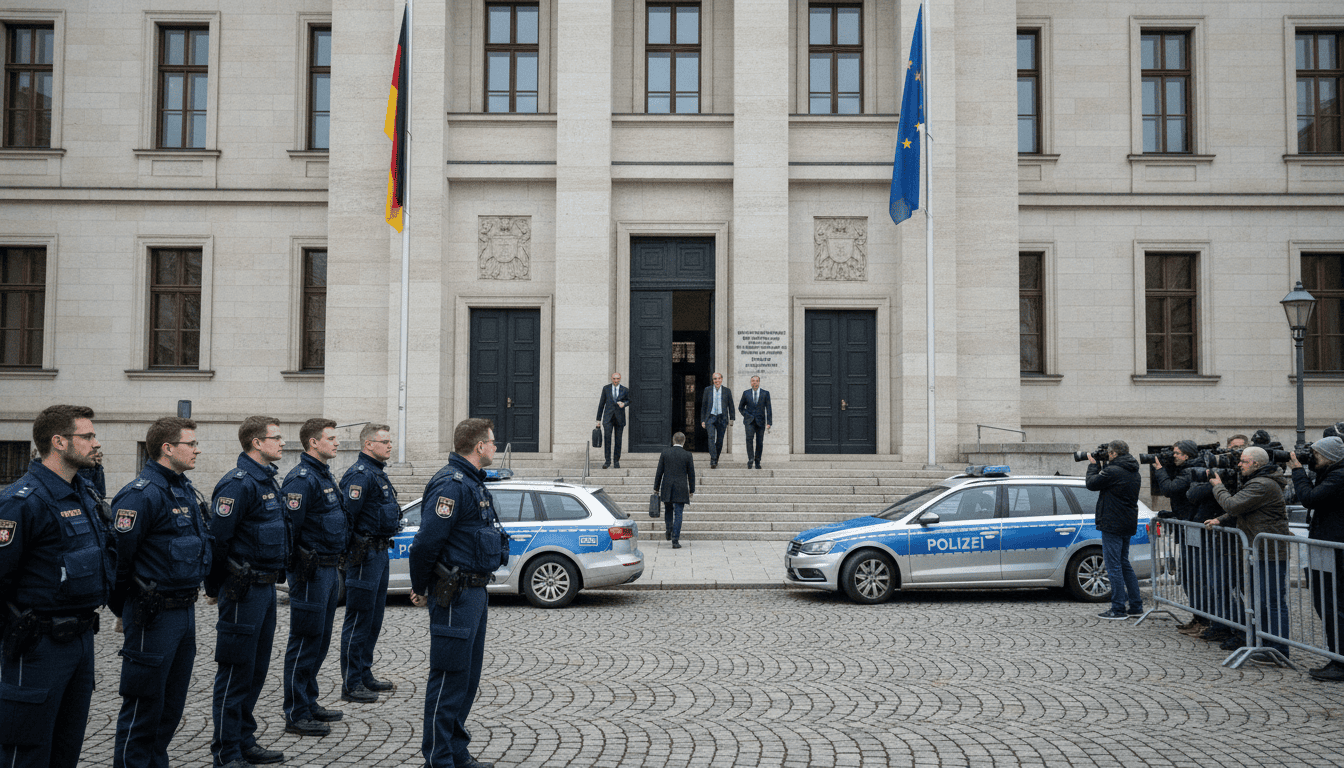
Bavarian police powers under scrutiny as Federal Constitutional Court hears challenge
Bavarian police powers face a constitutional test as MPs and civil groups challenge the 2018 law that expanded preventive detention, DNA profiling and other intrusive measures.
The Federal Constitutional Court heard arguments on Tuesday in a high-profile challenge to Bavarian police powers introduced in the 2018 police law, putting sweeping preventive authorities under judicial scrutiny. Plaintiffs include 216 Bundestag members from the FDP, Greens and Left, joined by a coalition of civil society litigants who argue the law allows intrusive action before a concrete threat is established. Defenders, including Bavarian Interior Minister Joachim Herrmann, told the court the changes are necessary to protect the public from terrorism and other serious threats.
Parliamentarians form rare cross-party constitutional challenge
A group of 216 Bundestag deputies from three parties jointly brought a norm-control action against the Bavarian law, an unusually broad parliamentary intervention in a state statute. Their representative, Regensburg law professor Thorsten Kingreen, told the court this alliance signalled the significance of the constitutional questions at stake. The joint suit is notable because it unites factions that seldom act together, underscoring broad political concern about the law’s preventive thresholds.
The parliamentary plaintiffs argue the law’s lowered threshold for intervention—allowing action on a “threatening” danger—undermines individual liberties protected by the Basic Law. They emphasize that the problem is not current enforcement but the scope of what authorities could do in future circumstances. That distinction framed much of the oral argument before the First Senate.
Core provisions of the 2018 reform contested in Karlsruhe
The contested statute gives Bavarian authorities the power to act before a danger materialises, authorising measures such as mail seizure, online searches, and the use of undercover investigators. It also extended preventive custody to a maximum of two months, up from 14 days, and broadened forensic techniques to include advanced DNA analysis that can suggest physical traits. Supporters in the Bavarian parliament framed the measures as necessary responses to evolving threats including terrorism, extremism and cyberattacks.
The law drew large public demonstrations across Bavaria when it passed with a CSU majority, reflecting sustained civic unease about pre-emptive policing. In 2025 the Bavarian Constitutional Court upheld the “threatening danger” concept but imposed interpretive limits on when and how it may be applied, a ruling that now sits alongside the national-level scrutiny in Karlsruhe.
Defence argument: state duty to prevent attacks and protect citizens
Bavaria’s interior minister, Joachim Herrmann, argued at the hearing that the state has a core obligation to secure its population, and that the law provides necessary tools for prevention. He told the court the reform was designed to implement Karlsruhe’s prior rulings and to give police lawful options in the face of complex modern threats. Herrmann warned that strict inaction could leave authorities unable to respond to emerging scenarios that have resulted in loss of life in recent years.
Government counsel characterised criticisms as political polemic rather than legal defects, and urged the court to preserve legislative discretion to calibrate security measures. They asked judges to allow room for the police to act within constitutionally prescribed safeguards when credible signs of future harm appear.
Plaintiffs highlight risks to fundamental rights and proportionality concerns
Opponents argued the law permits intrusive state action on the basis of abstract or speculative dangers, threatening privacy, freedom of movement and human dignity. Prominent critic Mathias Hong told the court that empowering police to deploy explosives or accept the risk to bystanders in some scenarios crosses a constitutional line. The civil-society complaint also lists a journalist, a physician, football volunteers and defence lawyers among its individual plaintiffs, emphasising the law’s broad reach.
Legal counsel for the plaintiffs invoked prior Karlsruhe jurisprudence that required a “concretised danger” for covert surveillance, arguing the Bavarian threshold falls short of that standard. They pressed the court to delineate clearer boundaries to ensure preventive measures meet proportionality and necessity tests under the Basic Law.
Technical measures and battlefield analogies spark legal debate
Specific provisions drawing skepticism included expanded DNA phenotype analyses and the authorization to use explosive devices in policing operations even when non-involved civilians might be at risk. The court’s rapporteur, Justice Yvonne Ott, questioned how those powers align with constitutional safeguards, particularly regarding the protection of life and human dignity. The exchange underscored the tension between innovative investigative techniques and core civil-rights guarantees.
Another recurring theme was how Karlsruhe’s 2016 BKA ruling—requiring a “concretised danger” for secret surveillance—applies to state-level preventive regimes. The judges must decide whether Bavaria’s “threatening danger” concept satisfies or conflicts with that precedent, a determination that could reshape the constitutional standard for preventive policing across Germany.
The oral hearing was scheduled to continue on Wednesday, with lawyers and the court preparing for further examination of evidentiary thresholds, proportionality limits and the procedural protections attached to the disputed powers.
The outcome will have implications beyond Bavaria, as a ruling affirming or curtailing the state’s preventive toolbox would influence how other Länder and federal authorities design security legislation.
