
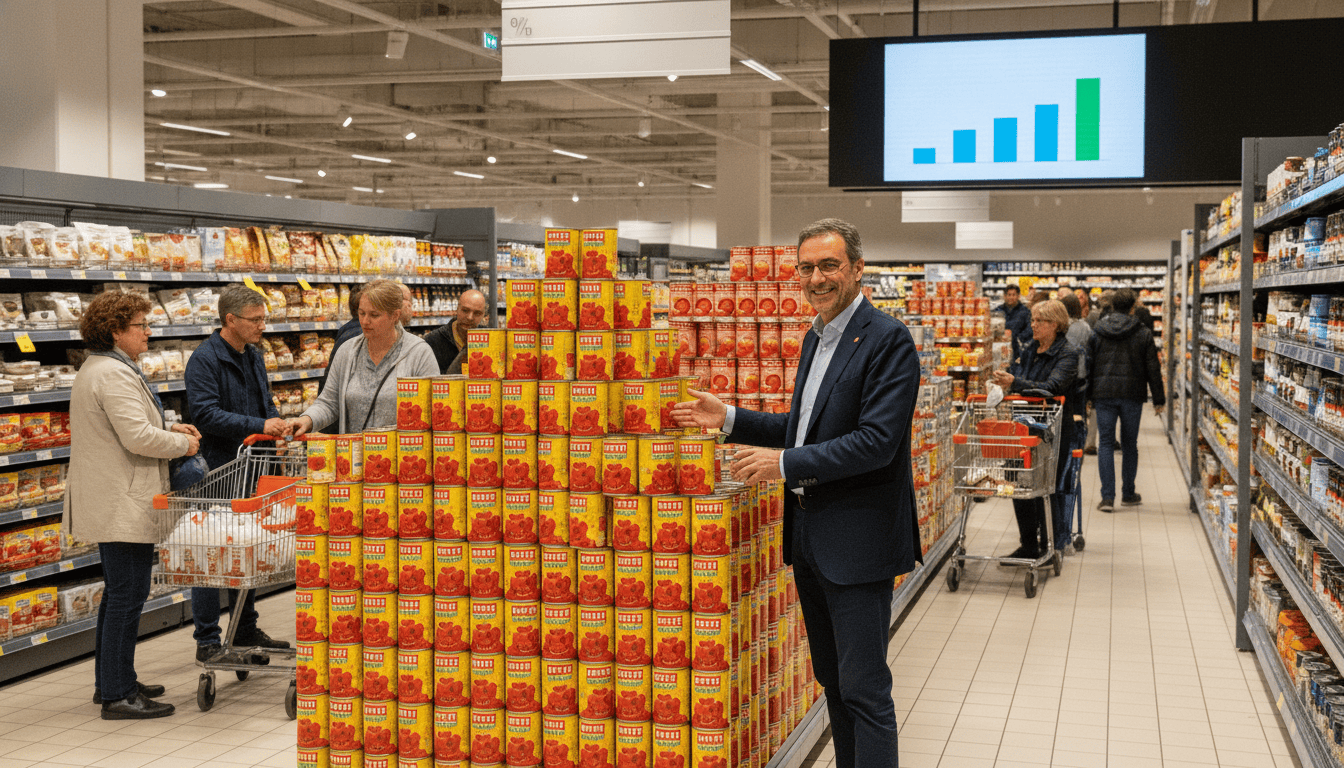
Mutti canned tomatoes surge in Germany as premium strategy pays off
Mutti canned tomatoes have captured a growing share of German supermarket shelves, challenging the country’s discount-driven grocery habits with a premium, Italy-sourced product. The brand’s rise in Germany—now a key market outside Italy—reflects a deliberate move away from competing on price toward selling quality, traceability and provenance. Retailers and consumers alike report that shoppers are increasingly choosing Mutti over cheaper private labels, signaling a notable shift in buying behavior.
Mutti’s foothold in German supermarkets
Mutti entered the German retail market in 2018 after a long presence in professional kitchens, and within a few years secured roughly 15 percent market share in canned tomatoes. The brand’s premium positioning allowed it to command prices two to three times higher than many private-label alternatives while still attracting mainstream shoppers. Industry observers say the brand’s performance in Germany demonstrates that higher-priced, value-led products can succeed even where discount shopping is deeply rooted.
A four-generation family business
The company traces its roots to a family business founded in 1899 in Parma, Italy, and remains majority-owned by the Mutti family, with an international investor holding a minority stake since 2016. Francesco Mutti, a fourth-generation leader who studied finance in Cardiff, has led the firm’s transformation since the 1990s, shepherding it from a small regional producer into a European specialist. The firm now reports several hundred million euros in sales and employs hundreds of permanent staff plus many seasonal workers during harvest.
Quality-first strategy and grower relations
Central to Mutti’s strategy was a conscious decision to pay farmers more for superior fruit and to source exclusively from Italy, securing tomato varieties and harvest practices aligned with the brand’s quality standards. The company introduced incentives and competitions to reward the best harvests and encouraged growers to invest in improved cultivation methods. That long-term commitment to field-level quality, executives say, underpins the consistent flavor and texture that differentiates Mutti canned tomatoes at the point of sale.
Packaging, storytelling and retail tactics
Mutti’s recognizable tin, featuring a retro emblem, and carefully crafted messaging have helped the product stand out in crowded aisles where many purchases are decided in seconds. The brand’s visual identity—rooted in heritage symbols once used to help non-literate shoppers identify the product—now works as a cue of authenticity and nostalgia. Complementing design, targeted marketing in Germany, including ads that feature the company’s name and founder, helped lift attention without heavy reliance on broad international campaigns.
From professional kitchens to supermarket carts
The brand’s initial adoption by restaurants and chefs proved instrumental to its retail success, establishing credibility among professionals who prioritized taste and consistency. As chefs embraced the product, consumers gradually followed, first trying Mutti in specialty or foodservice channels and later encountering it in regular grocery aisles. That staged market entry allowed the company to demonstrate product performance under demanding culinary conditions before scaling distribution to general retail.
Limits and risks of premiumisation
Analysts caution that premium growth carries inherent ceilings: producing at higher quality and paying growers more restricts the volume that can be cost-effectively supplied, and rapid expansion can strain standards. Mutti acknowledges seasonal and agronomic limits—Italian harvest windows are narrow and require year-by-year quality control—so its growth trajectory is intentionally managed to preserve the product proposition. Observers note that sustaining price premiums depends on continually communicating provenance, worker conditions and traceability to justify the cost to discerning buyers.
Mutti’s German success illustrates a broader retail trend in which shoppers balance price sensitivity with a willingness to pay more for proven quality and origin. For now, Mutti canned tomatoes remain priced above discount brands but continue to win shelf space and consumer trust by delivering a taste and story that shoppers appear ready to pay for.
