
GdW Warns of New-Build Investment Slump in Germany
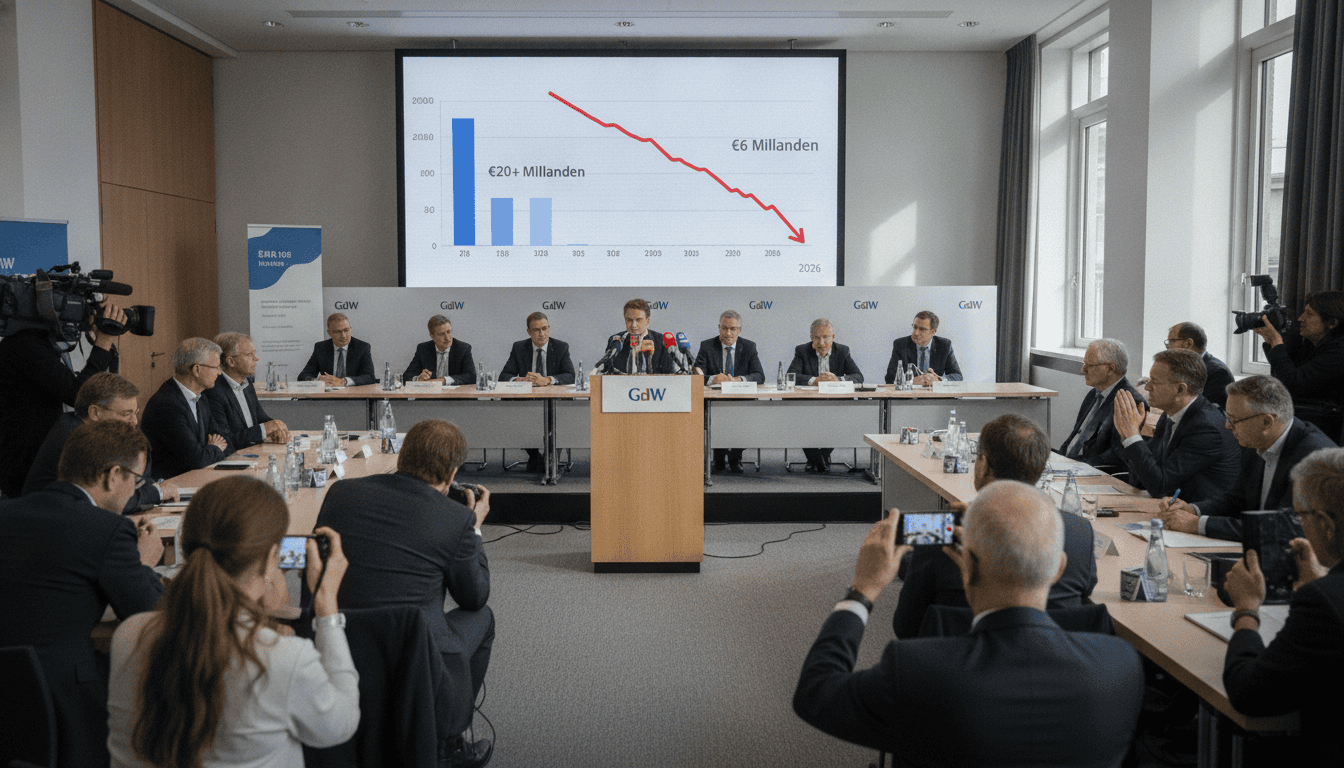
GdW warns of a new-build investment slump as construction costs cut 2026 new-build spending to €6bn; urges ‘type E’, faster approvals and warns shortages.
Germany’s main housing association has warned of a sharp fall in investment in new-build housing as rising construction costs and regulatory complexity push providers to focus on existing stock. The GdW — which represents roughly 3,000 housing companies and cooperatives managing about six million apartments — said investment into new construction will drop sharply in 2026. Association leaders called for a new, simpler building standard and faster approval and funding mechanisms to avoid a deeper shortfall in housing supply.
GdW projects sharp fall in new-build spending
The GdW forecasts that investment by its member companies in new construction will slump by more than a quarter to about €6 billion in 2026. By contrast, investment in the existing housing stock is expected to remain stable at roughly €12.7 billion, the association said. The shift follows a decline in new-build spending of 1.9 percent last year while investment in the stock rose by 5.8 percent.
New-build share of investment has narrowed
According to the association’s figures, the share of investment directed to new construction has fallen from 48 percent in 2021 to an estimated 32 percent this year. That reallocation reflects mounting cost pressures that make new projects harder to finance and deliver at affordable rents. GdW president Axel Gedaschko warned in Berlin that the trend could sharply reduce the pace of new housing completions nationwide.
‘Gebäudetyp E’ seen as key to cutting costs
Gedaschko urged policymakers to adopt the proposed “Gebäudetyp E” as a binding minimum standard to enable simpler, lower-cost construction. The GdW estimates that a standardized, streamlined building type could cut roughly one third of certain construction costs and potentially make it feasible to build between 260,000 and 300,000 homes per year. Association officials argue that such savings are essential to bridge the gap between current completions and the country’s estimated annual need.
Federal proposal remains without a bill in the cabinet
The federal government published key points for a Gebäudetyp E in November 2025, outlining concessions such as scaled-back requirements for underground garages, basements, lifts and component thicknesses. However, the cabinet had not approved a formal bill by the time the association issued its latest projection. The GdW called on ministers to convert the outline into binding law quickly to deliver predictable cost relief.
Completions lag far behind housing needs
Germany completed just over 206,000 housing units in 2025 and the GdW expects about 200,000 units in 2026, figures that fall well short of an estimated annual requirement of roughly 320,000 units. The association’s members, which tend to provide comparatively affordable rental housing, anticipate a 33 percent decline in their completions this year after a 20 percent drop in 2025. That contraction among social and cooperative providers risks worsening the availability of lower-cost rental options.
Social housing supply and benefit cuts under scrutiny
The GdW highlighted a simultaneous decline in the overall social housing stock despite new social builds: 27,300 social housing units were completed in 2025 but the total inventory fell to about 1.026 million units. Gedaschko also cautioned against proposed cuts to housing benefit, arguing that reductions would increase the risk of rental arrears and undercut demand-side support. The association emphasized that more funding alone will not solve shortages if escalating building costs and complex rules erode the impact of subsidies.
Industry calls for faster permit processes and reliable subsidies
Beyond the adoption of a standardized building type, the GdW pressed for streamlined permitting procedures and more reliable, long-term subsidy frameworks to restore investment confidence. The association said predictable funding and shorter approval timelines would help lower project risk and attract capital back into new construction. Without these changes, housing providers said they will continue prioritizing maintenance and refurbishment over risky new developments.
The association’s warnings underscore a broader policy challenge: balancing construction quality and regulation with the urgent need to accelerate housing delivery while preserving affordability.
