
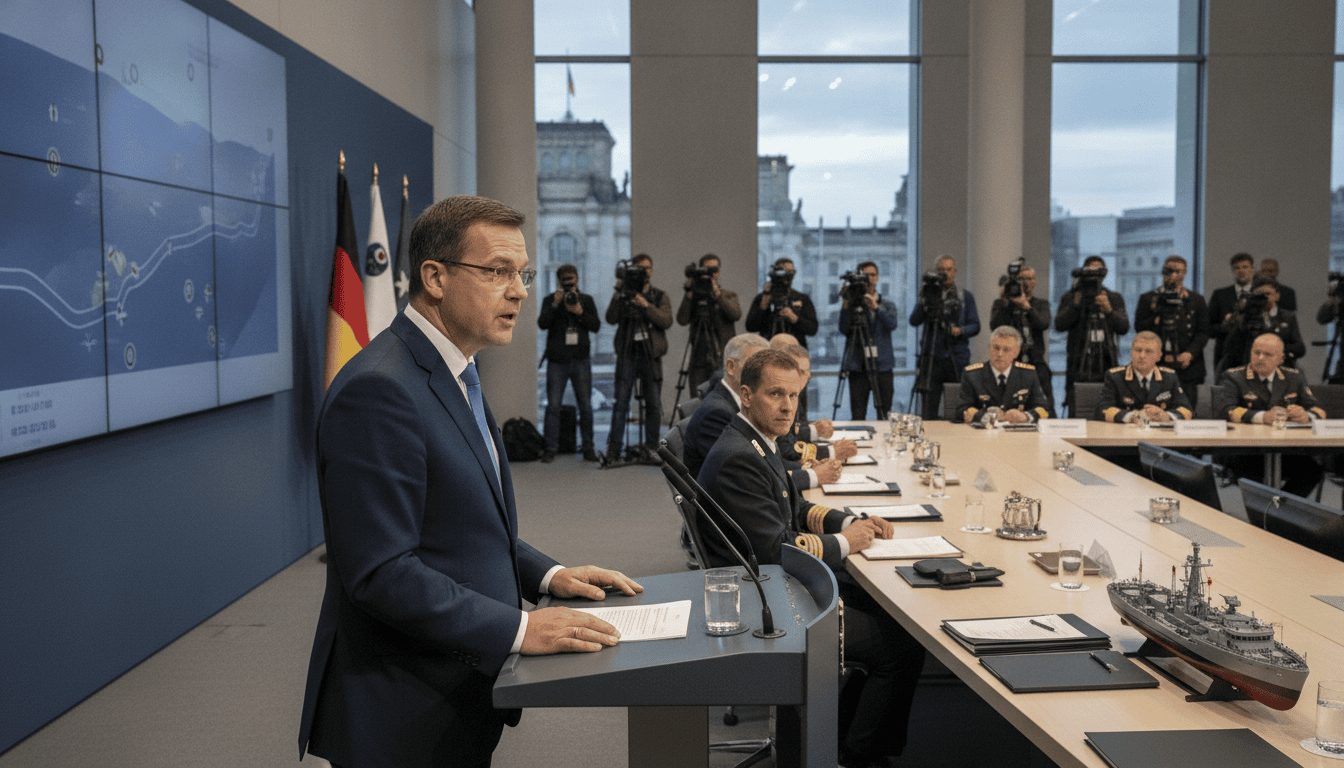
Germany mine-clearing mission: Berlin affirms readiness after defence minister issues clarification
Germany reiterates readiness for a mine-clearing mission, the Foreign Minister and the Chancellery said, after conflicting remarks from the Defence Minister prompted a speedy clarification.
Germany’s readiness to participate in a mine-clearing mission was restated by the Foreign Minister and the Chancellery following a brief episode of mixed messages from the Defence Ministry. The emerging narrative of a coordinated commitment contrasts with the Defence Minister’s earlier remarks, which were later softened by an official clarification.
Foreign Ministry and Chancellery stress Germany’s continued readiness
The Foreign Minister and the Chancellery made public statements underscoring that Germany remains prepared to take part in an international mine-clearing operation. Officials emphasized that logistical, legal and political conditions would guide any concrete decision, but that the federal government stands ready to contribute.
Both offices framed their remarks as consistent with previous commitments to allied efforts in maritime and land-based demining, while noting that operational details would be worked out with partners. The statements were aimed at reassuring international partners and domestic audiences after the day’s confusion.
Defence Minister’s initial remarks and swift clarification
Earlier comments from the Defence Minister appeared to convey a different tone, suggesting a need for further internal debate before committing to deployment. Those remarks briefly fueled speculation about a split within the cabinet over the extent and timing of German involvement in mine removal operations.
Within hours, the Defence Minister’s office issued a clarification aligning the ministry’s position with the Chancellery and Foreign Ministry, saying the earlier wording had been misunderstood. The clarification reiterated that any deployment would follow legal review, parliamentary oversight, and coordination with NATO and other partners.
Scope and context of the proposed mine-clearing mission
Government sources described the potential mission as aimed at clearing naval and coastal mines that threaten commercial shipping and humanitarian movements. Such operations typically require mine-countermeasure vessels, remotely operated vehicles, and specialized explosive ordnance disposal teams, along with multilateral coordination.
Officials framed the mine-clearing effort within a broader international response to disruptions in key shipping routes and to protect civilian maritime traffic. Germany’s contributions, they said, would depend on a formal mandate, funding arrangements, and clear rules of engagement.
Parliamentary oversight and legal prerequisites
Any decision to deploy German forces abroad must pass parliamentary scrutiny under current constitutional practice, and legal advisers must confirm compliance with international law. Lawmakers are likely to seek briefings from the government before approving personnel or materiel commitments.
The Defence Ministry’s clarification underlined that the cabinet would present proposals to the Bundestag and involve relevant committees in advance. Experts note that parliamentary debate can shape both the scale of a mission and the political messaging around it.
Coalition partners and diplomatic signaling
Coalition partners were reported to be in consultations as ministries moved to align their public positions, signaling an effort to present a unified front to allies. Diplomatic sources said Berlin’s affirmation was intended to reassure partner countries and international institutions monitoring mine-related threats.
Observers cautioned that reconciling different ministry priorities is a routine part of coalition governance, and that the episode reflects the fast pace of modern crisis communication rather than an enduring policy rift. Diplomatic channels are reportedly active to coordinate technical and political elements of a possible operation.
Operational hurdles and next steps for deployment
If a mission proceeds, Germany will need to secure platforms, personnel, and rules for command and control in a multinational framework. Procurement or redeployment of specialized assets, training for demining teams, and insurance and legal protections for service members are among the logistical matters to be addressed.
Officials indicated that a formal offer of assistance would follow once legal checks are complete and parliamentary processes are set in motion. International partners are expected to set the operational requirements, which will determine Germany’s precise role and the timeline for deployment.
The swift clarification from the Defence Minister closed a brief window of public uncertainty and returned the focus to the practical steps required to translate Germany’s stated readiness into operational support for a mine-clearing mission.
