
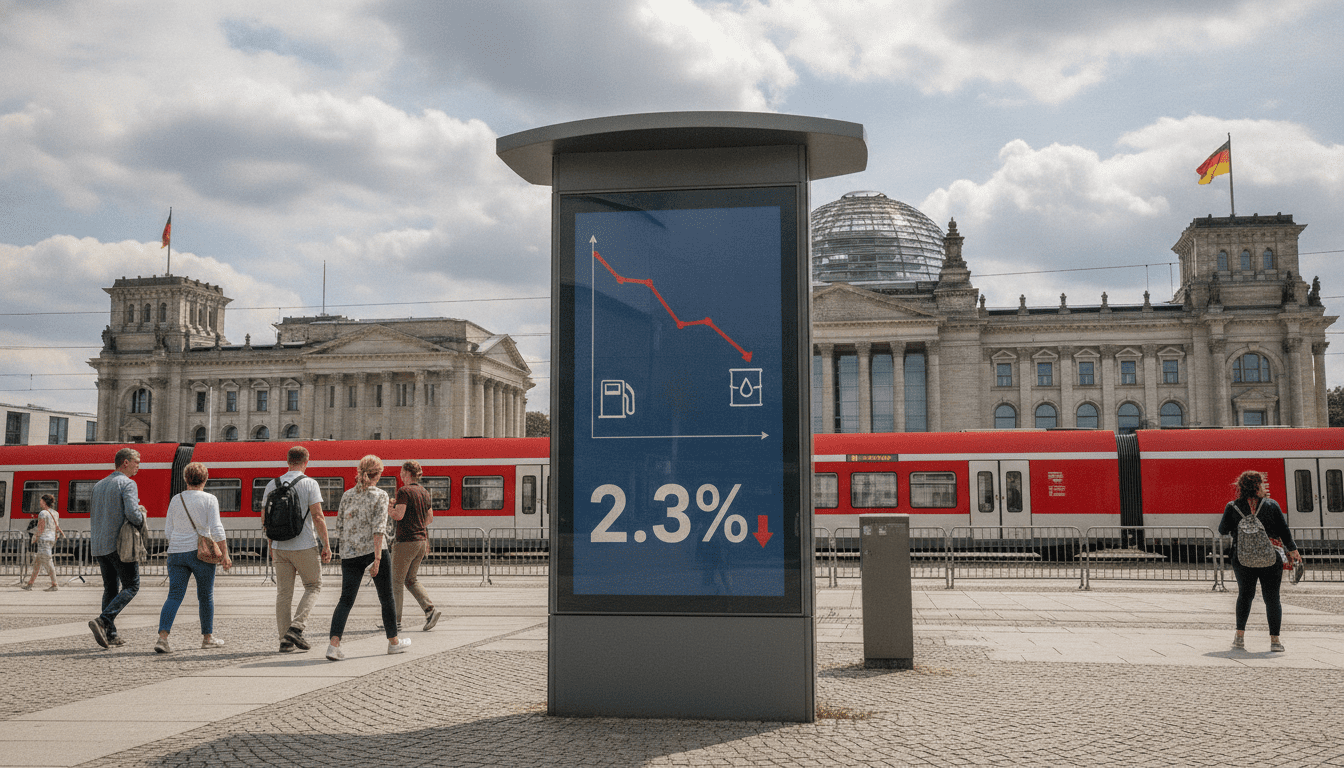
German inflation slows to 2.3% in June 2026 as oil prices and fuel discount ease pressure
German inflation eased to 2.3% year-on-year in June 2026, helped by lower oil prices and a temporary fuel discount, but core inflation and rising import costs point to risks ahead.
The Statistisches Bundesamt released a first estimate on Tuesday showing German inflation at 2.3% in June 2026, down from 2.6% in May and 2.9% in April. The agency said the decline was largely driven by lower energy prices combined with a government fuel discount known as the Tankrabatt. Core inflation — excluding food and energy — remained elevated at 2.5% year-on-year.
Statistical Office: June reading and recent trend
The Statistisches Bundesamt’s preliminary figure for June 2026 marks a continuation of a gradual downward trend in headline inflation that began earlier in the spring. Year-on-year inflation moved from 2.9% in April to 2.6% in May before reaching 2.3% in June, according to the office’s estimate. The release emphasized the outsized role of energy price movements in shifting the headline rate month to month.
Analysts noted that the June print is a first estimate and that detailed breakdowns will follow, but the headline decline was sufficiently clear to alter short-term market and policy expectations. The pattern underlines how volatile energy components can temporarily mask underlying price pressures elsewhere in the economy.
Energy and fuel decline tied to oil market and Tankrabatt
Household energy and motor fuel prices were 3.4% higher in June 2026 than a year earlier, the statistics office reported, a marked easing from a 6.6% increase in May and roughly 10% in April. The earlier spikes were linked to an oil-price shock associated with renewed conflict in the Middle East, which pushed pump prices sharply higher in the spring. Falling crude prices in June therefore had an immediate downward impact on headline inflation.
Jörg Krämer, chief economist at Commerzbank, said the drop in oil prices was the main factor behind the June easing and warned that the fuel discount will complicate the outlook. The temporary Tankrabatt is scheduled to expire in July 2026, and Krämer said the headline rate is likely to rise again when that support is removed and pump prices revert toward global market levels.
Core inflation and household cost pressures
Stripping out food and energy, core inflation rose 2.5% year-on-year in June, indicating persistent underlying inflationary momentum. Services prices, covering categories such as insurance and travel, were about 3.1% higher than a year earlier, reflecting sustained cost pressure in labor‑intensive sectors. Food prices showed a month-on-month uptick: households paid 0.4% more for groceries in June than in May 2026.
Economists highlight the risk that firms, having absorbed higher energy and transport costs earlier in the year, will pass them on to consumers with a lag. That delayed pass-through could keep core inflation elevated even if volatile energy components moderate temporarily, maintaining pressure on real household budgets.
Import prices climb and supply-cost transmission
Import price data for May 2026, referenced by statisticians, showed a sharp increase — the strongest month-to-month rise since the end of 2022. Rising import costs raise input prices for manufacturers and retailers, increasing the likelihood that producers will raise selling prices to protect margins. Higher transportation and commodity costs filter through supply chains and can broaden inflation beyond the directly affected sectors.
This transmission mechanism means that domestic inflation may not stay subdued for long if import price pressures persist. Companies facing higher import bills will weigh absorptions against price increases; the balance of that decision will determine how quickly consumer inflation resumes an upward path.
Outlook for July and policy considerations
With the Tankrabatt scheduled to lapse in July 2026, forecasters expect a rebound in headline inflation in the coming month as fuel prices adjust. Monetary and fiscal policymakers will therefore focus on persistence in core inflation and any signs that cost shocks are being transformed into lasting price increases. Central banks typically pay particular attention to the core rate and services inflation when assessing medium‑term inflation trends.
Short-term volatility from energy markets and temporary fiscal measures complicates the policymaking landscape, creating uncertainty about when and how much inflation will reaccelerate. Market participants and officials will be watching incoming data on import costs, wages, and services prices to assess whether June’s decline signals a durable slowdown or a brief reprieve.
The June 2026 reading offers temporary relief from the sharp increases seen earlier in the spring, but it also highlights the fragility of the outlook: energy-driven dips can be reversed quickly, and underlying price pressures in services and imports leave room for the headline rate to rise again.
