
Germany’s Coalition Stakes Social Reform on Economic Growth
Government coalition meeting on July 1, 2026, aims to approve sweeping reforms — but questions remain over the feasibility of relying on renewed economic growth to finance the plan.
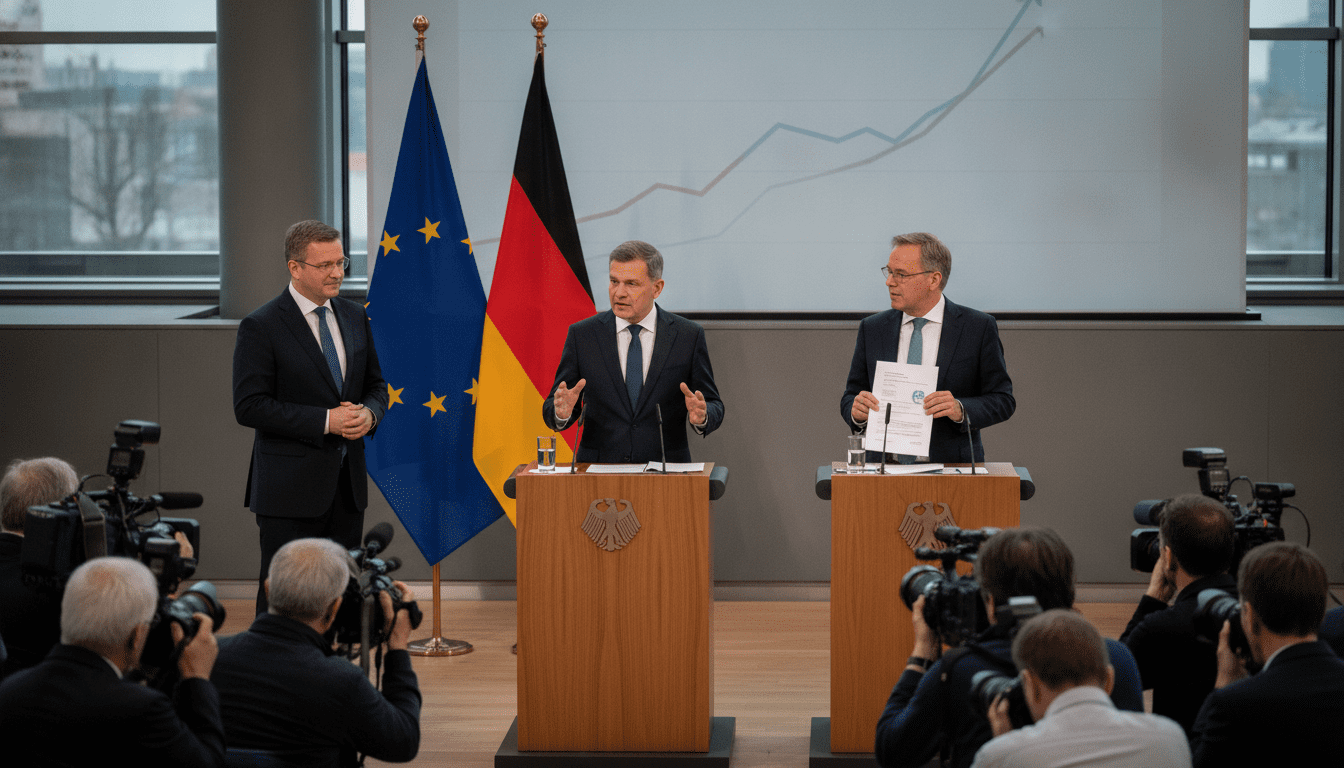
This Wednesday, July 1, 2026, the coalition committee of the CDU, CSU and SPD meets to push forward a major reform package that links health, long-term care, pensions and tax changes to the expectation of renewed economic growth. The coalition has prioritized measures it says will spur growth, but officials and analysts warn that reforms built on the assumption of a sustained upswing may face financing gaps if growth fails to materialize. The debate frames the central policy dilemma: can Germany maintain its social model without the economic expansion the government is banking on?
Coalition to Decide on Comprehensive Reform Package
The coalition committee will consider formal adoption of structural changes in health care, long-term care and pensions, and is expected to present tax reform proposals before the Bundestag’s summer recess in early July 2026. Party leaders have signaled that measures which directly support growth will be given precedence in the negotiations. The meeting represents a high-stakes attempt to knit together policy priorities across three areas that together account for a large share of public expenditure.
Health and Care Measures Already Agreed
According to government briefings, the partners have largely aligned on new arrangements for health and long-term care financing intended to contain rising costs and improve service delivery. Planned changes include stricter cost-control mechanisms and incentives to expand domestic care capacity, both aimed at reducing pressure on public budgets. The coalition frames these steps as necessary to stabilize spending while maintaining access to care for an aging population.
Pension Commission Recommendations to Be Implemented
The coalition says it intends to implement the proposals of an expert commission on pensions, translating technical recommendations into legislative measures to shore up the pension system. Those recommendations focus on balancing benefit adequacy with fiscal sustainability, including gradual adjustments to contribution and benefit rules. Implementing commission advice is presented by ministers as a pragmatic way to extend the solvency of pension funds without abrupt cuts.
Economic Growth Elevated as Central Priority
Senior figures in the coalition have repeatedly identified economic growth as the top priority, alongside safeguarding employment, and have linked the success of reform measures to a rebound in GDP. That emphasis reflects a conventional fiscal view: higher growth increases tax revenues and reduces the relative burden of social spending. Critics, however, caution that growth is an uncertain variable and that policy cannot be constructed around the assumption of an imminent upswing alone.
Demographic Pressures and Fiscal Constraints
Germany’s demographic profile — a growing share of retirees and a smaller working-age population — is a core driver of the reform push and underpins projections of rising health, care and pension expenditures. An aging population compresses the ratio of workers to beneficiaries, amplifying fiscal strain unless offset by productivity gains, higher labor participation or immigration. Budget planners warn that without changes to the structure of entitlement and financing, the pressures on public accounts will intensify over the coming decades.
Scenarios If Economic Growth Falters
Officials and independent analysts outline several mitigation options should economic growth remain subdued: reallocating budget priorities, raising taxes or social contributions, trimming benefits, or expanding borrowing. Each option carries political and social trade-offs that will test the coalition’s ability to reach consensus. The government also highlights structural responses — boosting investment in productivity, encouraging higher employment participation and targeted immigration policies — as less painful means to enlarge the revenue base over time.
Political Hurdles and Public Acceptance
Despite cross-party agreement on some technical steps, the package faces contentious debates within and between coalition partners over distributional effects and electoral risks. Tax reform proposals in particular are likely to encounter resistance from constituencies wary of higher levies or perceived cuts to benefits. Public opinion will be central: any perception that reforms unfairly burden certain groups could complicate parliamentary approval before the promised summer timeline.
Germany’s leadership is betting that a combination of targeted reforms and a renewed economic impulse will preserve the country’s social model without dramatic retrenchment. Yet policymakers acknowledge that growth is not guaranteed and that contingency plans must be credible and politically feasible. As the coalition committee meets on July 1, 2026, the outcome will reveal whether the government can reconcile fiscal realism with its stated social commitments and build a package that withstands both economic and political tests.
