
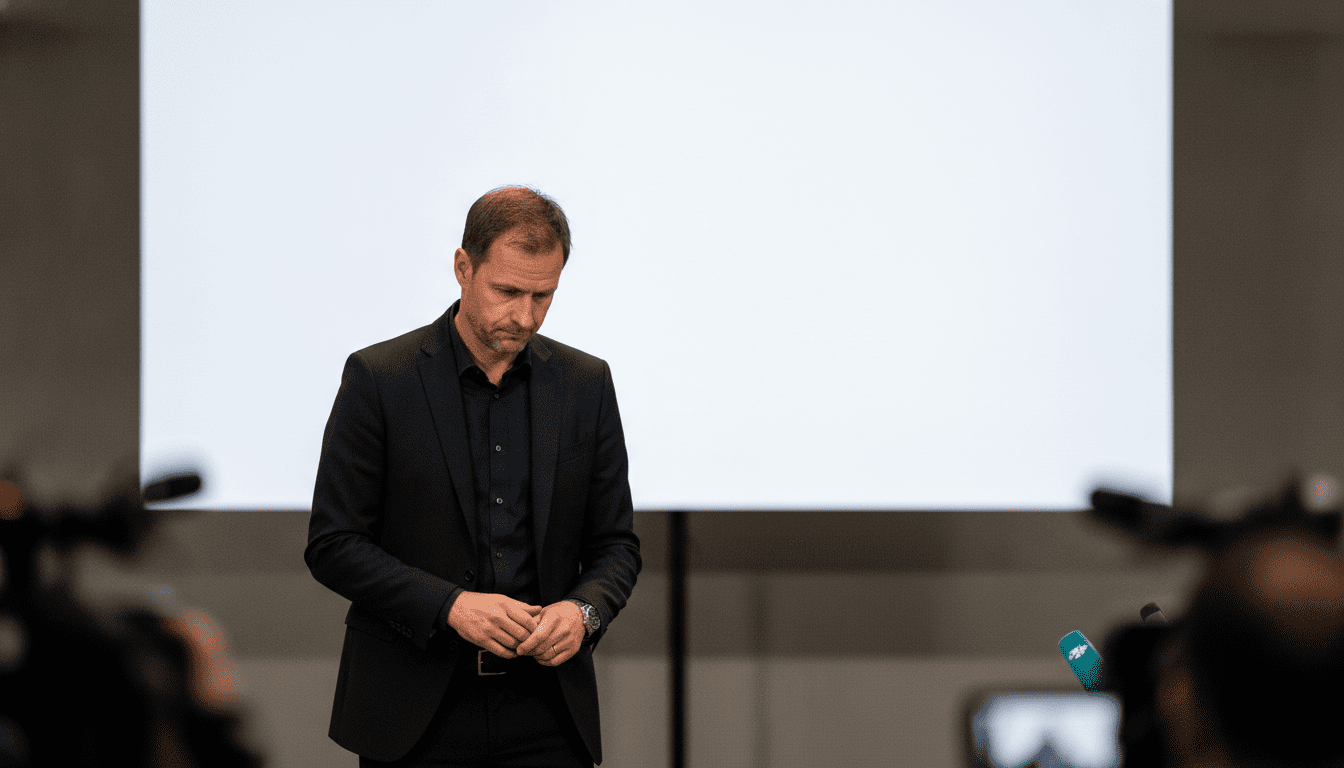
DFB Delays Decision on Julian Nagelsmann After World Cup Exit
DFB announces a review after Germany’s World Cup loss to Paraguay; Julian Nagelsmann has offered to remain, and officials will assess the reasons for the early exit.
Julian Nagelsmann, the 38-year-old Germany coach, will not learn his immediate fate after the national team’s World Cup elimination, as the German Football Association (DFB) postponed a decision the morning after the loss to Paraguay.
The defeat, decided on penalties in Foxborough, ended Germany’s campaign in the first knockout round and prompted senior officials to seek a thorough assessment before deciding on the coaching position.
DFB President Bernd Neuendorf told players in the team quarter that the federation will “jointly and calmly” examine why the squad failed to deliver on its potential and national expectations.
DFB Delays Formal Decision on Coaching Future
The DFB said it had held extended talks with Nagelsmann and the sporting leadership, including Andreas Rettig and Rudi Völler, but would not announce a final position immediately.
Neuendorf emphasized that the federation could not simply return to business as usual after such a setback and wants time to identify the causes of underperformance.
The decision delay is intended to allow for an evidence-based review that considers tactical, preparation and personnel factors rather than a rapid political reaction.
Neuendorf Calls for a Joint Review of Failures
Neuendorf outlined a process-focused response, saying the federation will investigate why the team did not reach the level expected by players, staff and the public.
He framed the review as collaborative, involving Nagelsmann and the sporting directors, and sought to avoid snap conclusions while stressing the result had not met the DFB’s standards.
The president’s remarks signaled that any determination about the coach’s future will be informed by that internal analysis rather than immediate public pressure.
Nagelsmann Reiterates Willingness to Continue
Nagelsmann publicly stated his readiness to remain in charge if the DFB desires, telling media after the elimination that he “stands ready” to carry on and that he is not someone who would walk away.
His contract with the DFB runs through the European Championship cycle, ending after Euro 2028, which gives both the coach and federation time to consider a midterm plan or longer-term continuity.
The coach, who took the job in September 2023 after spells at Hoffenheim, RB Leipzig and Bayern Munich, has defended his commitment to the national team despite growing scrutiny following the tournament exit.
Tournament Context and Pattern of Early Exits
Germany’s elimination continues an unwelcome sequence of early World Cup departures, following group-stage and knockout exits in previous editions, and raises questions about long-term direction under successive coaches.
This World Cup was the first with a 48-team format and expanded schedule, and Germany’s inability to reach the final 16 for the third straight tournament has intensified demands for a structured review.
Analysts and fans have pointed to tactical inconsistency, selection dilemmas and pressure on young players as elements that the DFB will likely scrutinize during its assessment.
Succession Speculation and Immediate Fixtures
Public discussion has already turned to potential successors, with Jürgen Klopp frequently named as a top candidate in media commentary; Klopp, now working as Global Head of Soccer for Red Bull, has been present at the tournament as a broadcast analyst.
The federation has not opened formal recruitment but cannot ignore succession narratives given the national expectations and the proximity of competitive fixtures that will test any coach’s mandate.
Germany’s next competitive match is set for 24 September, a Nations League opener in the Netherlands, with Greece and Serbia also in the group, giving the DFB a tight calendar in which to finalise or clarify leadership.
The DFB’s next steps will hinge on the internal review and the federation’s appetite for continuity versus change as it prepares for the Nations League and the long-term objective of Euro 2028.
For now Nagelsmann remains in place and available, the players have dispersed from the team camp, and the federation has signalled that any decision will be deliberate and tied to findings from the joint evaluation.
