
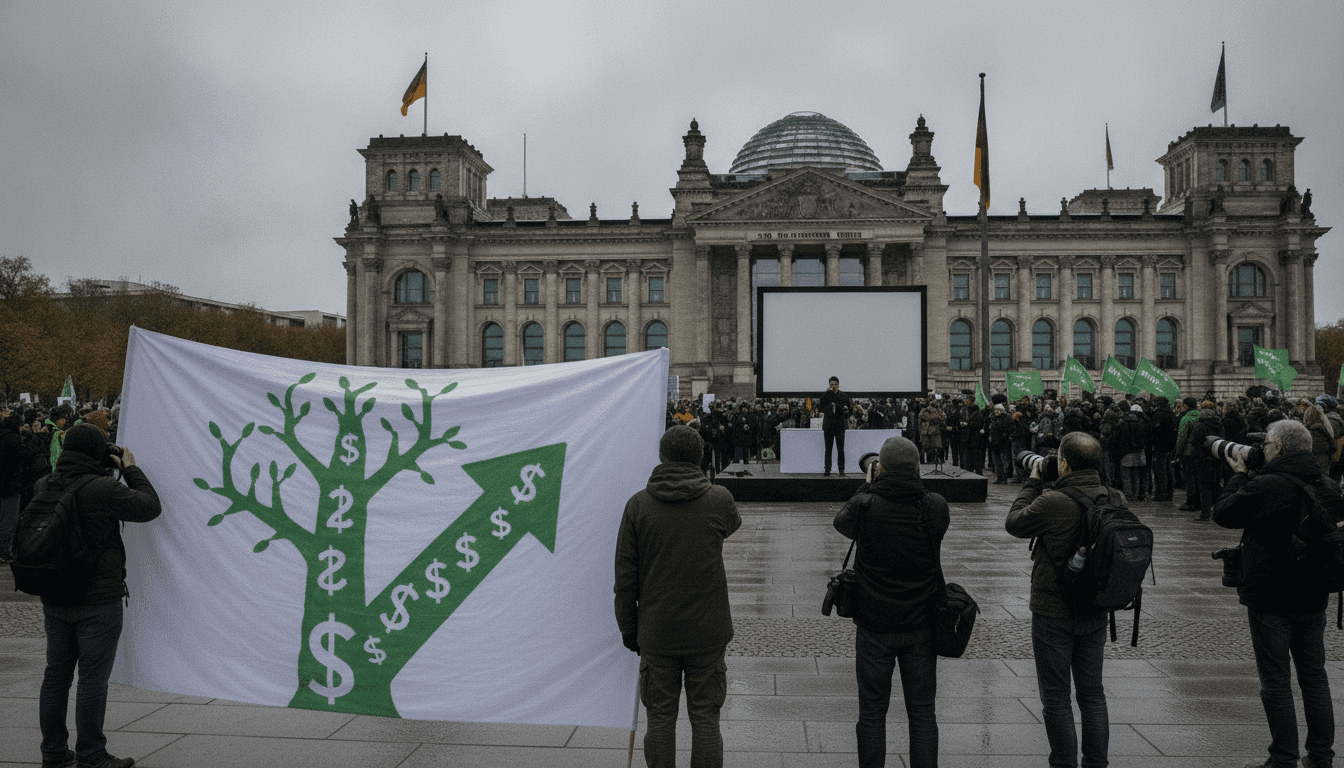
Greenpeace says Germany introduced €11 billion in environmentally harmful subsidies
Greenpeace says Germany introduced €11 billion in environmentally harmful subsidies this year, citing a FÖS calculation; the report comes ahead of a coalition summit on July 1, 2026.
Germany faces renewed criticism after Greenpeace reported that the federal government introduced new environmentally harmful subsidies and incentives worth about €11 billion in 2026, according to a calculation by the Forum Ökologisch Soziale Marktwirtschaft. The report singles out measures such as a two month fuel rebate that expires at the end of June, cuts to air travel taxes, a higher commuter allowance, and cheaper agricultural diesel. The publication arrives on the eve of a coalition summit set for Wednesday July 1, 2026 where major tax and budget decisions are expected.
Greenpeace calculates €11 billion increase in harmful subsidies
Greenpeace released the figures together with a calculation by FÖS that aims to quantify the fiscal scale of measures it considers counterproductive for climate policy. The group says the total reflects both direct subsidies and temporary incentives that lower the effective cost of fossil fuel use for households and businesses. Greenpeace argues these moves undo progress on cutting emissions and consume funds that could be directed to low carbon investments.
A Greenpeace spokesperson criticized the government for pursuing austerity in some areas while expanding support that favors fossil fuel consumption. The organization framed the measures as misplaced spending that creates economic distortions and undermines long term planning for decarbonization. The spokesperson urged the coalition to reverse measures that encourage higher greenhouse gas emissions.
Tank rebate and tax changes singled out by the report
The calculation highlights the two month fuel rebate that has been in effect this summer and is scheduled to end on June 30, 2026. According to the report, the temporary discount on pump prices reduces incentives for motorists to conserve fuel or accelerate adoption of more efficient vehicles. Researchers cited by the study have previously warned that such rebates can blunt behavioral and market shifts needed to lower transport emissions.
The report also flags a reduced tax on airline tickets as a policy that supports the most carbon intensive form of mass transport. It lists the increase in the commuter allowance and subsidies such as cheaper diesel for agricultural use as additional drivers that could raise fossil fuel demand. FÖS says these measures together shift public money toward consumption patterns that conflict with Germanys stated climate objectives.
Timing ahead of coalition summit and tax reform debate
The findings were published just days before a coalition leadership meeting scheduled for Wednesday July 1, 2026 where ministers plan to agree a broad reform package. One central element on the agenda is a proposed overhaul of income tax designed to ease burdens on lower and middle income households. Negotiators have not yet secured the full financing for that package, leaving potential savings measures on the table.
Officials have signaled that trimming subsidies could be considered among options for counter financing, but political fault lines remain. Parties in the governing coalition are under pressure to demonstrate fiscal responsibility while avoiding measures that would be politically costly for voters who benefit from fuel and travel relief. The FÖS based figures therefore inject fresh urgency into talks over how to balance short term relief with long term fiscal and climate priorities.
Economic and climate implications of the subsidy shift
Analysts say redirecting public funds from subsidies that favor fossil fuel use toward investments in clean energy, public transport and building retrofits would yield stronger long term returns. The FÖS report argues that environmentally harmful subsidies represent not only a missed opportunity for future proofing infrastructure but also a direct cost to the public purse when climate impacts and transition needs are accounted for. Unchecked, those incentives can lock in higher emissions and create stranded asset risks.
Critics point out that measures which lower the cost of gas or diesel can delay household and business decisions to adopt heat pumps, electrified transport or energy efficiency upgrades. Those behavioral effects are central to the debate because policymakers must weigh immediate cost relief against the slower, cumulative benefits of accelerating decarbonization. Economic studies cited by NGOs indicate that well targeted public investment can spur growth while lowering emissions over the medium term.
Pressure grows for targeted cuts and green alternatives
Environmental groups and some economists have called on the coalition to identify specific subsidy lines that can be scaled back or repurposed to support the energy transition. Suggestions range from phasing out temporary fuel rebates to redirecting relief toward low income households through means tested mechanisms and increasing incentives for electrification and insulation. Proponents argue that smarter targeting could preserve social support while advancing climate goals.
Political feasibility will depend on trade offs the coalition is willing to accept during the July 1, 2026 talks and in subsequent parliamentary deliberations. Observers say the coming days will test whether the government prioritizes short term relief or commits to reorienting public spending toward the green investments that experts say are needed to meet emissions targets. Advocacy groups have pledged to monitor implementation and to press for transparency on the fiscal assumptions behind any decision.
The coalition meeting on July 1, 2026 is likely to set the tone for whether Germany moves to rein in subsidies seen as environmentally harmful or maintains temporary relief measures that critics say undermine climate policy.
