
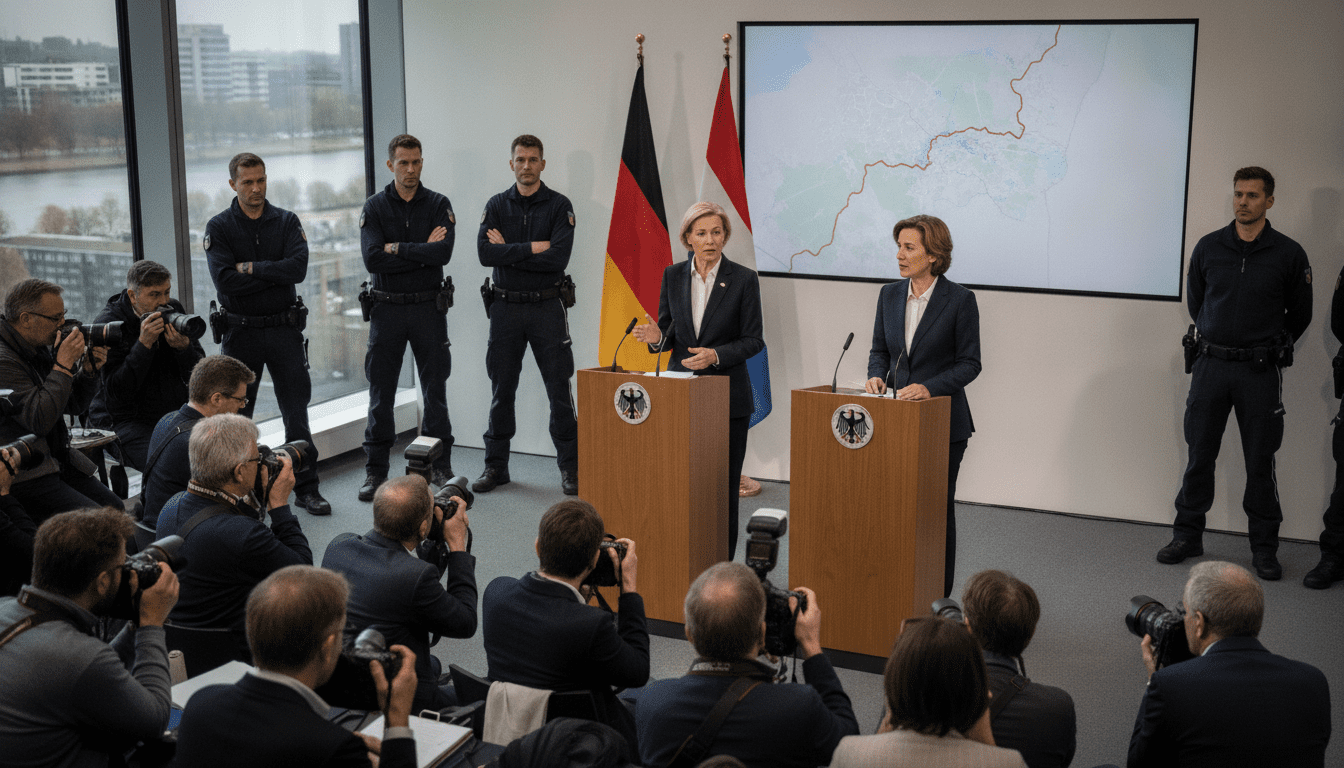
Germany-Netherlands police cooperation set to expand joint special-forces deployments
Germany-Netherlands police cooperation expands: new cross-border special forces deployments to target organised crime, granting shared operational powers with increased oversight and judicial coordination across borders.
Germany and the Netherlands are preparing to broaden Germany-Netherlands police cooperation by authorising joint deployments of specialised law-enforcement units to pursue organised criminal networks across their shared border. Officials say the move will allow tactical teams to operate with powers beyond their national territory in coordinated missions. The proposal highlights growing operational integration between the two NATO partners while raising questions about oversight and the use of force.
Bilateral forces move toward joint deployments
Authorities in both capitals have discussed formalising arrangements that let specialised units act together and, when necessary, pursue suspects across the border. The initiative builds on existing cross-border agreements and bi‑national training that have increased interoperability in recent years. Proponents argue that criminal groups already exploit jurisdictional seams and that coordinated deployments will close operational gaps.
The planned deployments focus on high-risk interventions against organised crime, including drug trafficking and violent gang activity, rather than routine policing. Officials emphasise that missions would be jointly planned and evaluated to ensure legal and tactical alignment. The prospect of single-mission command structures for short, targeted operations marks a significant deepening of Germany-Netherlands police cooperation.
Scope of cross-border powers and lethal force
A central and sensitive element of the plan is the extension of powers for officers operating beyond their home territory, including authority to detain suspects and, in extreme cases, to use lethal force. That capability represents the most consequential transfer of coercive authority between states in peacetime. Security planners stress that such powers would be tightly circumscribed and enacted only under clearly defined, exceptional circumstances.
Both governments say rules of engagement and command prerogatives would be codified to prevent ambiguity during fast-moving incidents. Legal counsel and prosecutors would be embedded in mission planning to address immediate jurisdictional questions. Still, civil liberties advocates warn that cross-border use of force demands robust safeguards and transparent accountability.
Legal framework and accountability measures
Any expansion of joint operations will require adjustments to bilateral treaties, national statutes, and operational protocols to reconcile procedures for arrest, evidence handling, and judicial follow-up. Legislators and legal experts expect a phased approach that begins with pilot projects and builds a legal architecture around them. The aim is to avoid legal vacuums that could jeopardise prosecutions or civil-rights protections.
Accountability mechanisms are also under discussion, including joint oversight committees, independent incident reviews, and automatic notification to domestic prosecutors when a foreign officer has exercised coercive powers. Observers note that public confidence will depend on clear rules for use of force, timely reporting, and accessible complaint processes for affected civilians.
Operational planning and training regime
To prepare for combined deployments, police forces plan intensive joint training that emphasises shared tactics, communications, and command relationships. Exercises will simulate cross-border scenarios, hostage rescue, and high-risk arrests to test interoperability under realistic stress. Investment in compatible equipment and secure communications is part of the operational package.
Training will also include legal education, ensuring frontline officers understand the limits of their authority when operating under a partner’s jurisdiction. Planners say that embedding liaison officers and prosecutors in operational units will reduce friction and speed decision-making during missions. Early joint exercises are expected to inform refinements to doctrine before any full-scale implementation.
Political reactions and public concerns
Political response has been mixed, with major parties generally supportive of stronger tools against organised crime while calling for clear parliamentary oversight. Opposition voices have urged caution, highlighting the symbolic significance of allowing foreign officers to make potentially lethal decisions on national soil. Municipal leaders near the border have sought assurances about how operations will affect local policing and civil life.
Civil-society groups demand transparency and judicial safeguards, arguing that any transfer of coercive authority must be accompanied by external review and public reporting. Supporters counter that criminals already operate across borders with impunity and that operational cooperation is a pragmatic response. The debate is likely to shape the pace and scope of formal agreements.
The next steps include detailed legal drafting, a timetable for pilot operations, and parliamentary consultations in both countries. Officials expect initial cross-border missions to be limited, closely monitored, and announced to relevant oversight bodies. If pilots prove effective and legally sound, the arrangement could serve as a model for other neighbouring states facing similar transnational criminal threats.
The expansion of Germany-Netherlands police cooperation marks a consequential moment for cross-border law enforcement in Europe, balancing operational necessity against legal and democratic safeguards as two neighbours deepen security ties.
