
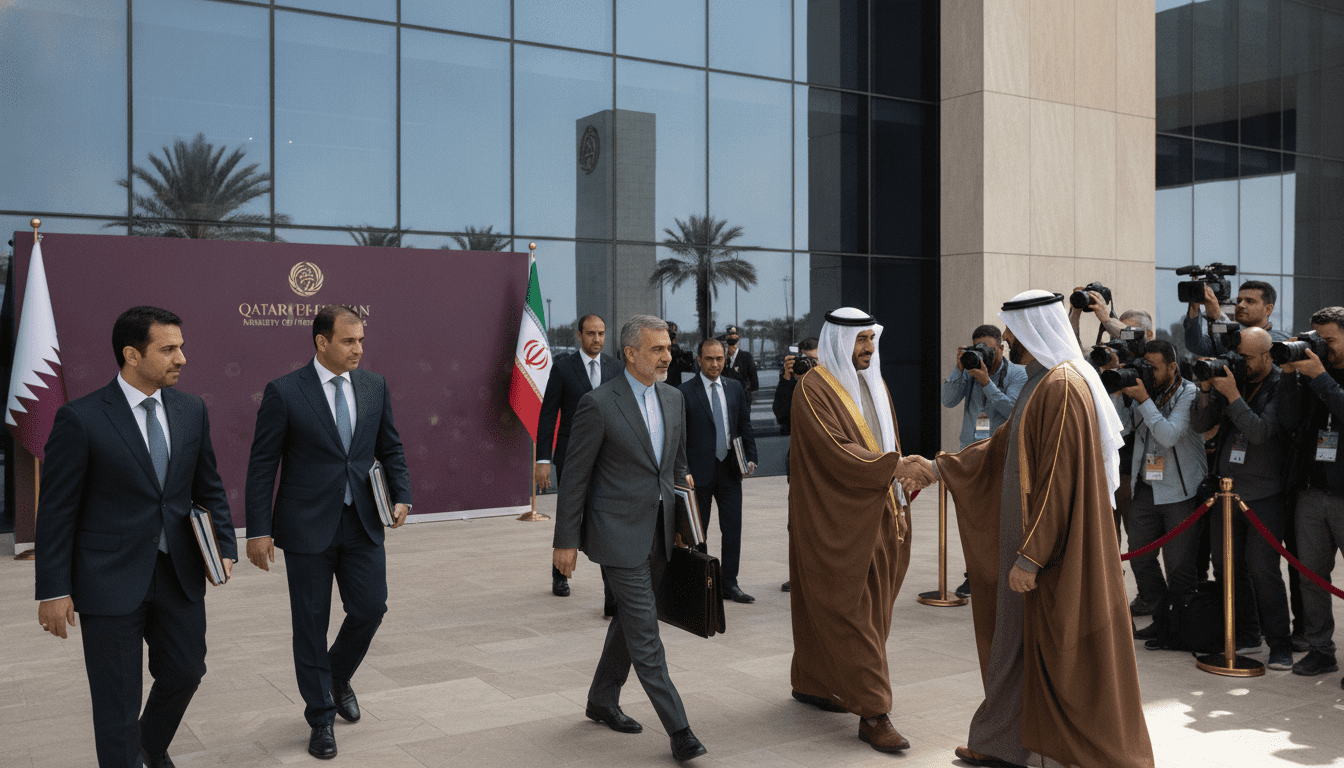
Iran delegation to Doha to discuss implementation of US memorandum
Iran says an expert delegation will travel to Doha this week to discuss implementation of a memorandum of understanding signed with the United States.
Tehran confirms expert mission to Doha
Iran’s foreign ministry announced on Monday that an expert delegation from the Islamic Republic will travel to Doha later this week to discuss the implementation of clauses in a memorandum of understanding with the United States. The ministry named spokesman Esmaeil Baghaei as the source of the announcement and said the visit is focused on technical follow-up rather than final political accords. The confirmation underscores a cautious, procedural approach by Tehran as it moves to operationalize the recent understanding with Washington.
Mandate centers on implementing memorandum clauses
Officials described the Doha meetings as aimed at ironing out practical steps needed to implement specific clauses of the memorandum, rather than negotiating new terms. The delegation is expected to concentrate on technical, legal and logistical elements that would enable both parties to execute agreed measures. That emphasis on implementation suggests talks will involve subject-matter experts working through detailed modalities rather than senior political negotiators shaping policy.
Foreign ministry cautions against expectations of a final deal
Baghaei explicitly said Iran has “not yet entered the stage of negotiating a final agreement,” and that in the coming days there will be no negotiation meetings with U.S. officials at any level. The statement was intended to manage expectations after the memorandum’s signing and to clarify that procedural discussions should not be read as moving immediately toward a comprehensive treaty. Tehran’s language indicates a phased diplomatic strategy in which technical cooperation precedes any political determination on broader commitments.
Doha chosen as a neutral venue for technical talks
Qatar’s capital has become a recurrent meeting place for sensitive diplomacy, offering a neutral environment and infrastructure for multilateral and bilateral discussions. Using Doha for an expert-level exchange follows a pattern of third-party facilitation that regional capitals have provided in previous U.S.-Iran and Middle East dialogues. The selection of Doha also allows both sides to conduct focused, discreet workstreams in parallel without the political theater that often accompanies higher-level summits.
Diplomatic context and regional implications
The expert mission comes amid a broader pattern of cautious engagement between Tehran and Washington that seeks to translate broad understandings into executable steps. While details of the memorandum have not been fully disclosed, technical implementation can affect sanctions mechanisms, humanitarian channels, and confidence-building measures across the region. Regional capitals will be watching the Doha talks closely, as successful technical progress could ease tensions and open space for further, staged diplomacy between adversaries.
Analysts note limited scope but strategic significance
Foreign policy analysts describe expert-level implementation talks as small in scope but high in strategic value, because they establish the operational architecture for any subsequent political arrangements. Experts believe that clarifying timelines, verification mechanisms and communication channels in Doha would reduce the risk of misunderstandings and provide measurable benchmarks. At the same time, analysts warn that technical progress does not guarantee political breakthroughs, particularly while mistrust and competing regional priorities persist.
Next steps and expected outcomes from the Doha meetings
Diplomatic sources say the delegation’s work is likely to produce detailed proposals, draft protocols and technical schedules that both sides can review domestically. If those outputs are accepted in principle, they may pave the way for follow-up meetings or the involvement of higher-level officials to consider political ratification. Conversely, if core technical disagreements remain unresolved, the process could stall and prolong the uncertainty that led to the memorandum in the first place.
Baghaei’s insistence that no negotiations on a final agreement are imminent signals Tehran’s intent to compartmentalize the process, separating downstream implementation from top-level political bargaining. That compartmentalization is designed to allow experts to make progress without prompting premature political debates that could complicate or derail detailed work.
The outcome of the Doha exchanges will likely shape both the short-term diplomatic agenda and the strategic calculations of regional actors. For now, the international community is awaiting the expert delegation’s return and the substance of any technical proposals it produces. Ultimately, the success of the delegation’s mission will be judged by whether practical, verifiable steps emerge that can be translated into durable diplomatic advances.
