
US and Iran Exchange Fire Despite Ceasefire After Merchant Ship Attack
US and Iran exchange fire after an attack on a Singapore-flagged freighter; Centcom says US struck missile and drone sites and coastal radars near Hormuz.
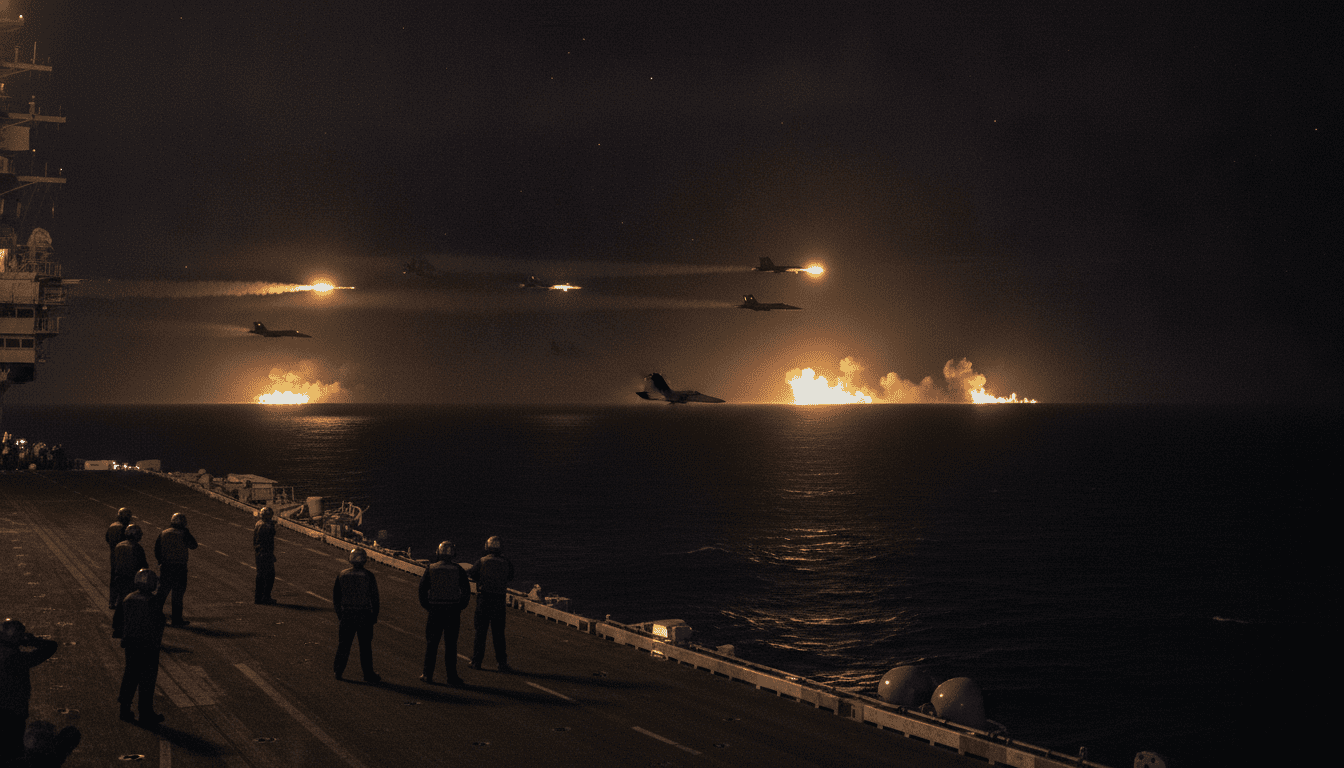
The United States and Iran exchanged fire in the Gulf region after the United States carried out air strikes on Iranian sites following an attack on a merchant vessel, officials said. The incident marks the first reported US military strikes since a framework agreement was signed to de-escalate the wider conflict, and the exchanges have renewed fears of broader confrontation in the Strait of Hormuz. Centcom described the strikes as retaliation for the earlier attack on a Singapore-flagged freighter and said targets included missile and drone storage facilities and coastal radar installations. Iranian state outlets and the Revolutionary Guard Corps reported counterattacks on US targets in the region, statements that could not be independently verified at the time.
US military describes targets and motive
Centcom said the strikes were directed at Iranian missile and drone stockpiles and coastal radar sites as a measured response to the attack on the merchant ship. The regional command framed the operation as a direct reaction to what it called an “unjustified aggression” against commercial shipping. Officials stressed the strikes were intended to degrade Iran’s ability to target international shipping, and to uphold the terms of the ceasefire framework referenced by US authorities. A confirmation or detailed assessment from other independent sources was not immediately available.
Iranian Revolutionary Guard reports retaliation
The Islamic Revolutionary Guard Corps issued a statement saying its naval forces struck US targets in the region in response to the US strikes. Iranian state television also reported explosions in the southern coastal city of Sirik and on Qeshm island near the Strait of Hormuz, locations that have been repeatedly involved in past confrontations. Iranian sources characterized their actions as a strong response to the attack on the merchant vessel and to the subsequent US strikes. There was no immediate independent verification of the Iranian claims, and US officials had not publicly confirmed damage to American assets.
Attack on merchant vessel in Gulf of Oman
The International Maritime Organization reported an attack on a freighter in the Gulf of Oman earlier in the week, an incident that shipping and safety agencies said disrupted routine maritime operations. US authorities attributed that attack to Iran, stating the vessel was hit by a drone and describing the strike as a breach of the ceasefire agreement. The vessel sailed under a Singapore flag, and details on crew safety and vessel damage were limited in the first reports. Shipping operators and insurers closely monitor such incidents given the strategic importance of the area for global energy and cargo transit.
Local reports of explosions along southern Iranian coast
Residents and state media in the Hormozgan province reported explosions in Sirik and on Qeshm island late into the night following the exchange of strikes. Sirik sits on the Gulf near the Strait of Hormuz and has previously been targeted in regional skirmishes, according to local reporting. Authorities in Tehran have framed the actions as defensive and proportional responses to aggression against Iranian territory and interests. Independent verification by international monitors or journalists in the immediate aftermath was limited, leaving some details contested.
Impact on shipping and seafarers
The IMO said the attack and ensuing tension disrupted plans to evacuate seafarers in the area, noting that about 11,000 mariners who had been due to move or be brought ashore were affected. Shipping firms warned that heightened military activity in the Strait of Hormuz and adjacent waters can force vessels to reroute or delay transits, increasing costs and logistical complexity. The Strait remains a critical transit for a substantial share of the world’s oil and liquefied natural gas shipments, so any spike in hostilities draws immediate international commercial concern. Industry groups urged caution and called for rapid de-escalation to restore safe passage for merchant traffic.
Political reactions and US warnings
US political leaders framed the strikes as a necessary enforcement of the ceasefire arrangement and a deterrent to further attacks on international shipping. Vice President JD Vance posted on X that violence would be answered with force, and urged Tehran to resolve disagreements through communication channels rather than escalation. Iranian officials, meanwhile, signaled that Tehran retained the right to respond to perceived aggression and emphasized what they described as proportional measures. Diplomats and outside governments called for restraint and for the parties to return to negotiated mechanisms intended to prevent precisely this kind of flare up.
The exchanges reopen pressing questions about how the ceasefire framework will be enforced and what safeguards exist to prevent localized incidents from spiraling into wider conflict. International maritime and diplomatic actors are likely to press both Washington and Tehran for clarity on lines of communication and for immediate steps to reduce the risk to civilian shipping in the Strait of Hormuz.
