
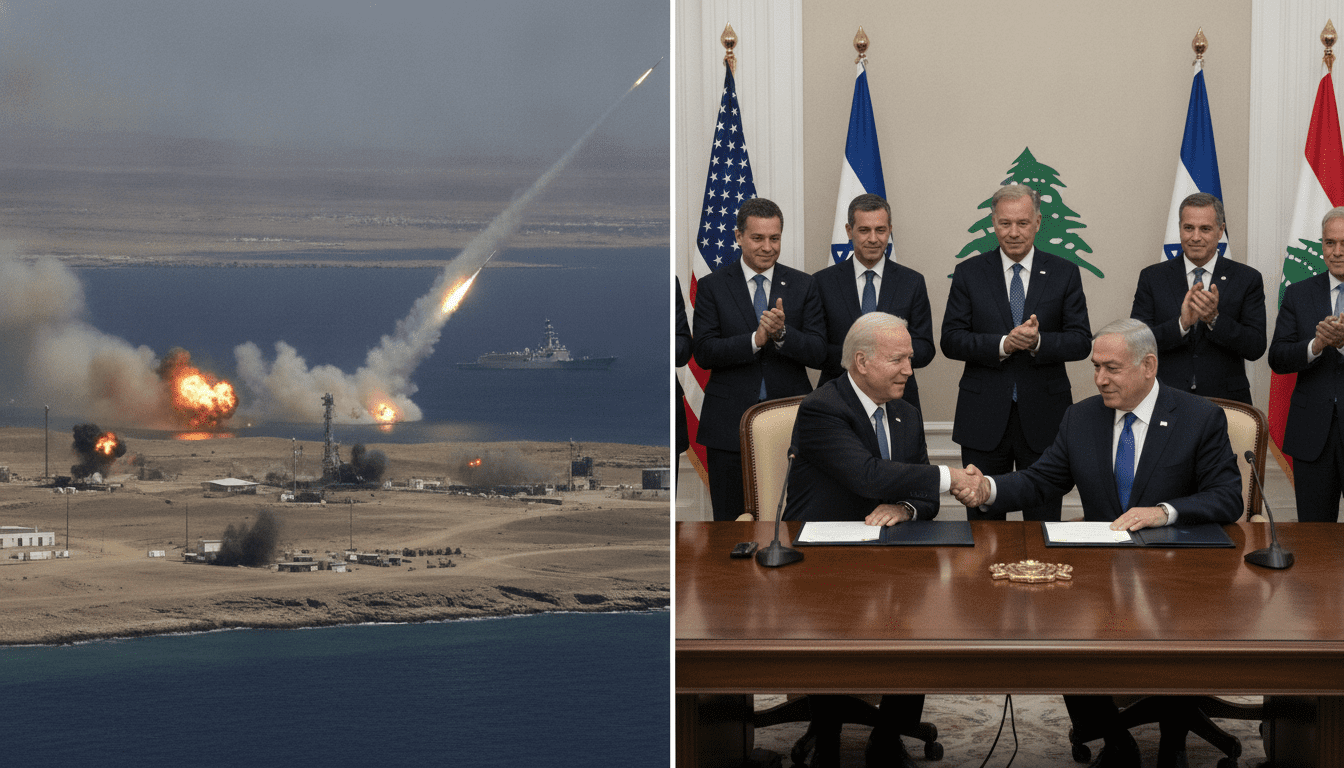
US Strikes on Iranian Targets Strain US-Iran Ceasefire as Israel-Lebanon Framework Signed
US strikes on Iranian targets after a reported Strait of Hormuz drone attack strain the US-Iran ceasefire, while a US-brokered Israel-Lebanon pact sparks protests.
A fragile US-Iran ceasefire appeared to fray after American forces struck what US Central Command described as Iranian-linked positions following a reported drone attack on a commercial vessel in the Strait of Hormuz. Iran declared it had retaliated by targeting US positions in the region, and lawmakers in Tehran condemned the strikes as a breach of the truce. At the same time, Washington announced a US-mediated Israel-Lebanon framework agreement signed in Washington, a diplomatic step that has provoked opposition and street protests in Beirut.
US says strikes targeted Iranian-linked sites after vessel attack
US Central Command reported that American forces carried out strikes against sites it linked to Iranian forces following what the Pentagon described as a drone attack on a commercial ship transiting the Strait of Hormuz. A US official told a US broadcaster the operation had concluded for the night after the strikes, with the military characterizing the action as a proportional response to the maritime incident.
The strikes mark one of the most direct US military responses to Iranian-linked activity in the region since the ceasefire was negotiated, and they come amid heightened tensions over shipping security in the Gulf. Washington has repeatedly warned it will protect commercial shipping and respond to attacks on vessels, and the strikes signal a willingness to take kinetic action to deter further incidents.
Iran’s Revolutionary Guard reports retaliatory strikes on US positions
Iran’s Islamic Revolutionary Guard Corps said it targeted US military positions in the region in retaliation for the American strikes, framing its actions as a defensive response. Iranian lawmakers strongly denounced the US operation, warning of further escalation and saying the strike violated the spirit of the ceasefire.
The Iranian response adds a volatile military dimension to the political protests and diplomatic efforts unfolding elsewhere in the region, and it raises questions about how both sides will manage escalation risks. Military analysts warned that tit-for-tat strikes risk widening the conflict if either side miscalculates or if proxy groups become involved.
Washington brokers Israel-Lebanon framework in separate diplomatic push
In parallel to the military exchanges between Washington and Tehran, the United States announced a framework agreement between Israel and Lebanon after several days of negotiations in Washington. The deal, presented as a first step toward restoring stability along the northern border, reportedly recognizes each country’s right to live in peace and lays out a phased security plan.
Under the agreement, the Lebanese army is expected to assume responsibility for security in designated areas over time, an effort intended to strengthen state authority in southern Lebanon. Lebanese officials described the framework as an initial move toward restoring full sovereignty over territory long contested by armed groups and foreign forces.
Hezbollah rejects the deal and mobilizes supporters in Beirut
Hezbollah publicly rejected the framework, calling the agreement unacceptable and mobilizing supporters to protest in Beirut. Demonstrators blocked roads and set fire to tyres in southern suburbs, signaling broad opposition in communities aligned with the militia and raising concerns about internal stability in Lebanon.
The group’s rejection complicates implementation of the framework since Hezbollah remains a dominant force in southern Lebanon and a central actor in the security dynamics on the border. Lebanese leaders face the challenge of reconciling international diplomacy with domestic political realities that include powerful non-state armed actors.
Israeli officials to maintain forces while planning limited reductions
Israeli officials said forces would remain in southern Lebanon under terms of the understanding, while military planners prepare to scale down troop levels in some sectors as security responsibilities transition. The phased approach aims to avoid a rapid vacuum that could allow militant groups to reassert control and to provide space for the Lebanese army to expand its presence.
Israeli authorities framed the framework as a practical measure to reduce the risk of cross-border incidents while preserving deterrence, even as some military planners caution that any drawdown carries potential risks. The agreement’s success will depend on coordinated security measures, monitoring arrangements, and the ability of Lebanese institutions to extend effective control.
Regional implications and risks of renewed escalation
The combined military strikes and diplomatic breakthrough underscore the complex and fragile interplay between force and negotiation in the region. While the Israel-Lebanon framework offers a diplomatic pathway to reduce one source of instability, the deterioration of the US-Iran ceasefire following the maritime incident highlights how quickly localized events can reverberate and threaten broader escalation.
Diplomats and defence officials warned that sustaining calm will require careful de-escalation steps, transparent communication channels and credible mechanisms to investigate incidents at sea and on land. The coming days will be critical in determining whether the ceasefire can be stabilized and whether the new framework between Israel and Lebanon can withstand political opposition and on-the-ground challenges.
The aftermath of the strikes and the signing of the framework have left regional capitals assessing short-term risks while attempting to consolidate diplomatic gains, with both military and political actors watching for signs that the situation might either calm or spiral further.
