
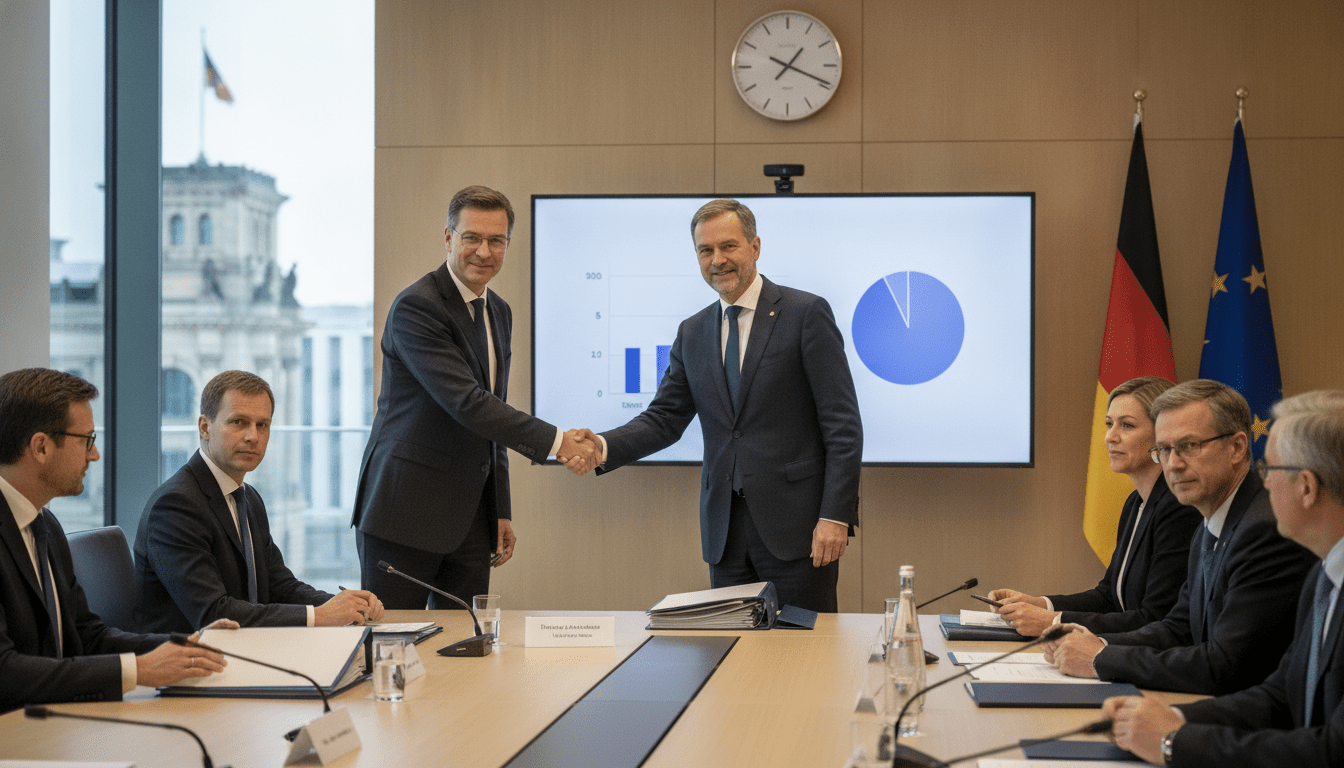
Germany news roundup: Merz and Bas pledge full implementation of pension commission proposals
Germany news roundup: Merz and Bas pledge to adopt pension commission proposals as heatwave warnings arrive, while Iran tensions and Russian fuel shortages escalate.
Strong opening: key developments in politics, climate and security
Germany news roundup opens with a pledge from the chancellor and the labour minister to adopt the pension commission’s proposals wholesale, as the country faces an intense heatwave and international security flashpoints. The announcement has sparked debate within the governing coalition and the SPD parliamentary group, while separate international crises — from Iran’s resistance to IAEA inspections to fuel shortages in Russia — add pressure on Berlin. Domestic watchdogs and humanitarian groups have also weighed in on industrial concentration and refugee family reunification.
Merz and Bas pledge full implementation of pension commission recommendations
The chancellor and the labour minister declared they will press the coalition to enshrine the commission’s recommendations into law without modifications. Minister Bas said she would personally stand behind the plan, signaling high-level political backing for a swift legislative effort. The move aims to address long-running concerns about pension sustainability and intergenerational fairness.
SPD parliamentary group voices reservations over pension plan
Despite the executive’s commitment, dissent has surfaced within the SPD parliamentary group, where lawmakers questioned elements of the commission’s package and the speed of implementation. Critics warned that rapid enactment without thorough consultation could leave vulnerable groups exposed or require later adjustments. Party leaders now face the task of reconciling internal objections with the government’s cross-party agenda.
Heatwave warnings: up to 40°C expected and climate trends highlighted
Meteorological services are forecasting temperatures as high as 40 degrees Celsius in parts of the country this weekend, intensifying strain on public health and infrastructure. Climate researchers note that heat extremes have become more frequent and prolonged across Europe, with summers now beginning earlier and ending later than in past decades. Scientists warn that rising peak temperatures and extended heat periods require strengthened adaptation measures for cities, health services and transport.
Iran says inspectors will not enter damaged nuclear facilities
Tehran has rejected requests to permit International Atomic Energy Agency inspectors into nuclear sites that have sustained damage, a stance that contradicts claims by some Western officials. The refusal complicates diplomatic efforts to monitor compliance and assess potential risks at affected installations. The development has become another point of tension ahead of high-level international visits and diplomatic exchanges.
Fuel shortages spread across Russian regions after strikes
A growing fuel supply crisis in Russia has reached Siberian territories, with several regions imposing rationing of gasoline and diesel sales following disruptions to energy infrastructure. Officials link the shortages to intensified Ukrainian strikes on logistics and fuel storage sites, which have hampered distribution networks. The domestic shortfalls are prompting concerns about transport bottlenecks and economic repercussions beyond the directly affected areas.
Competition watchdog warns of monopoly risks in arms industry
Germany’s competition authorities have sounded an alarm over concentration in the defence sector, noting that a large share of military procurement flows to a few major firms. The head of the competition commission warned that such dominance can stifle innovation and reduce competitiveness, potentially undermining broader strategic and industrial resilience. The assessment raises questions about procurement policies and the balance between scale and diversity in national defence supply chains.
Caritas criticizes government family-reunification rules for refugees
The Caritas association sharply criticized the federal government’s hardship rule for family reunification, describing current provisions as ineffective and causing despair among affected families. The NGO argued the regulation fails to deliver timely solutions for vulnerable refugees who seek to reunite with relatives, calling for clearer, more humane procedures. The intervention adds pressure on policymakers to revisit asylum and integration-related measures.
Concluding note: implications and next steps
Taken together, these developments present a packed agenda for Germany’s political and administrative leaders in the coming weeks, from negotiating pension legislation to managing climate health risks and responding to international security shocks. Lawmakers will need to balance rapid action with careful deliberation as internal party debates and external crises demand coordinated responses. Observers say the government’s handling of these intersecting issues will shape political fortunes and public confidence in the months ahead.
