
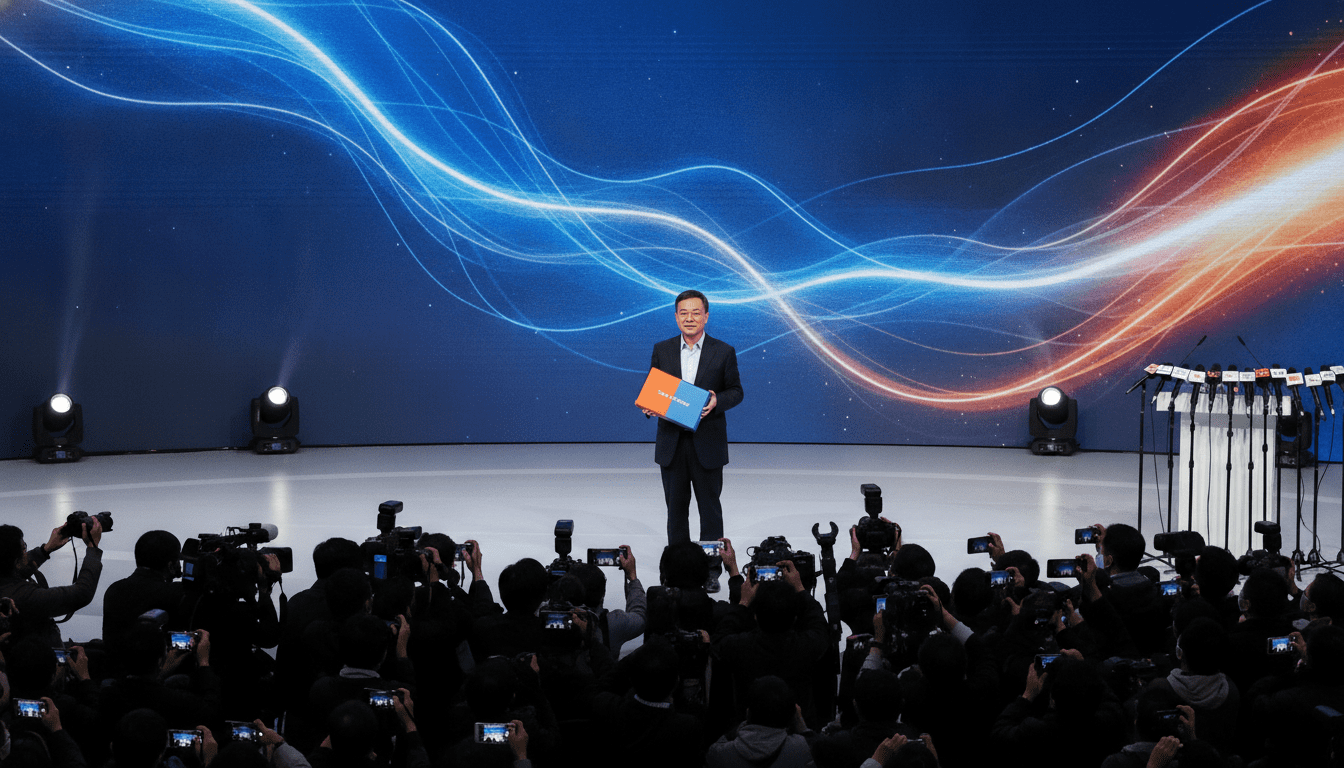
CATL unveils “Tener” sodium-ion battery as commercial rollout begins in China
CATL revealed the “Tener” sodium-ion battery in Munich, saying sales start in China in September and will expand globally next year, positioning the sodium-ion battery as a lower-cost alternative to lithium-based systems.
CATL presented the Tener sodium-ion battery system in Munich on Monday evening, describing it as a product aimed first at stationary energy storage and later at electric vehicles. The company, the world’s largest battery maker, said the system is designed to store renewable power from solar and wind and to provide a lower-cost, safer option compared with lithium-ion technology. Company executives reiterated plans to begin Chinese sales in September and to extend distribution internationally by mid-2027.
Executive statements and company strategy
CATL’s leadership framed the launch as a strategic push to scale sodium-ion battery production rapidly, with CEO Robin Zeng saying the firm will increase output to meet both grid and automotive demand. Zeng made the remarks at a business forum in northeastern China after the Munich announcement, stressing that sodium (common table salt) offers a far larger raw-material base than lithium. The company cast sodium and lithium as complementary pillars for future energy storage rather than mutually exclusive solutions.
Commercial rollout timeline and target markets
CATL confirmed that commercial sales of the Tener system will start in China in September and that international shipments are slated to begin around mid-2027. Initially marketed for stationary storage, the system is intended to capture electricity generated by renewables and to serve utilities and large-scale energy projects. CATL also signaled plans to adapt the technology for electric vehicles, positioning sodium-ion cells as a cost-sensitive option for lower-range or secondary applications.
Performance profile: trade-offs and operational advantages
Sodium-ion batteries typically deliver lower energy density than lithium-ion cells, a limitation that affects vehicle range when compared on a per-kilogram basis. CATL emphasized several operational advantages that it says offset that trade-off: improved stability across extreme temperatures, longer calendar life in cyclic use, and a lower propensity for thermal runaway that reduces fire risk. For stationary storage and applications where volumetric energy density is less critical than cost, durability and safety, CATL argues sodium-ion chemistry can be highly competitive.
Global production landscape and supply-chain implications
Industry observers note a paradox: while sodium is widely available and inexpensive, current manufacturing capacity for sodium-ion batteries is concentrated in China, which remains the dominant hub for battery production. The International Energy Agency has previously estimated that the bulk of planned battery factories through 2030 are located in China, and CATL’s own expansion reinforces that concentration. European firms such as Varta have expressed interest in sodium-ion technology as a way to counterbalance Chinese supply dominance, but building a diversified global manufacturing base will require years of investment.
Scale-up plans, capacity targets and early contracts
CATL set out aggressive scaling targets, saying it expects to reach a 100 gigawatt-hour annual capacity for sodium-ion batteries within three to five years as production ramps. The company also announced plans for two new plants with combined annual capacity of 200 gigawatt-hours and cited an initial supply agreement for 60 gigawatt-hours with a Chinese energy company. CATL aims to deliver more than 1,000 gigawatt-hours of batteries across chemistries this year, up from roughly 660 GWh last year, underscoring how the group plans to expand both lithium and sodium production in parallel.
The emergence of commercially available sodium-ion batteries could alter industry economics by reducing reliance on lithium, a material prone to price swings and supply bottlenecks, while offering a safer, lower-cost storage option for many grid and mobility use cases. However, wide adoption will depend on further manufacturing scale-up, vehicle-maker acceptance, and the development of supply chains outside China to ensure diversity and resilience in battery production.
