
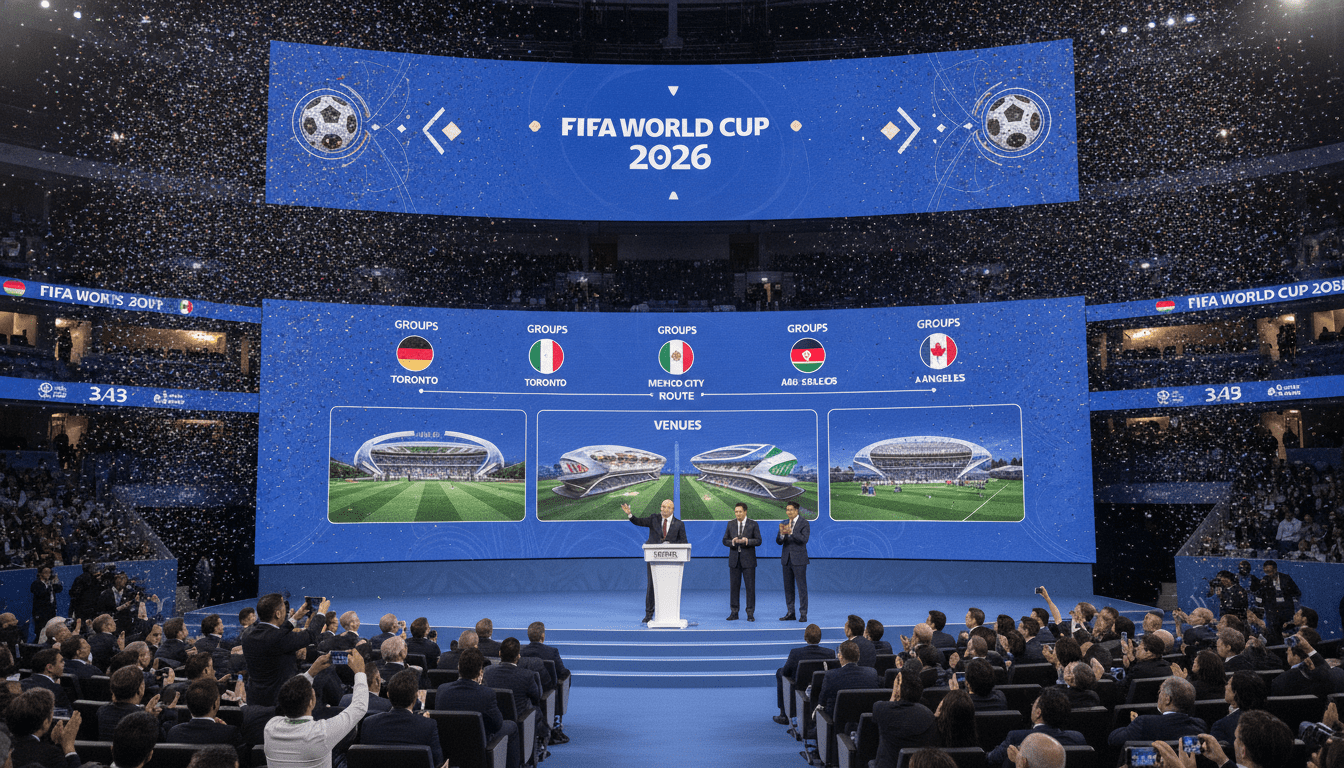
FIFA World Cup 2026: Complete schedule, hosts, Germany’s route and key knockout dates
Complete FIFA World Cup 2026 schedule: dates, 48-team groups, host cities across USA, Mexico and Canada, Germany’s fixtures and key knockout match dates.
The FIFA World Cup 2026 runs from June 11 to July 19, 2026, across three host nations and a record 48-team field. The expanded tournament features 104 matches in 16 stadiums spread across the United States, Mexico and Canada, creating a complex schedule with multiple time zones. Germany, placed in Group E, has already registered decisive wins and now faces Ecuador in the final group match as it looks toward the new round-of-16 format.
Hosts, scale and dates
The tournament is unprecedented in scale: for the first time three countries stage the finals together and the match count is the highest in World Cup history. Sixteen venues will stage the 104 fixtures, with eleven stadiums located in the United States, three in Mexico and two in Canada. Organizers must manage travel, climate and broadcast windows across time differences ranging from six to nine hours relative to Central European Summer Time.
Matches begin on June 11 and conclude with the final on July 19 in the New York region, with the third-place match scheduled for July 18 in Miami. That timeline compresses a large number of fixtures into just over five weeks, placing a premium on squad rotation and logistics. Broadcasters and fans have had to adapt to late-night and early-morning kick-offs in Europe because of the Atlantic and continental time shifts.
Germany’s group results and upcoming match
Germany topped Group E after commanding wins in the opening fixtures, positioning the national side for the knockout phase. The team opened with a dominant 7-1 victory in Houston and followed up with a narrow 2-1 win in Toronto, both results easing pressure on the squad and coaching staff. Germany’s final group game is scheduled for June 25 in New York against Ecuador, a match that will determine final placement and the precise opponent in the round of 16.
If Germany advances as group winner, the team will play a round-of-16 fixture on Monday, June 29, in Boston against one of the third-placed teams from several groups. Beyond that, the knockout bracket places potential encounters with strong sides from Group I — a section that includes France and Norway — setting up a pathway in which big-name matchups are likely to appear early in the elimination rounds.
Group stage highlights and notable results
The opening rounds have already produced several emphatic scorelines and early surprises that reshuffle pre-tournament expectations. Host and non-host teams alike recorded clear wins: Canada thumped Qatar, the Netherlands delivered a high-scoring win over Sweden, and traditional powers such as Brazil and Argentina moved through their groups with comfortable victories. Meanwhile, tightly contested battles in other pools have left some third-place decisions wide open.
Matches across North America have also been affected by weather interruptions in some U.S. venues, reminding teams and fans of the logistical challenges of staging events over such a vast geographic area. Several underdog nations delivered strong performances and results that could influence the list of the eight best third-placed qualifiers for the round of 16, making the final group matches particularly consequential.
Group composition and route to the Sechzehntelfinale
The competition format places 48 teams into twelve groups, with the top two in each group advancing automatically and the eight best third-placed teams moving into a newly introduced round of 16. That structure expands the knockout field but also creates two days of uncertainty for teams finishing third in Groups A, B and C, which must wait to learn whether they qualify among the best third-placed sides. Group E, featuring Germany, Curaçao, Ivory Coast and Ecuador, is one clear example of how a single late result can alter the qualification picture.
Other groups of note include Group I, which pairs France with Senegal, Iraq and Norway, and Group F, containing the Netherlands, Japan, Sweden and Tunisia. The distribution of teams across twelve groups means that many traditional football nations will face unfamiliar opponents and travel patterns, intensifying the strategic demands on coaches and national federations.
Knockout schedule and key venues
The round of 16 begins at the end of June and runs through early July, with fixtures allocated across major stadiums in Boston, Houston, Los Angeles, Dallas, Toronto and Vancouver among others. Quarter-finals are scheduled between July 9 and July 12 in Boston, Los Angeles, Miami and Kansas City, while the semi-finals are fixed for July 14 in Dallas and July 15 in Atlanta. The schedule culminates with the final on July 19 in the New York area and the third-place match in Miami on July 18.
Venue capacities range widely and will influence atmosphere and logistics: large arenas in Dallas and New York will host the tournament’s most high-profile fixtures, while Canadian stadiums in Toronto and Vancouver provide important group-stage settings. Teams advancing deep into the tournament will face significant travel, and those logistical demands could become a decisive factor late in the competition.
Broadcast rights and how to watch
In Germany the public broadcasters ARD and ZDF hold rights to a substantial portion of the tournament, transmitting approximately 60 of the 104 matches between them. A pay service carries the full slate: all games are available live via the national telecommunications provider’s MagentaTV package and associated streaming services. ARD and ZDF are also providing live streams through their apps and media libraries, while the paid platform offers additional streaming access for subscribers.
For international viewers, multiple broadcasters and streaming partners across regions carry selected matches, and time-zone differences have shaped programming choices with many games broadcast in late evenings and overnight windows in Europe. Fans planning live viewing should check local listings and streaming schedules to account for kick-off times and any weather-related interruptions.
The FIFA World Cup 2026 has expanded both the field and the logistical complexity of the sport’s flagship tournament, producing sweeping schedules and early surprises that will shape the knockout bracket in the weeks ahead.
