
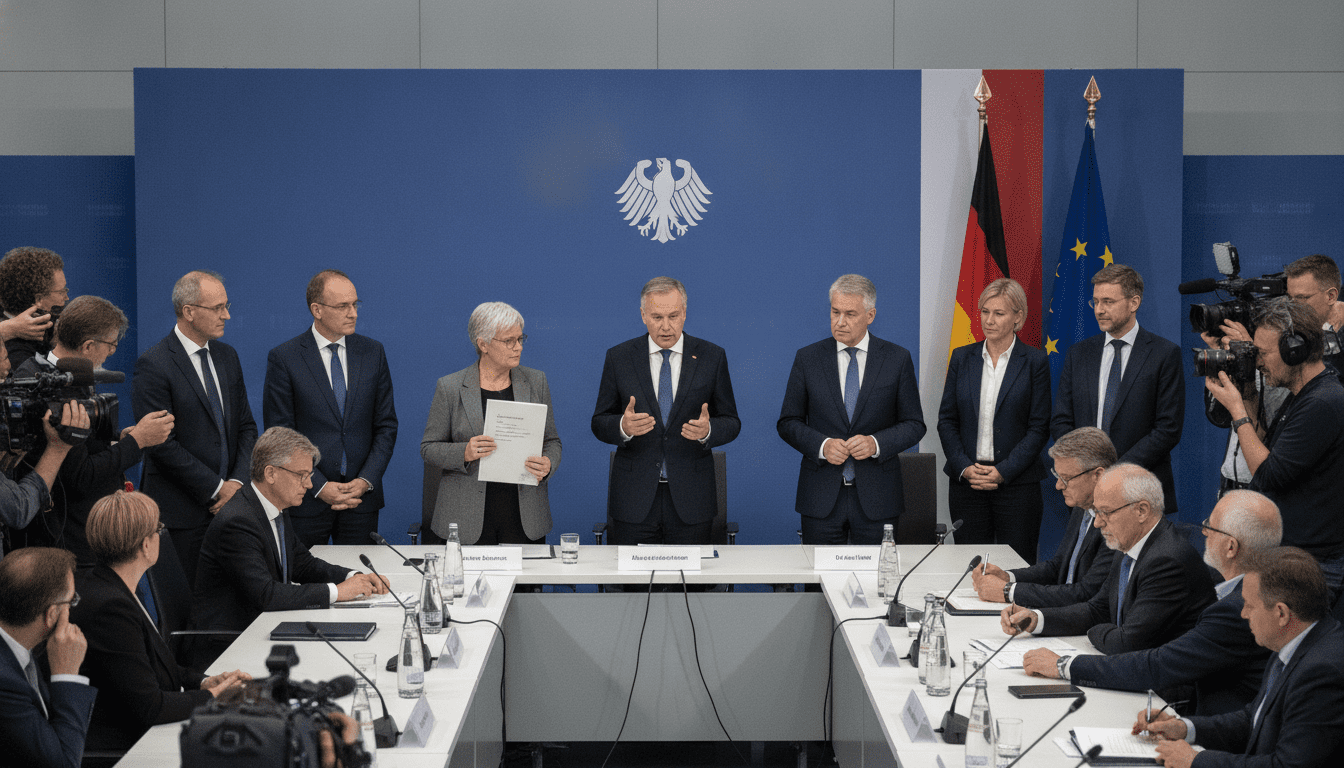
German pension reform panel recommends ending 48% pension guarantee for current retirees
A government expert commission has proposed ending the 48% pension guarantee for ongoing pensions, reshaping German pension reform and prompting immediate political and union debate.
The government’s 13-member pension commission recommends a fundamental change to the pay-as-you-go system that would preserve the current 48% reference level only for those who first enter retirement from 2031 onward. Under the proposal, the legal guarantee that has underpinned existing pensions would not apply to current beneficiaries, meaning the protected reference level for already-pensioned cohorts would be removed. The recommendation is part of a wider package that introduces a capital-funded supplement intended to bolster long-term pension levels but leaves significant gaps in the mechanics and financing.
Commission proposes end to 48% guarantee for current pensions
The commission’s report sets out that the existing safeguard of 48 percent of average wages would no longer be maintained for running pensions, while new entrants after 2030 would retain transitional protection. The report projects that, under current law, the security level would decline to roughly 46.4 percent by 2040 and to about 46.1 percent by 2050 even without the commission’s full package. The panel stopped short of naming a single final percentage for the combined reforms, noting instead that outcomes will depend on design choices for the capital component and future macroeconomic developments.
Who would be affected and when
The recommended changes would hit birth cohorts and workers approaching retirement most acutely, since their pensions would be assessed against rising wage levels rather than an absolute protected share. People retiring in the early 2030s would see a relative decline in their replacement rates compared with current standards, even if nominal pension payments continue to rise modestly. The commission acknowledges that those closest to retirement may not benefit fully from the new capital-funded element because the accumulation period before retirement would be short.
Transition factor and capital-funded top-up
To avoid an abrupt drop at the point of pension entry for cohorts retiring from 2032, the commission proposes a transition factor paid from general tax revenues that would temporarily offset the initial decline in the entry-level replacement rate. The transition measure is intended to ensure that first pensions for those cohorts do not fall relative to today’s levels, at least initially. Simultaneously, the panel recommends introducing a statutory capital-funded pension that would sit alongside the pay-as-you-go system and, in time, supplement the overall pension level.
Budget strain and uncertain financing
The report highlights a chronic fiscal challenge: federal subsidies to the pension system are already large and rising, with current-year transfers exceeding previous forecasts and expected to grow in the coming years. The commission’s reliance on tax-funded transition payments raises questions about affordability given tight public finances and competing spending pressures. Experts and officials will need to clarify where additional revenues would come from and whether the transition factor can be sustained without squeezing other budget priorities.
Unions warn of disproportionate losses
Trade unions have reacted sharply, arguing that the proposed package would accelerate declines in pension replacement rates and leave current retirees and near-retirees worse off in distributional terms. Union representatives contend the commission’s approach creates a two-tier protection that favors future entrants while reducing the effective value of benefits already being paid. They also warn that a stronger role for capital-funded pensions could deepen inequality by advantaging workers with long, uninterrupted contribution histories and higher incomes.
Economists critique distributional consequences
Leading economists have expressed concern that the commission did not sufficiently address the reform’s distributional effects, particularly for low-income workers and those with interrupted careers. Critics point to the persistence of an equivalence principle in the current system, whereby pension entitlements closely mirror lifetime contributions, which can penalize lower earners who also have shorter life expectancies. Reform advocates say rebalancing the link between contributions and benefits would be necessary to prevent the proposed package from amplifying existing inequities.
The commission’s report marks a significant turning point in the debate on German pension reform, combining a shift away from an absolute guarantee for current pensions with a push to introduce capital-funded elements. Implementation will hinge on political negotiations over financing, transition arrangements and measures to protect vulnerable groups, and the proposal is likely to face sustained scrutiny from unions, economists and lawmakers in the coming months.
