
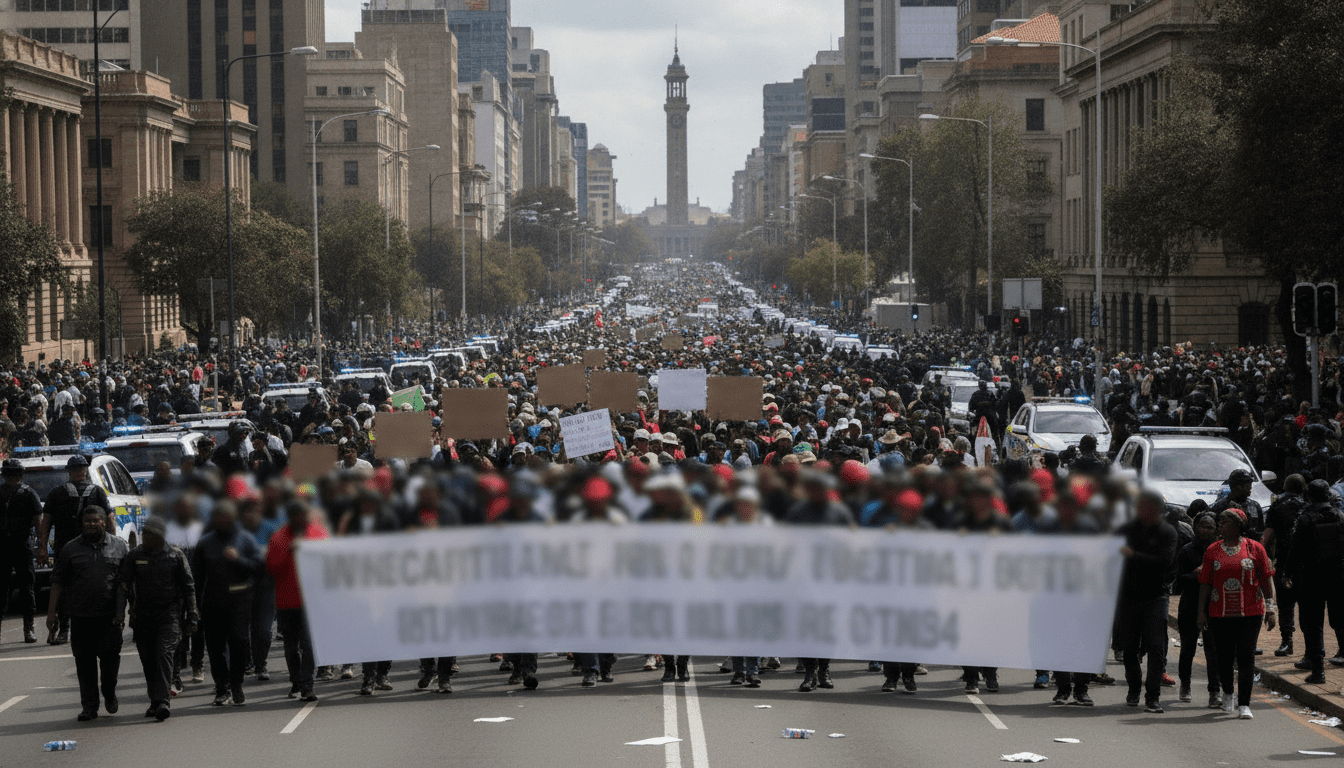
Xenophobic Attacks in South Africa Escalate as ‘March and March’ Orders Migrants to Leave by June 30, 2026
March and March’s xenophobic campaign in South Africa has driven repatriations, sparked diplomatic protests and is ordering migrants to leave by June 30, 2026.
South Africa is confronting a wave of coordinated xenophobic attacks as the citizen movement known as March and March intensifies pressure on foreign nationals to depart the country by June 30, 2026. The campaign, which organizers cast as an effort to remove “illegal” migrants, has resulted in street violence, looting of shops owned by foreign nationals and mass repatriations by affected countries. The attacks have drawn formal protests from several African governments and heightened scrutiny of policing and political leadership in Pretoria.
Militant Citizen Group ‘March and March’ and Its Ultimatum
March and March presents itself online and in public statements as a grassroots movement representing frustrated South Africans, but its tactics have escalated beyond protest. Organizers have issued a hard deadline—June 30, 2026—demanding that people without legal status leave the country or face a campaign the group warns could “paralyze” public life.
The movement’s public platform blends conspiracy narratives about a so‑called “foreign invasion” with claims that migrants are to blame for crime, unemployment and service failures. Humanitarian and rights groups say the rhetoric has translated into vigilante actions that target entire communities rather than only those without paperwork.
Patterns of Violence and the Communities Targeted
Witness accounts and reporting indicate that attacks focus disproportionately on African migrants: shopkeepers from Zimbabwe and Nigeria, Mozambican taxi drivers and Congolese street vendors have been singled out. Assaults, forced evictions from rental housing and denial of access to medical care have been reported in multiple urban centers.
Looting and attacks are often organized in groups that adopt a paramilitary posture, detaining or “arresting” migrants in public while local police frequently delay intervention. The cumulative effect has been widespread fear among migrant communities and a fraying of social cohesion in neighborhoods where households are mixed.
Diplomatic Fallout and Mass Repatriations
Several African states, including Nigeria, Ghana and Malawi, have responded by repatriating citizens and lodging diplomatic protests with South African authorities. Those governments have described the measures as emergency responses to protect their nationals, while demanding guarantees for safety and accountability.
The diplomatic pressure has added an international dimension to what might otherwise be portrayed as domestic unrest. Regional organizations and foreign ministries have urged independent investigations and an end to collective punishment of migrants, warning that prolonged unrest could damage South Africa’s regional standing and trade ties.
Policing, Government Response and Political Stakes
Critics say the South African government and police have been inconsistent in confronting the violence, with some incidents met by rapid action and others by visible inaction. This uneven response has fueled accusations that law enforcement tolerates or is overwhelmed by vigilante groups, eroding public confidence in the state’s capacity to protect all residents.
The governing African National Congress (ANC) faces blame from parts of the population for failing to deliver on promises of economic inclusion and service delivery. As unemployment remains high—official estimates place joblessness above thirty percent—frustration has been channeled toward visible minorities rather than the structural causes of inequality, analysts say.
Migration Facts and Misconceptions Driving Hostility
South Africa hosts roughly three million migrants, a figure that represents about five percent of a national population near 65 million. While migration has been a persistent feature of the continent—driven by conflict, economic need and regional labor patterns—research shows migrants do not commit crimes at higher rates than citizens, apart from immigration-specific violations.
Despite evidence that migrants contribute economically, public narratives promoted by groups like March and March attribute crime, drug trade and social decline to foreign residents. Experts warn that scapegoating distracts from governance failures such as corruption and unequal distribution of resources that have remained largely unaddressed since the end of apartheid.
A growing chorus of civil society organizations and international observers is calling for immediate protection measures, transparent investigations into violent incidents and a restoration of community policing practices that respect human rights. If authorities do not act decisively, analysts say, the cycle of retaliatory violence and diplomatic ruptures may expand beyond the current hotspots.
The ultimatum from March and March adds a pressing timeline to the crisis: governments, rights groups and community leaders will be watching developments around and after June 30, 2026, to see whether the campaign results in further expulsions, a security clampdown or renewed political mobilization around migration and poverty.
