
Reich Chancellery Files Online: New Digital Edition Opens Hitler-era Records for Search
Germany’s Bundesarchiv and Bavarian Academy release searchable Reich Chancellery files, offering scholars a new way to study Nazi-era bureaucracy and governance.
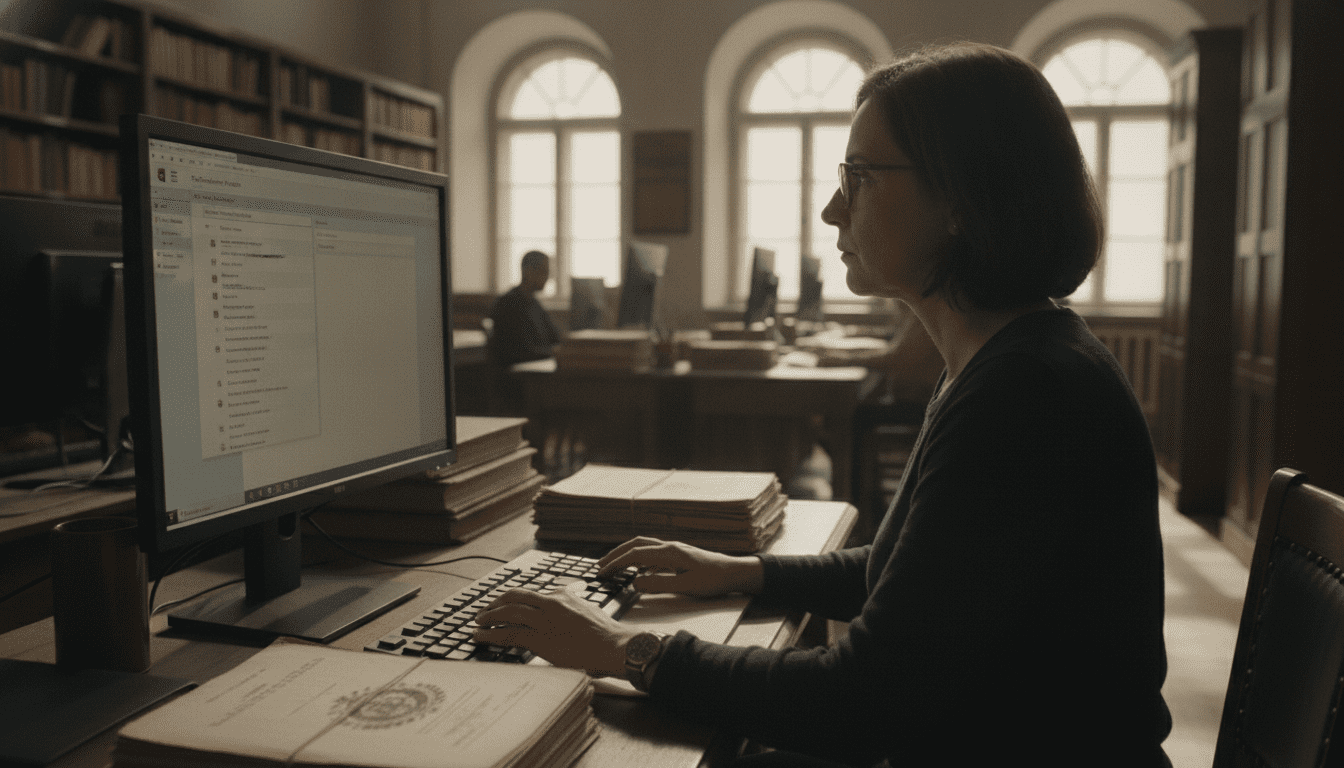
The Reich Chancellery files are now searchable online, giving historians and the public direct access to documentary records from Hitler’s government and expanding research into the administrative structures of the Nazi state. Editors of the new edition, including historian Hans Günter Hockerts of the Historical Commission at the Bavarian Academy of Sciences and Michael Hollmann, president of the Bundesarchiv, described the project as a major advance in transparency and archival scholarship. The searchable format links previously printed volumes and isolated manuscript holdings, making the bureaucratic mechanics of the regime more visible to researchers.
New Digital Edition Makes Reich Chancellery Files Searchable
The newly published digital edition consolidates the Akten der Reichskanzlei, Regierung Hitler into an online, searchable platform that reflects material long available in print. The editors say the online format preserves the editorial standards of the printed series while enabling keyword search and cross-referencing across documents. Users can now locate protocols, directives and internal correspondence that illustrate how decisions moved through the Reich Chancellery.
This digital availability follows earlier projects that made Weimar Republic files accessible in similar formats, creating a comparative research tool for scholars studying state continuity and rupture. Editors emphasize that the online edition does not replace archival visits but complements them by reducing preliminary research time and revealing leads for deeper investigation.
Editors Point to Bureaucratic Dimension of Führer Rule
Hockerts and Hollmann highlighted how the files foreground the administrative and bureaucratic operations that underpinned Hitler’s rule. Rather than portraying the Nazi state as purely top-down despotism, the records show routines of memo circulation, departmental negotiation and legalistic framing that sustained policy implementation. The files provide evidence of how legal instruments, ministerial coordination and private offices translated political directives into concrete actions.
These documents allow historians to trace the chain of commands and to document the involvement of various ministries, party offices and the Reich Chancellery itself in drafting legislation, decrees and measures. The granular record complicates simplified narratives and helps explain how centralized ideology was enacted through ordinary administrative practice.
Bundesarchiv and Bavarian Academy Collaboration Explained
The online edition results from a collaboration between the Bundesarchiv and the Historical Commission at the Bavarian Academy of Sciences, combining archival holdings with long-form editorial apparatus. The project team worked to standardize metadata, annotate entries and reconcile references across printed volumes and manuscript sources. Officials note that aligning disparate inventories and proofreading digitized texts were among the most time-consuming tasks.
Michael Hollmann characterized the project as part of a broader modernization effort at the Bundesarchiv to make primary sources more discoverable without sacrificing provenance information. The Bavarian Academy’s involvement brought scholarly editorial experience that ensured the digital edition carries the contextual notes and indices researchers expect from a critical edition.
AI Tools and the Future of Archival Research
Editors discussed the potential role of AI models in future scholarship, stressing both opportunity and caution. Machine learning can accelerate full-text indexing, language recognition and pattern detection across thousands of documents, enabling researchers to spot trends and networks more quickly. Yet Hockerts warned against uncritical reliance on automated summaries and urged continued human oversight to maintain interpretive rigor and guard against misreadings.
The project team has piloted AI-assisted workflows for transcribing typed and handwritten texts, but they retain manual verification for sensitive or ambiguous items. The combination of human expertise and computational tools promises to expand the questions historians can ask while preserving scholarly standards for citation and contextualization.
What Researchers and the Public Will Find
The online Reich Chancellery files include ministerial correspondence, policy drafts, appointment records and administrative notes that illuminate day-to-day governance. Researchers will find documents tied to economic policy, civil administration, propaganda coordination and legal measures, all annotated to indicate provenance and editorial interventions. The searchable platform also helps identify cross-references to holdings in other repositories, enabling multi-archive projects.
For educators and the general public, the edition provides primary evidence useful for teaching about the mechanics of authoritarian government and the role of bureaucracy in state crime. Curators and memory institutions may also use the material to build exhibits or digital teaching modules that show how decisions were produced and recorded.
Implications for Memory, Scholarship and Accountability
Making these files searchable reshapes how researchers construct narratives about the Nazi era and how institutions manage accountability and memory. Greater access increases the potential for nuanced findings that attribute responsibility across institutional lines rather than concentrating it solely at top leadership. At the same time, editors caution that documents do not speak for themselves; archival context and critical apparatus remain essential for responsible interpretation.
Scholarly responses are likely to appear quickly as historians mine the searchable corpus for new insights on continuity in personnel, administrative adaptation and policy formulation. The release also raises questions about digitization priorities and the resources required to sustain and expand similar projects for other archival collections.
The searchable Reich Chancellery files mark a significant step toward making the documentary records of the Nazi period more accessible and analyzable, enabling both specialists and the public to engage more deeply with the administrative history of the regime.
