
German industry faces a “critical” moment as leaders demand swift reforms to revive investment and competitiveness
Industry leaders warn German industry faces a critical phase as high costs and weak investment bite; they demand swift, visible reforms and coordination.
Germany’s industrial leadership has sounded an urgent alarm about the nation’s economic health, calling the situation “critical” and urging immediate, visible reforms to restore investor confidence and spur domestic investment. The warning centers on five structural cost pressures and a perception that government action to date — including a delayed corporate tax cut — is insufficient to reverse a sustained decline in industrial output. Industry representatives told ministers and unions that a combined package of quick wins and deeper structural changes is needed to stop further erosion of competitiveness.
Industry Diagnosis: patient in critical condition
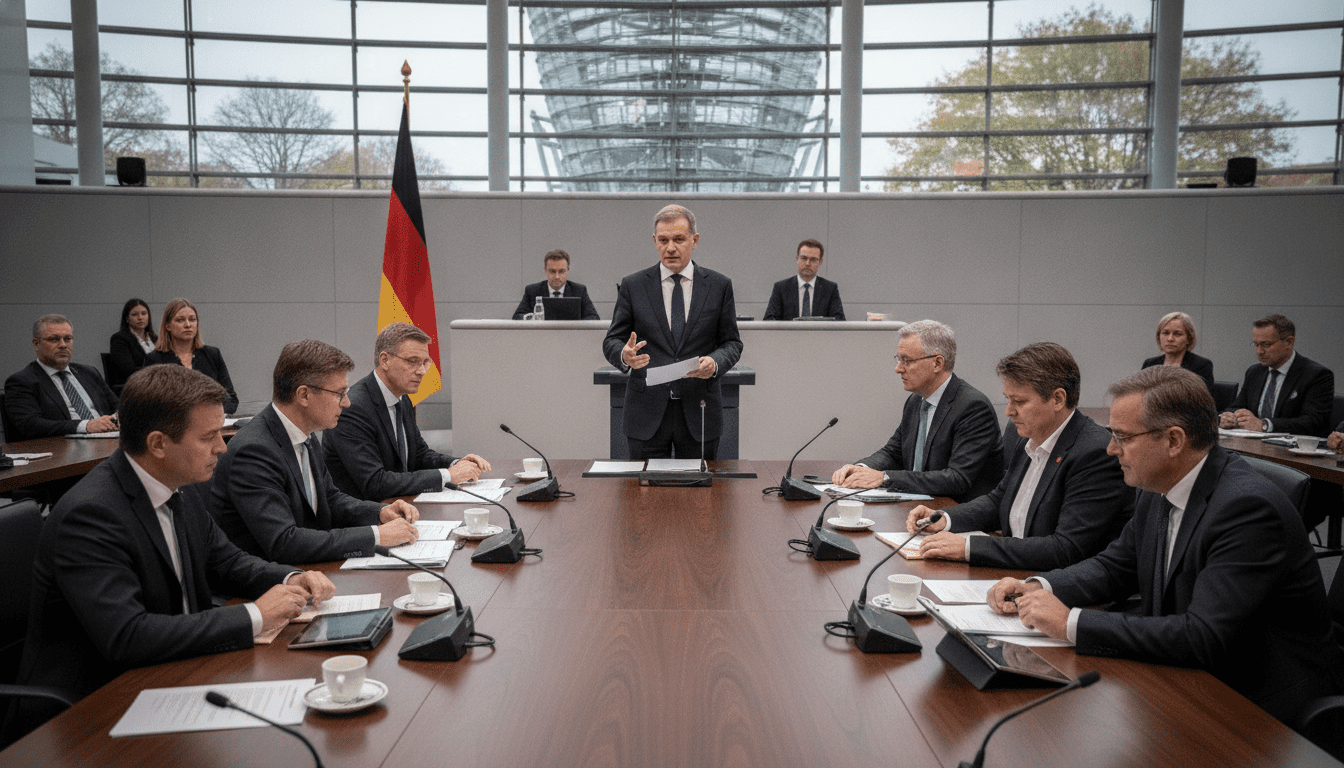
Senior industry representatives described the German economy as a patient with a known illness: the causes are debated, but the prognosis is serious without treatment. Participants at recent government talks agreed on the severity of the problem, even if they differed sharply on whether it stems primarily from supply constraints or weak demand.
That disagreement, industry sources say, splits along political and union lines and complicates consensus on remedies. While some advocate demand-side measures to boost purchasing power, others warn that higher taxes on business income would drain investment funds and deepen the slowdown.
Five cost categories undermining competitiveness
Industry leaders singled out five cost categories that together make Germany unusually expensive: wages, non-wage labor costs, energy, taxes and bureaucracy. Each element sits near or at global peaks, and the combination, not any single factor, explains much of the lost ground, they argued.
The argument is that piecemeal tinkering will not suffice; firms need coordinated relief across these areas to change expectations and make investment decisions viable. Industry warned that tax policy in particular requires caution because a large share of German firms are taxed through the personal income tax system, meaning that taxing higher incomes more heavily can still pinch investment capital.
Short-term signals and a five-week reform sprint
To break the stalemate, industry proposed a two-track approach: immediate, tangible measures that businesses can feel within weeks, and a parallel, fast-moving task force to design deeper reforms. Examples of short-term actions offered included removing regulatory irritants and cutting reporting burdens that disproportionately affect small and medium-sized firms.
Separately, industry suggested assembling a small group of experienced, independent advisers with direct lines to the chancellor and vice-chancellor and a strict five-week mandate to deliver proposals. The aim is both policy substance and a psychological signal that reform momentum has started.
Investment booster alone does not sway firms
Government measures already adopted — including an “investment booster” with eased depreciation rules and a future corporate tax cut — were judged inadequate by business leaders. The proposed corporate tax reduction will not take full effect until 2028, and companies say that uncertainty and persistent structural costs blunt any near-term impact.
Industry representatives stressed that tax changes would need to be paired with structural reforms that make investment easier and faster, otherwise the measures risk being symbolic rather than transformative.
Global competition: China, subsidies and strategic choices
Competitive pressure from China was described as intensifying, with an array of factors — lower producer prices, large subsidies and currency dynamics — distorting markets. At the same time, Chinese firms have emulated Germany’s innovation-production model, raising competitive stakes across high-tech sectors.
Senior industry figures urged nuanced responses at EU and G7 levels: targeted, flexible instruments that can react quickly to unfair practices rather than broad protectionism. They also argued against trying to produce everything domestically, advocating instead for “sovereignty” in areas that matter to Germany’s industrial product mix while maintaining crucial trading and innovation ties.
Chips, AI and the future of manufacturing
On semiconductors, industry voices called for selective investment rather than an illusion of full autonomy, noting that building cutting-edge fabs requires competencies and timescales Germany currently lacks. Strategic funding should therefore focus on technologies that align with domestic strengths — such as machinery, robotics and automotive applications.
Artificial intelligence was highlighted as a major opportunity for reindustrialization. Leaders said industrial AI — integrating AI into production processes, products and production equipment — could become a new growth story if value creation remains domestic and policy supports adoption. They warned, however, that Europe’s fragmentation in AI programs and lack of large language model capabilities from domestic players leave the region exposed.
Final paragraph without title
Industry leaders concluded that Germany remains fundamentally strong — a “value” economy with deep innovation systems and a skilled workforce — but that regaining momentum requires credible, coordinated action now. They urged policymakers to combine immediate, visible steps with a focused structural reform agenda to restore confidence and prompt the investments needed to preserve industrial capacity and jobs.
