
Israel-Hezbollah ceasefire breached as strikes kill civilians in southern Lebanon
Attacks hit Lebanon hours after an Israel-Hezbollah ceasefire, killing civilians as US‑Iran talks in Switzerland and Tehran scramble to avert wider conflict.
Ceasefire breached within hours
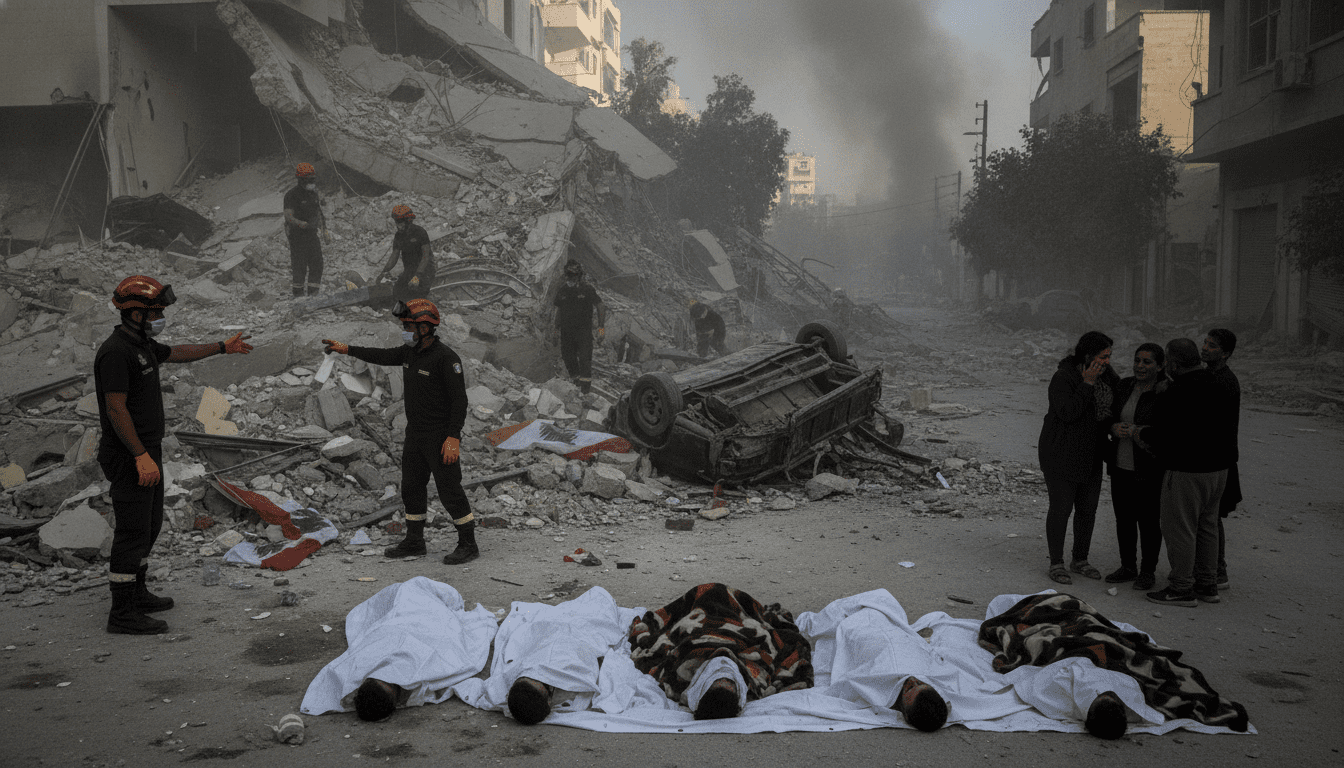
A ceasefire between Israel and the Iran-backed Hezbollah militia, which took effect on Friday, was broken within hours by renewed strikes and rocket fire. Local and military sources reported air and drone strikes on the Nabatieh area overnight, followed by artillery exchanges that left several civilians dead.
Lebanese state media and security officials said the dead included a Lebanese soldier and multiple civilians killed in a strike on the village of Arabsalim. The attacks occurred while residents sought shelter and emergency services began responding to damage in towns around Nabatieh.
Lebanese army blames Israeli operations
The Lebanese Armed Forces publicly accused Israel of continuing “brutal” attacks that undermine efforts to stabilize the country and calm the south. The army said operations extended across the south toward the Bekaa Valley, with one soldier killed on the road between Kfarreman and Nabatieh and additional casualties and material damage reported.
State news agency NNA cited military statements that Israeli warplanes and drones struck the Nabatieh area late at night and into the morning, and that artillery fire had been used against populated areas. Lebanese commanders warned that ongoing strikes risk further escalation and humanitarian distress.
Israeli military says Hezbollah violated agreement
An Israeli army spokesman countered that stability for both Israel and Lebanon depends on Hezbollah ceasing breaches of the agreement. The Israeli statement said the militia fired more than 50 projectiles at Israeli forces in southern Lebanon overnight and that Israel struck what it described as Hezbollah targets in response.
Israeli officials portrayed their actions as defensive measures to protect troops along the border and to deter further attacks, while emphasizing that operations will continue if Hezbollah persists in firing across the line. The competing accounts highlight the fragile nature of the truce on the ground.
Diplomatic efforts under pressure in Switzerland
Regional and international diplomacy aimed at consolidating a broader pact between Washington and Tehran has been put under strain by the fighting around Nabatieh. Axios reported that the US special envoy Steve Witkoff travelled to Switzerland for initial talks on a potential atomic agreement with Iran, with other delegations assembling for higher-level negotiations.
Those diplomatic movements were further complicated when US Vice President JD Vance unexpectedly cancelled planned travel to a meeting near Lucerne, delaying a scheduled round of talks intended to translate a framework into a more durable settlement. Officials from multiple countries said the timing of the skirmishes threatens to derail momentum.
Pakistan sends high-level mediators to Tehran
Pakistan moved to intensify mediation efforts, dispatching Interior Minister Mohsin Naqvi to Tehran for meetings with senior Iranian figures aimed at keeping the broader negotiations on track. Iranian state agencies reported that Naqvi’s visit was focused on assessing progress in US‑Iran discussions and exploring confidence-building measures.
According to Iranian outlets, Naqvi was expected to meet members of the Iranian negotiating team, including parliamentary and foreign ministry officials, with the aim of relieving tensions that could spill beyond the Lebanon border. Islamabad framed the mission as contributing to regional de-escalation.
Fourteen-point framework and remaining hurdles
On Wednesday, leaders in Washington and Tehran signed a 14-point framework that extended a ceasefire in the wider Iran-related conflict for at least 60 days and included provisions for reopening the Strait of Hormuz. The agreement was described by negotiators as a pause designed to create space for a comprehensive settlement, including discussions of Iran’s nuclear program.
Diplomats have said the next phase would convert the framework into a final accord, but the renewed clashes in southern Lebanon have added pressure and uncertainty to those talks. Negotiators now face the task of preventing local confrontations from unravelling a fragile diplomatic breakthrough.
The immediate humanitarian impact is concentrated in towns near Nabatieh, where residents and municipal authorities reported damage to homes and infrastructure and called for restraint from both sides to prevent a wider conflagration. International aid and monitoring groups have been urged to gain access to assess needs.
The coming days will test whether diplomatic channels in Switzerland and Tehran can absorb the shock of the clashes and shepherd a transition from a temporary framework to a durable settlement, even as frontline commanders and political leaders in Beirut and Tel Aviv trade blame for the ceasefire breaches.
